
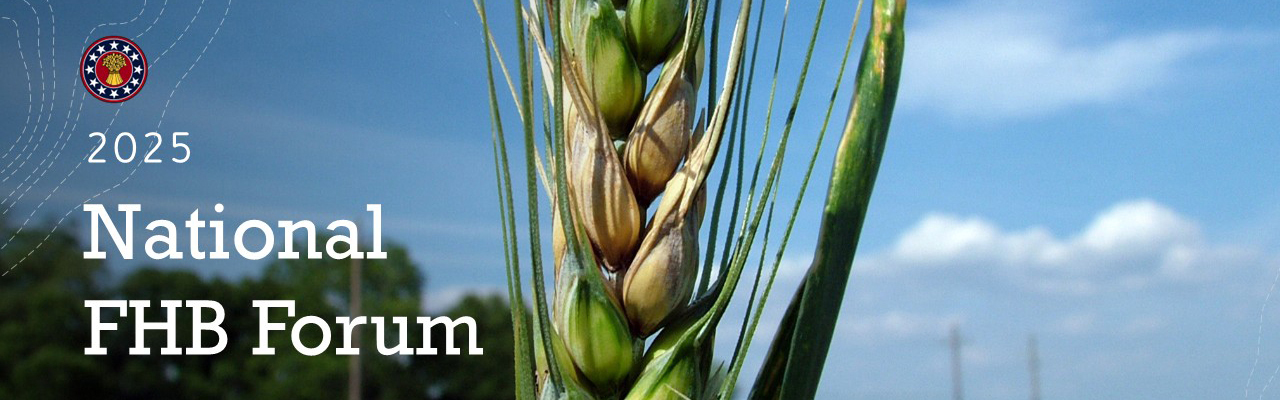
Stakeholders from the wheat and barley industries gathered with experts and researchers in Denver this month to exchange information and ideas about ongoing efforts that have successfully reduced risks of scab – also known as Fusarium Head Blight (FHB) – and the resulting deoxynivalenol (DON).
Nearly 200 people attended the December 7 to 9 event, organized by the U.S. Wheat and Barley Scab Initiative (USWBSI).
“The National FHB Forum is where collaboration drives progress,” said Ruth Dill-Macky, a USWBSI researcher co-chair and a University of Minnesota plant pathology professor. “It’s a unique opportunity for farmers, researchers and industry partners to exchange ideas and address challenges that shape our collective efforts to reduce the impact of FHB on wheat and barley.”
An Important Mission
The USWBSI, a national collection of researchers, has a mission of minimizing the threat of scab, including the production of mycotoxins, for wheat and barley producers and processors. The USWBSI’s annual budget comes from the federal government and is appropriated through USDA’s Agricultural Research Service (ARS) and research projects are funded in at least 30 states.
Lori Wickett, Research and Communications Director for the Montana Wheat and Barley Committee (MWBC), was a first-time attendee at the FHB Forum. She immediately recognized the importance of bringing together people who are working on issues that affect wheat and barley producers.
“The progress that is being made is very meaningful to the growers we represent, and to hear from the people involved in the research and science has great value,” she said.
At this year’s FHB Forum, participants engaged in presentations highlighting 2025 projects, including more than 60 research posters. Sessions highlighted latest breakthroughs in breeding, crop protection, disease management and strategies for reducing Fusarium-associated toxins that threaten grain quality. Keynote speakers included Richard Horsley, professor at North Dakota State University, and Molly Miller, vice president of regulatory and technical affairs at North American Millers’ Association.
Return on Research Investment
“One important thing the forum does is show everyone involved how the money that goes into research comes back ten-fold to help reduce overall risks,” said Esten Mason, a wheat breeder at Colorado State University and also a USWBSI co-chair who helped organize this year’s FHB Forum. “The purpose is to communicate with growers, and everyone involved in the initiative our recent successes and share the latest findings. The value is that getting everyone together is also an opportunity to get feedback and discuss things that can spark ideas. Over the past 25 years, we have significantly reduced the risks of DON, and thanks to the work of scientists – along with the funding that supports their work – we continue to develop tools to reduce those risks even more.”
Speaking of scientists, USWBSI granted its Lifetime Achievement Excellence Award to David Van Sanford, a professor and wheat breeding specialist at the University of Kentucky. The national honor recognizes individuals with more than two decades of impactful work on scab.