
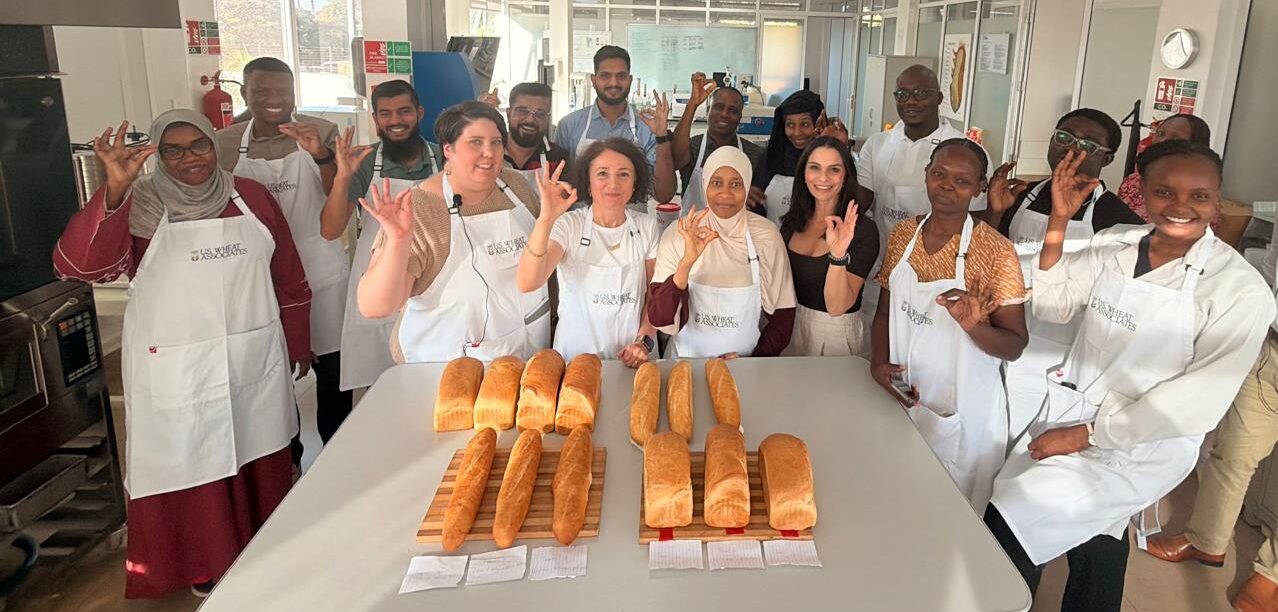
East African consumers know they’re eating a good mandazi, a fried dough pastry, if there’s a visible, crusty “crack” on the golden-brown exterior. But how do millers and bakers determine which blend of wheat will produce that crack in a crispy outer shell while keeping a soft, airy interior?
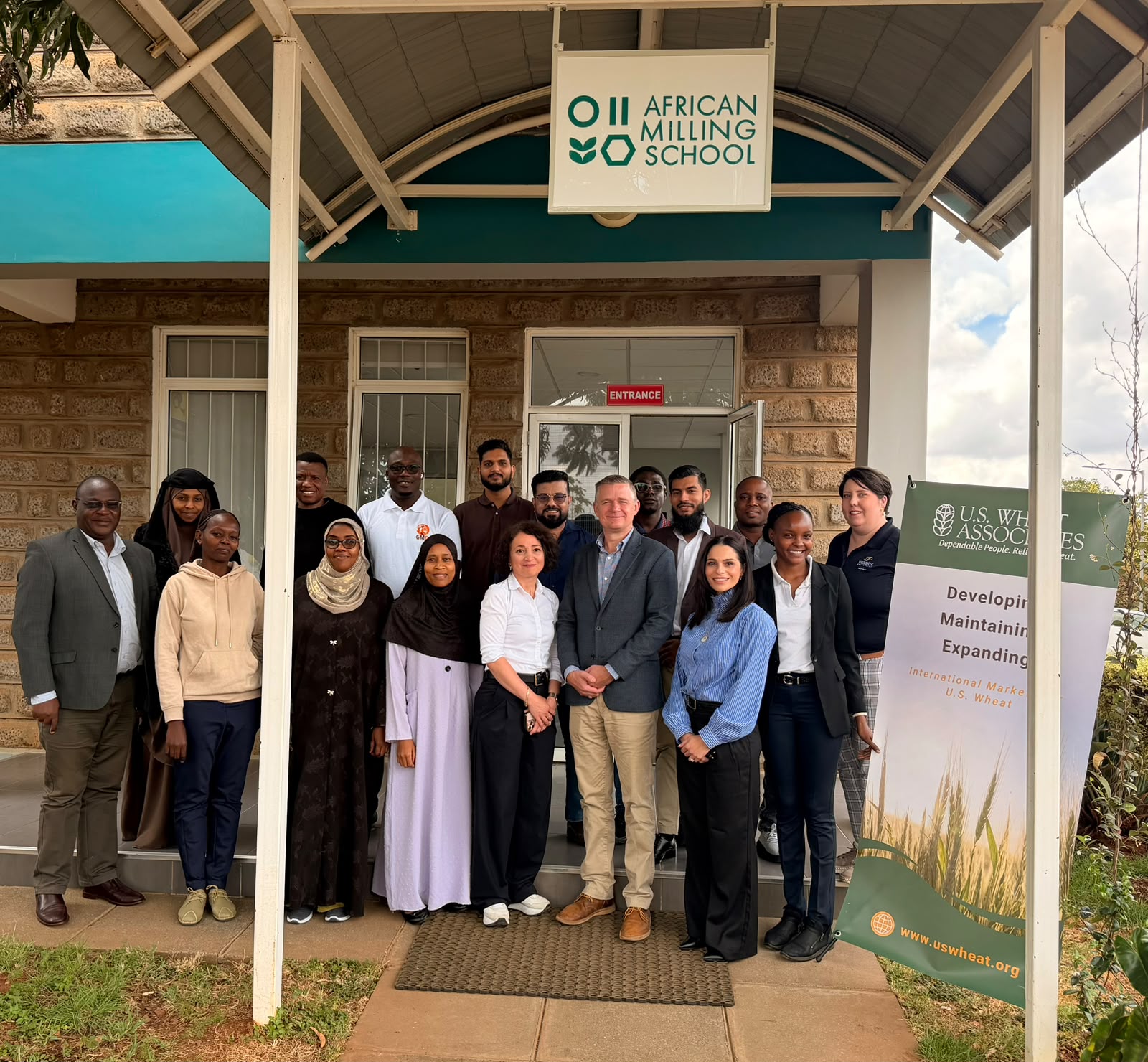
The laboratory analysis behind the answer to that question was just one part of the Sub-Saharan Africa Wheat Quality Academy – SRC Workshop in late September at the African Milling School (AMS) in Nairobi, Kenya. U.S. Wheat Associates (USW) supported the workshop to help strengthen understanding of U.S. wheat classes, with an emphasis on translating laboratory and wheat-quality information into practical milling and product-development decisions.
Workshop participants represented milling and laboratory interests from across Sub-Saharan Africa, including Kenya, Rwanda, Tanzania, Mozambique, Nigeria and Senegal. The diverse regional participation allowed the group to discuss different wheat-quality requirements, milling challenges, product applications and consumer preferences across the region.
“The discussions included useful insights into the different regional product preferences,” said Domenique Opperman, program and marketing specialist in the USW Cape Town Office. “At the same time, there is shared, significant demand for practical, application-driven wheat-quality training in Sub-Saharan Africa.”
Turning Data into Decisions
The group’s common interest in better understanding the relationship between wheat quality, laboratory results, milling decisions and finished-product performance is the specialty of Dr. Senay Simsek, a cereal scientist and researcher who led the workshop. Simsek serves as department head and professor in Purdue University’s Department of Food Science. She discussed using solvent retention capacity (SRC) analysis to better predict the true performance characteristics of flour for specific end products, including mandazi, biscuits (cookies), crackers and cakes, as well as many hard wheat flour applications.
More specifically, SRC examines the glutenin, gliadin and pentosan characteristics of the flour, and the level of starch damage in the flour. These values describe the flour’s ability to absorb water during the mixing process and its ability to release that water during the baking process. The combined pattern of the four SRC values establishes a practical flour quality profile useful for predicting functionality and how flour products conform to specifications.
Workshops like the one in Kenya show millers how to use SRC to analyze flour streams, maximize quality and minimize costs. For bakers, such testing ensures they are using the best possible flour for their products. Participants left with strong interest in incorporating SRC into their milling operations and, in turn, were encouraged to add reliable, consistent U.S. wheat classes to commercial blends for specific end-use products like baguettes in Senegal, pan breads in Nigeria or mandazi in East Africa.
“The workshop demonstrated the value of bringing together laboratory, milling and end-product expertise rather than treating these areas as separate technical activities,” Opperman said. “This workshop also provided a strong foundation on which to build future technical training, research and customer engagement around SRC, flour functionality and blending.”