
Producers from Arizona, Idaho and Nebraska explored three unique markets and met with customers to exchange information about U.S. wheat as part of U.S. Wheat Associates’ (USW) Board Team trip to Egypt, Morocco, and Portugal.
The two-week trip took place in early May, led by USW staffers Erica Oakley, Ian Flagg, Peter Lloyd, and Tarik Gahi. Participants were Mark Spurgin of Nebraska, Richard Heiden of Arizona, Cory Kress of Idaho, and Jamie Kress of Idaho. Jamie Kress was representing the National Association of Wheat Growers (NAWG).
Giving U.S. Farmers a Close Look
“Along with giving these wheat farmers a good look at these markets, our visits and meetings with bakers, flour millers and wheat buyers also showed them how different classes of U.S. wheat are being used and how USW staff is working to create demand and overcome challenges,” said Oakley, USW Vice President of Programs. “It also was chance for our customers to interact and ask our staff and the farmers questions about quality, availability, production, trade issues and a host of things involving the U.S. wheat industry.”
At meetings held in each country, Flagg, USW Regional Vice President for the EU/MENA, was able to provide a USW perspective on trade issues and the impact of supply and demand for U.S. wheat customers. Lloyd, USW Regional Technical Director, and Gahi, USW Assistant Regional Technical Director and Administration Manager, shared advantages of U.S. wheat quality for millers, bakers, and pasta makers.
“In each country we visited, customers were very appreciative of the technical expertise provided by our staff, as well as our customer service,” said Oakley. “The farmers learned that these are not services offered by competing countries, and that it can make a big difference.”
Understanding Challenging Markets
Team members were appreciative to meet customers – and potential customers — and to learn how U.S. wheat is being used. The farmers were also able to get a better understanding of obstacles in the way of growing market share.

“It’s valuable to see where we have success, but it’s also important to see what is standing in our way,” said Cory Kress, a member of the USW Board of Directors. Cory and Jamie Kress are a husband-and-wife farming team that grows wheat and canola in Idaho’s Rockland Valley. Cory Kress serves on the Board of the Idaho Wheat Commission. Jamie Kress is Vice President of NAWG.
“The purpose of the Board Team trips is to give us the chance to represent our fellow wheat farmers while gathering information that we can bring back home to share with others,” cory Kress added. “This trip offered a lot of insight on both the opportunities and the challenges for U.S. wheat.”
A Broad Journey Starts in Egypt
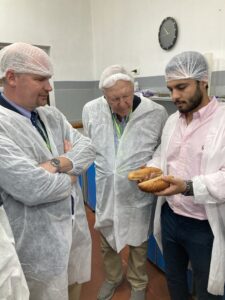
The trip began in Cairo, Egypt, where the team toured flour mills, a pasta factory, and an industrial bakery. Egypt is a key supplier of flour to many African and Middle Eastern countries and has significantly expanded its wheat flour exports to the region, USDA’s Foreign Agricultural Service (FAS) explained in its recent report on the market. A price-sensitive market, Egypt is expected to import 13 million tons of wheat in Marketing Year 2025-26, the same as 2024-25, according to FAS. The largest suppliers of milling wheat to Egypt during the past five marketing years were Russia (34.6 million tons), Ukraine (10.4 million tons) and the EU (9.64 million tons).
On to Morocco
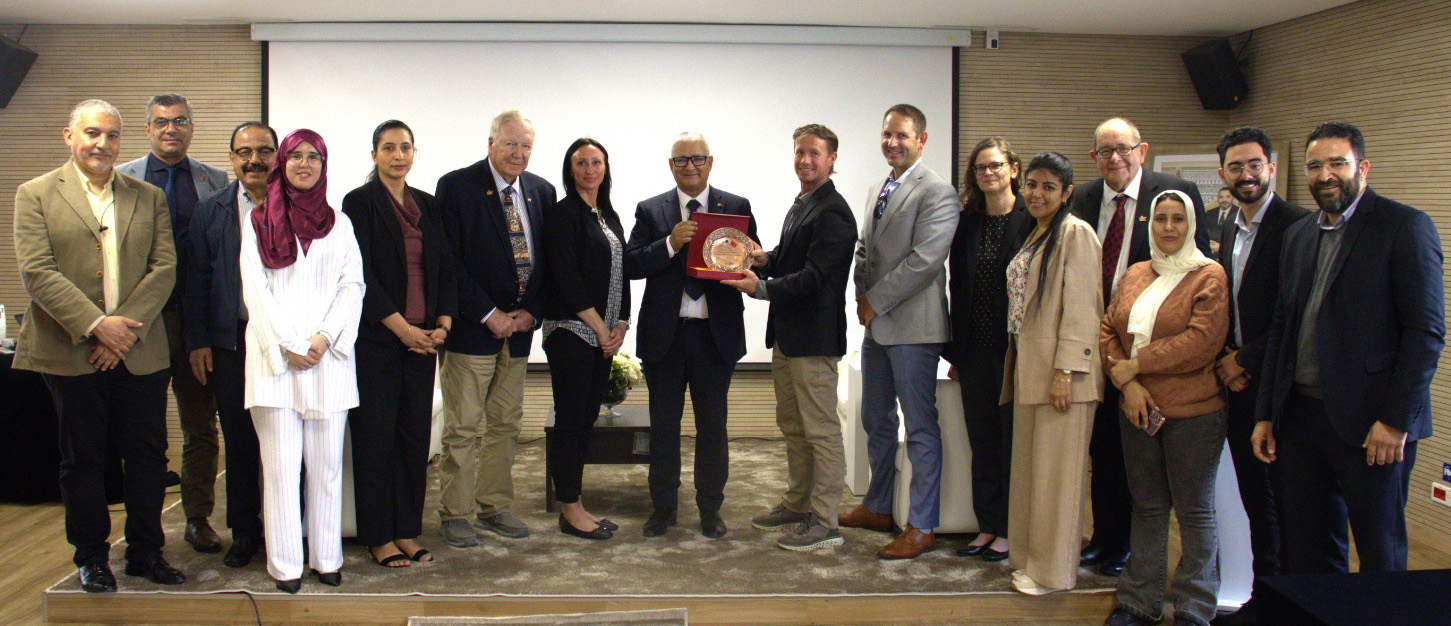
From Egypt, the team traveled to Morocco, where in Casablanca members met with executives of the Moroccan Millers’ Federation (FNM) and the Moroccan Importers’ Federation (FNCL). It also toured the KenzPat durum mill and couscous factory, and met with the Director General of the Millers National Federation at the Milling and Baking School.
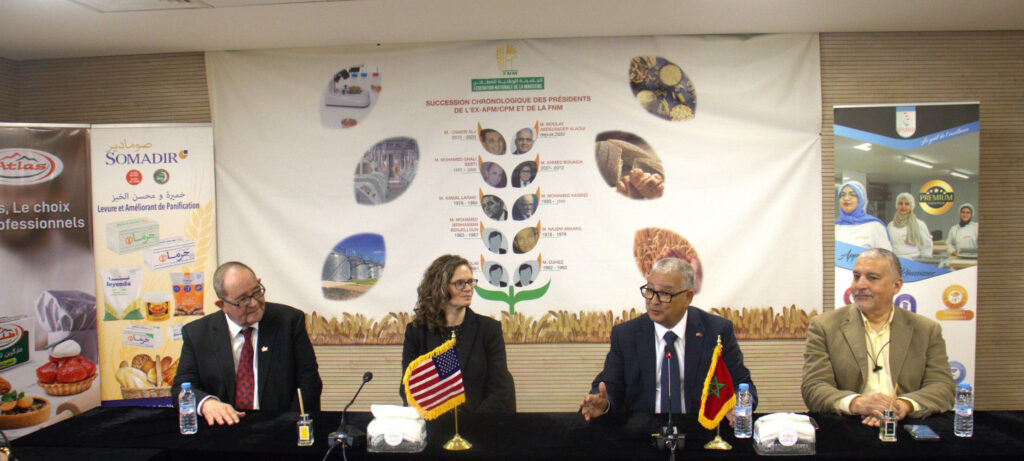
Morocco, which has one of the fastest expanding economies on the African continent, is a top market for hard amber durum wheat. It is a price sensitive market, but less so than Egypt. Wheat color – specifically durum wheat color — is a premium.
“Color is incredibly important to them, so they will pay a higher price,” explained Oakley. “The challenge is that they tend to have the perception going back many years that Canadian wheat more yellow than U.S. wheat. The U.S. industry is working on testing methods to prove that U.S wheat, specifically U.S. durum, has improved in color.”
Finishing in the EU
The next stop for the team was in Porto, Portugal. There, the team met with the trading manager at Cerealis Internacional S.A., one of Portugal’s largest industrial and commercial groups. Later, the team met with officials from a handful of food companies and importers.
Like other EU markets, Portugal has duties in place that limits access for many U.S. wheat classes. However, high protein wheat and durum wheat are excluded from that duty system.