
Two U.S. wheat farmers stood on the deck of the U.S.-flagged Liberty Grace in the Port of Mombasa as the hatches opened and the crew started unloading donated commodities destined for a Kenyan refugee camp. The shipment was the second bulk vessel delivered to Africa under the new administration by the U.S. Department of Agriculture (USDA) of the 70-year-old Food for Peace program.
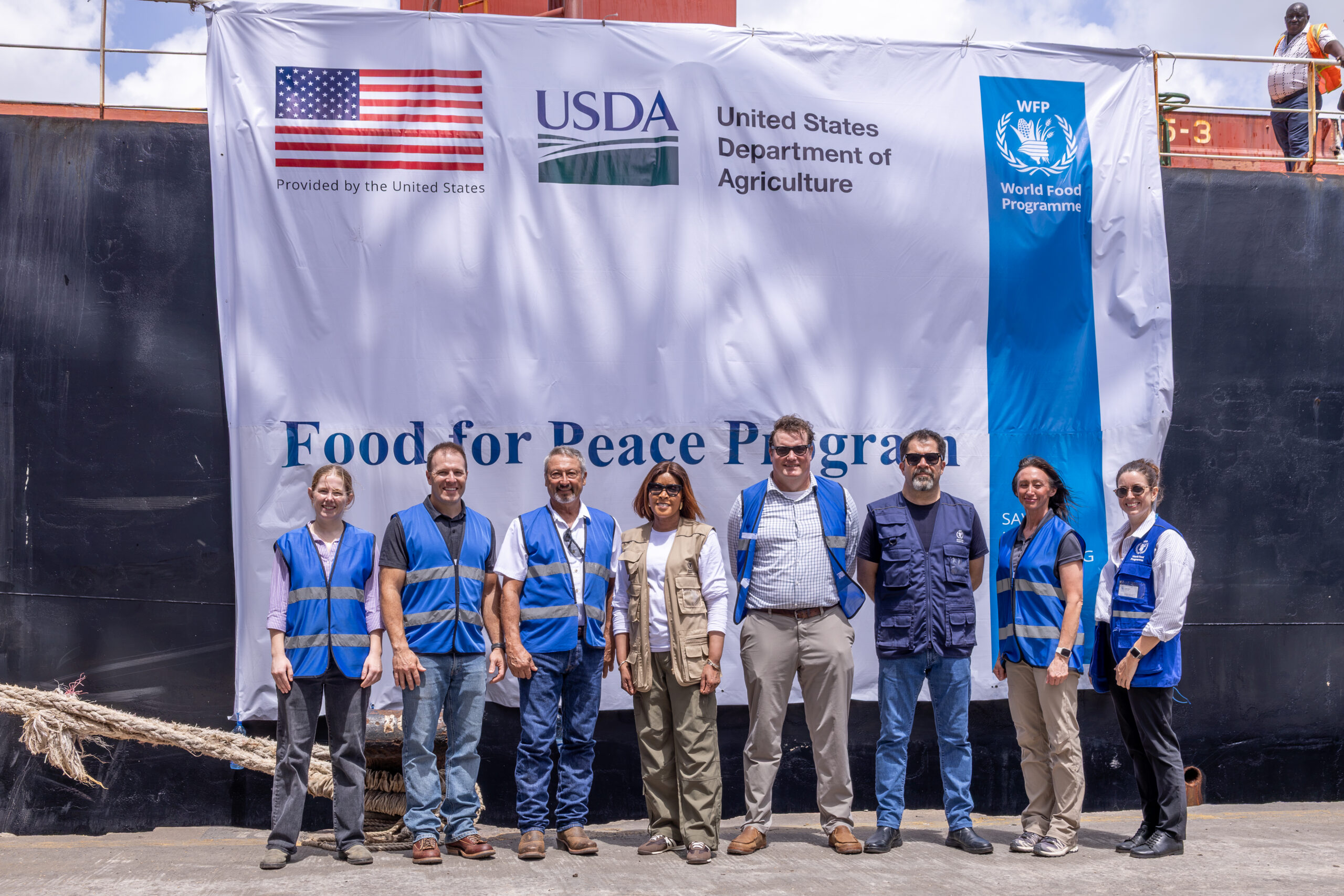
The 48,000 metric ton (MT) shipment of U.S. hard red winter (HRW) wheat and rice was provided to the World Food Program and will provide enough food for hundreds of thousands of Kenyans and east African refugees well into 2027. Immediately upon arrival, the group witnessed wheat being bagged and shipped inland for use in refugee camps. A later tranche of more than 3,500 MT (130,000 bushels) of wheat was shipped inland to the Kakuma Refugee Camp in far northwest Kenya to ensure the camp’s more than 300,000 refugees have a stable food source through the expected El Nino flooding this fall.
On hand to witness the return of wheat to feeding programs to Kenya was a U.S. wheat industry group, which included Gary Millershaski, chairman of U.S. Wheat Associates (USW) and farmer from Lakin, KS; and Jamie Kress, president of the National Association of Wheat Growers (NAWG), chair of the USW Food Aid Working Group and farmer from eastern Idaho. Supported by the USDA’s Foreign Agricultural Service (FAS), their mission’s goal was to learn about how emergency food assistance is being delivered in order to address challenges and improve the use of wheat in emergency programs.
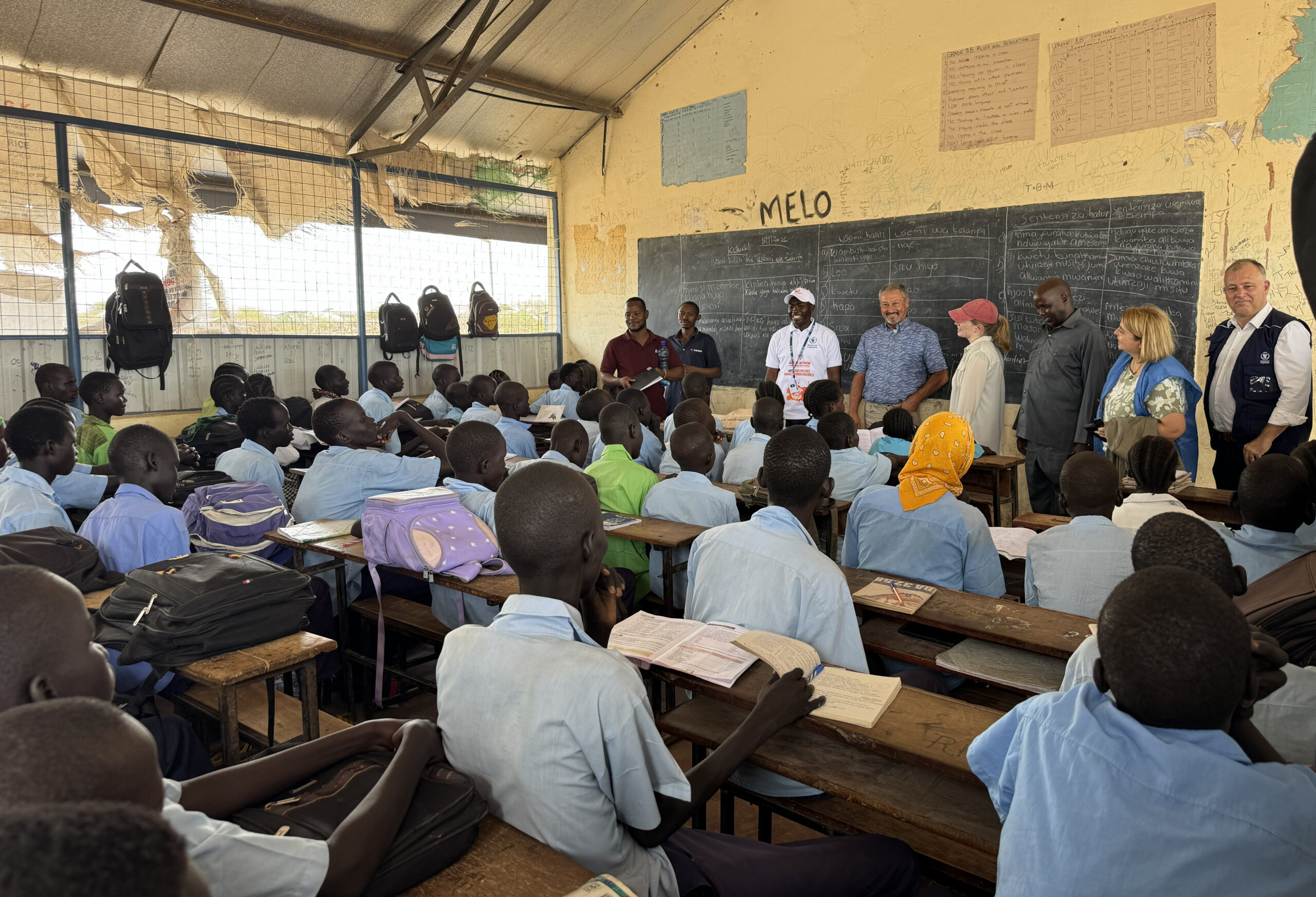
The group also traveled to Kakuma, a nearly 35-year-old camp in northwest Kenya. The camp was established in 1992 to host tens of thousands of unaccompanied minors that that fled a civil war in Sudan. Unfortunately, since that time, the number of east African refugees has continued to grow as continued conflicts and hunger have struck the region in viscous cycles. As a result of current conflicts, the camp is estimated to be growing around 400 people per week, placing a strain on current resources and making the USDA-provided assistance particularly timely.
“I’ve had the opportunity to visit commercial wheat markets around the world, including in Africa, but I had never traveled to a refugee camp,” Millershaski said. “I was stunned at both the scale of the camp – it’s a lot of people – and just how pleasant and thankful everyone was as they waited in lines for food.”
“Visiting the refugee camp really adds perspective. It’s easy for me to get focused in on the challenges we face as farmers in the United States, especially with the recent drought, wild input prices and continued uncertainty. But, when I saw the challenges these folks have in accessing the most basic amount of food, it makes me realize how blessed we really are.”
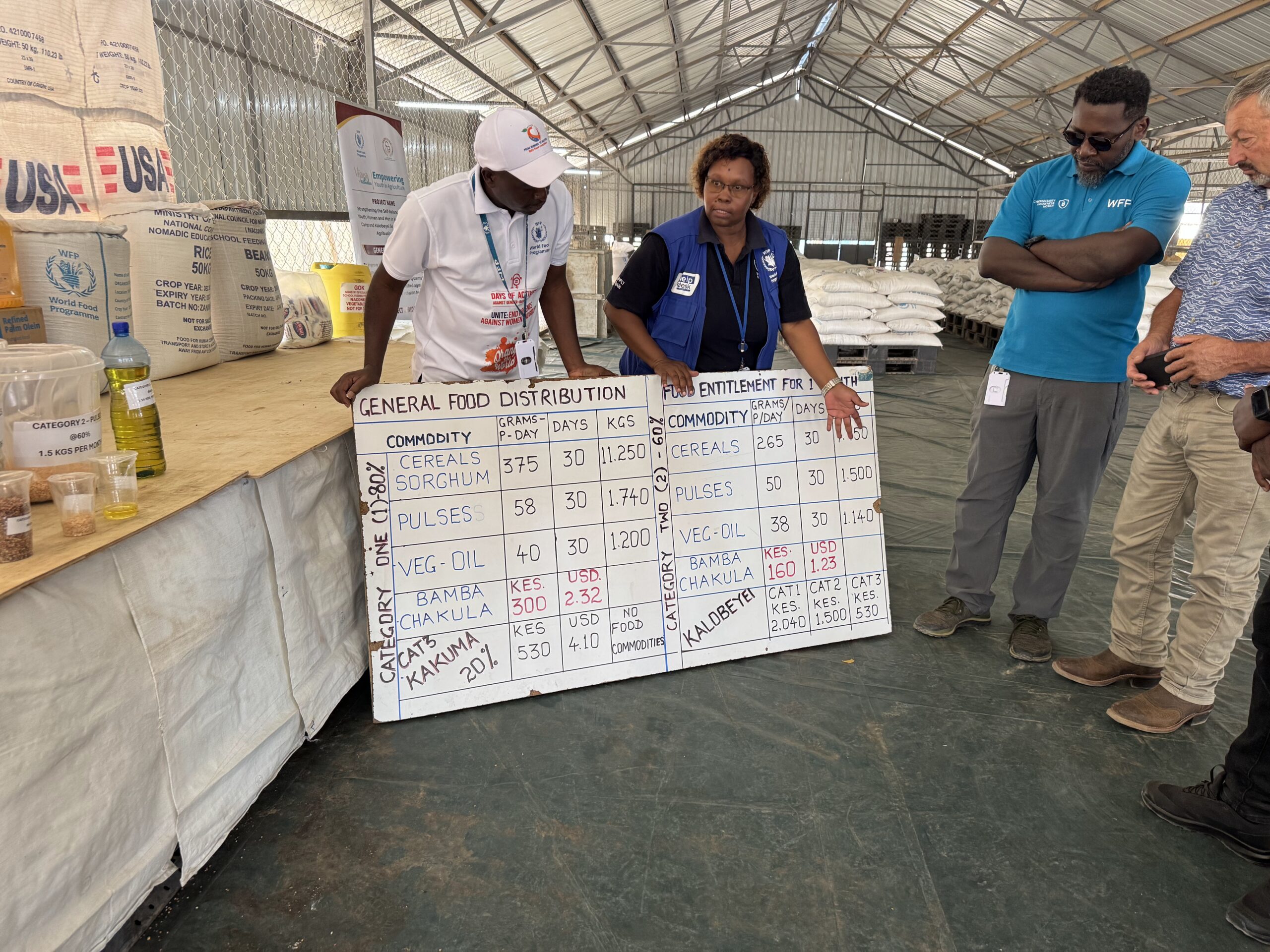
With the wheat from the Liberty Grace still in transit, the farmers saw other commodities being distributed in the refugee camp, nearly all whole grains, including U.S. sorghum, U.S. vegetable oil and yellow split peas. The most at-risk portion of the camp’s population was receiving enough food to count for approximately 1,600 calories/day, distributed a month’s worth at a time. That meant an entire month’s worth of calories in about 30 pounds of whole commodities and a small cup of vegetable oil.
In addition to the limited size of the ration, the group was struck by the WFP’s efforts to maintain accountability during distributions and to aim to transition refugees off aid over the long term. The WFP has implemented a differentiated assistance program at the camp, which categorizes recipients by level of need, ranging from those that need to receive virtually all their calories from distributed aid to those who can provide partially or even mostly for themselves.
“The camp was massive – more than 300,000 people – yet in order to receive their food ration, recipients must present a ration card and have their fingerprints digitally scanned,” Millershaski observed. “Add in the differentiated assistance program, which is a key part of how WFP is meeting refugee needs with a lower amount of overall food, and this distribution effort is a real success story with regards to efficiency and stewardship of program dollars.”
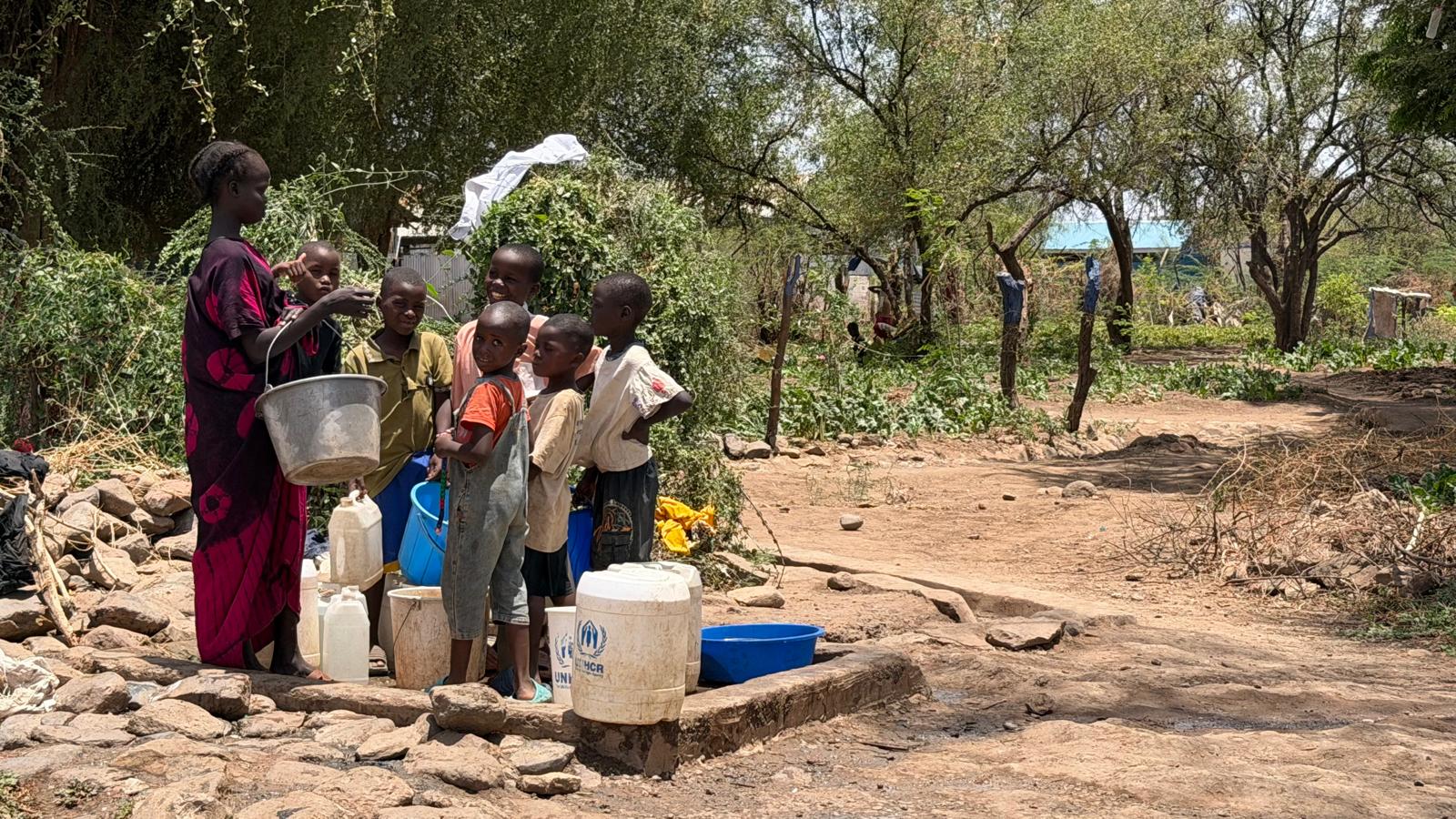
The challenges of providing food for such a large population and in a region with limited infrastructure are well known to the WFP staff working in the camp, but witnessing these difficulties was a new, eye-opening experience for the U.S. wheat farmers on the trip.
“From the hands of American farmers who grow this wheat to the hands of families receiving it in Kakuma, this contribution creates a tangible connection across continents,” remarked Betty Kaw, WFP country director in Kenya. “WFP connects the dots, bringing together the logistics and partnerships needed to deliver this wheat to families who depend on it. We thank American farmers for helping provide the next meals to refugees in Kenya.”
The farmers also saw firsthand the efficiencies of bulk grain handling that makes the U.S. the world’s most reliable supplier of wheat, both for commercial markets and food assistance programs. The U.S. wheat team has tracked this shipment of wheat as it moved from fields in central Kansas to the elevator to shuttle train to a bulk vessel in New Orleans and Houston. The wheat then traversed the Atlantic Ocean before reaching the Port of Mombasa and was then being bagged into 50-kilogram bags in a warehouse facility right next to the vessel for future distribution.
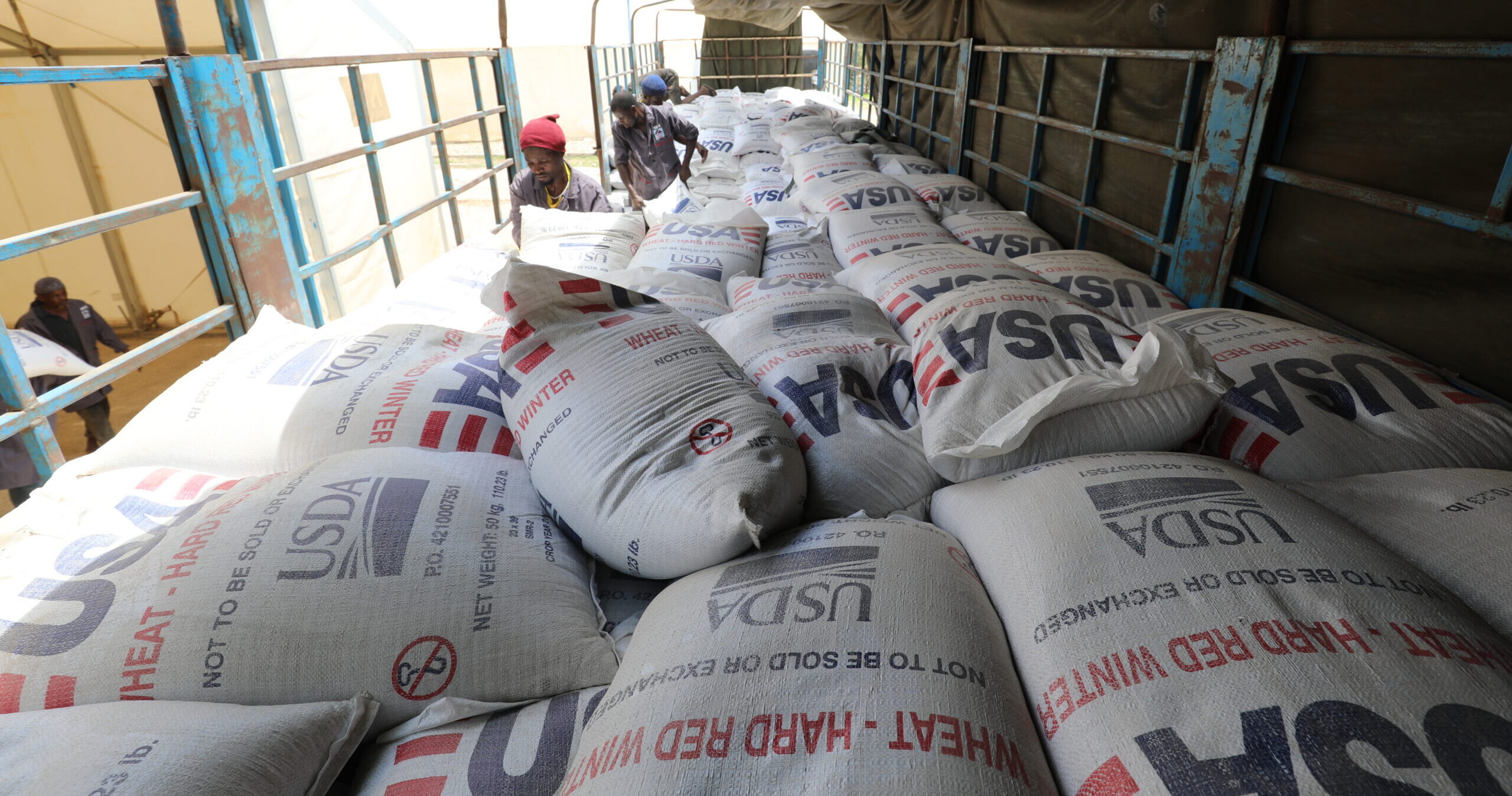
For Kress, who serves as the farmer-leader of the USW Food Aid Working Group, the learning journey forced reflection on past discussions of when use of U.S. commodities was minimized or even halted.
“Seeing U.S.-grown wheat back in these programs is incredibly exciting for me,” Kress reflected. “In the past, it was heart-wrenching to be thinking about our harvest in the United States—knowing we have such an abundance of food—while mothers on the other side of the world were struggling to provide even the most basic amount of food for their children. To see that wheat being unloaded at the port in Kenya and know it will help feed hungry families made this trip especially meaningful.”
The concept of using a bountiful U.S. wheat harvest as a life-saving tool was at the core of the creation of the Food for Peace program more than 70 years ago. With USDA now at the helm guiding the program’s implementation, shipments of U.S. wheat through the Food for Peace program continue to serve as a symbol of U.S. leadership and a direct connection between American farmers and displaced families for whom these kernels are a lifeline.
“Being on board the Liberty Grace as it discharged wheat was particularly meaningful for us as wheat farmers,” Kress noted. “The smell of that fresh wheat as the holds were opened was immediately familiar. It was the smell of harvest, grains bins and the satisfaction we take in farming.”
“There was something more powerful about experiencing that familiar smell thousands of miles from the farm. It really brought home to me that the Liberty Grace had carried a little bit of America’s countryside to Kenya—and that this wheat would now help feed people who desperately need it.”