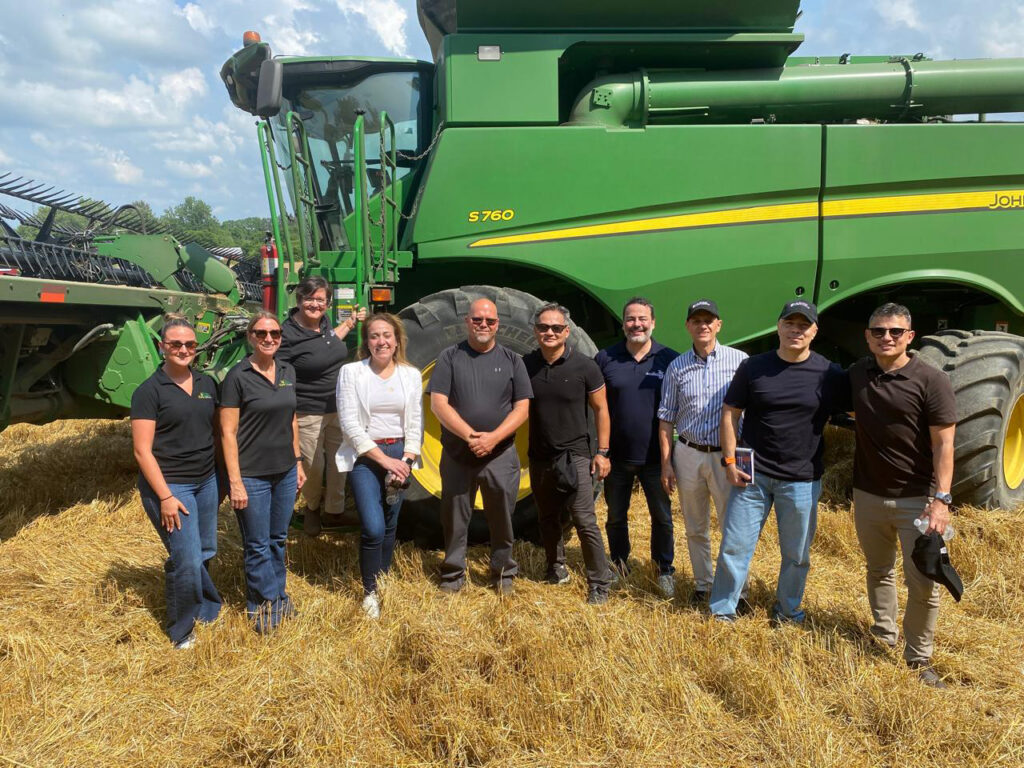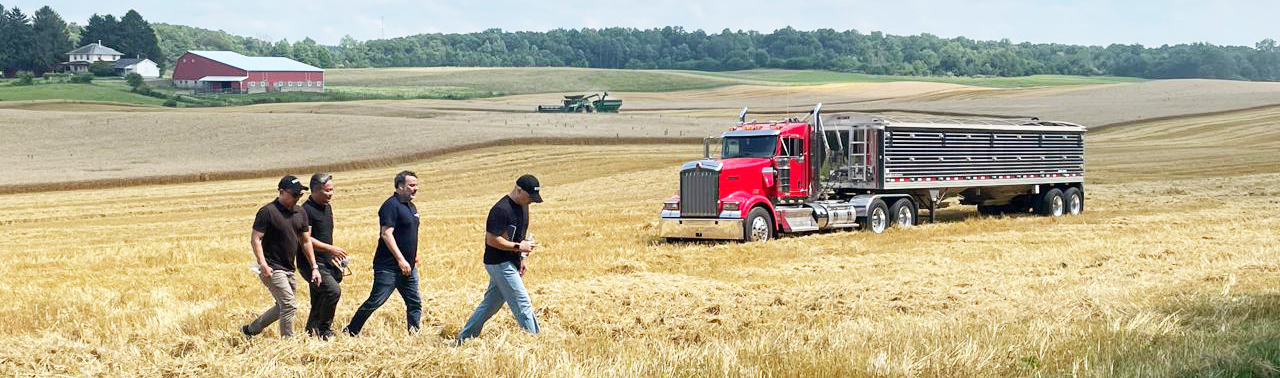
Conversations and tours in Ohio and Kansas provided the final information needed for one Brazilian customer to make their first purchase of U.S. soft red winter (SRW) wheat of the year in mid-July. While not every trade team ends with a reported sale, this success exemplifies the importance of these activities in instilling confidence in purchasing decisions.
“The team was interested in developing their understanding of the SRW supply chain from production to export and how this class of wheat supports consistency and end-product performance,” said Claudia Gomez, regional marketing manager in the USW Santiago Office, who led the team. “Overall, this team aimed to demonstrate how the U.S. grain supply chain supports U.S. SRW as a consistent ingredient for the Brazilian market.”
Brazil is one of the world’s largest wheat importers, driven by bakery and biscuit (cookie) applications and supported by a well-developed milling industry. While Brazil has been importing U.S. wheat for more than 40 years, it still is an extremely competitive market due to Brazil’s domestic production and advantages enjoyed by some U.S. competitors, including Argentina and other countries that have mostly duty-free access under the Mercosur Agreement.
In 2019, Brazil agreed to implement an annual duty-free tariff rate quota (TRQ) of 750,000 metric tons (MT) (nearly 27.6 million bushels) of wheat imports from countries not part of the Mercosur Agreement.
Seeing Firsthand the Value of U.S. SRW Wheat
In Brazil, SRW wheat is used in cookies, cakes and bakery flour blends, typically as a blending wheat to improve consistency. Purchases of SRW vary with freight costs, policy decisions and short-term market conditions.
This year’s team set out to better understand the functionality, reliability and value of SRW wheat, with support provided by the Ohio Small Grains Marketing Program and Kansas Wheat. The four team members represented a cross-section of Brazilian milling and food industries, including wheat procurement, industrial processing and end-product manufacturing.
In Ohio, the team’s focus was on evaluating the functional performance of SRW in cookies and crackers at the USDA Agricultural Research Service’s Soft Wheat Quality Laboratory. The team also visited a grain elevator, toured field plots and greenhouses at The Ohio State University Agricultural Technical Institute and met with Ohio wheat farmers to discuss wheat production practices.
In Kansas, the team shifted their emphasis to the commercial side of the business, including grain inspection and logistics during visits to the USDA Federal Grain Inspection Service (FGIS). The team also toured the Frito-Lay Factory in Topeka and met with members of the grain trade based in Kansas City.
Following the team’s visit to the United States, Bunge purchased approximately 15,000 MT (551,000 bushels) of U.S. SRW wheat, representing their first U.S. wheat purchase of the year. The wheat will be used to supply Mondelez’s industrial operations and set the stage for future potential purchases later in the calendar year.
“The business had been developing over the course of the weeks leading up to the visit,” Gomez said. “The customer indicated that the trade team visit played an important role in reinforcing the company’s confidence in U.S. wheat and helping reaffirm its preference for SRW wheat as a reliable choice.”