

U.S. Wheat Associates (USW) Director of Trade Policy Ryan Olson traveled to London from June 8 to 12 for London Grains Week events, including the International Grains Council’s (IGC) annual conference and meetings of the International Grain Trade Coalition (IGTC).
Centered on the IGC meeting, which manages the International Grains Convention and promotes market transparency and multilateral engagement, the meetings provided an opportunity for grain associations, traders, government officials and technology providers to meet and discuss industry issues, trends and developments.
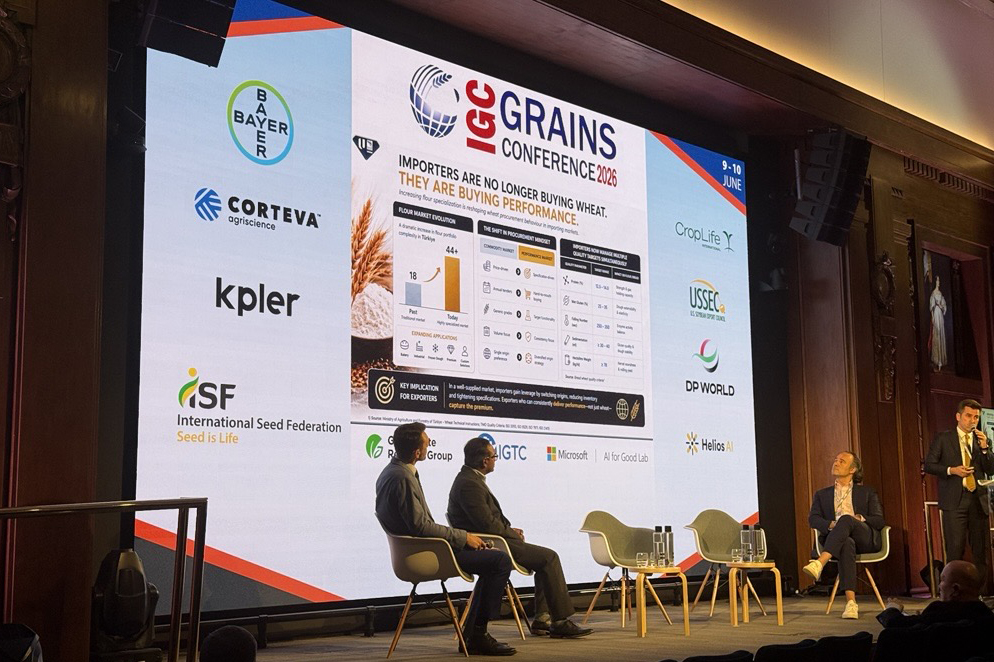
This year’s conference included a significant focus on technological developments, including exploring how exporters and importers regulate technology and facilitate grain flows. Gene editing, and more traditional biotechnology techniques, continue to be regulated differently between grain exporting countries and importing countries, increasing the risk of market disruption. Further, some markets are moving to tighter restrictions on contaminants and pesticides decoupled from underlying risks, developments that can limit farmers’ tools and lead to trade tensions if efforts are not taken to harmonize rules. The conference and IGTC meetings provided a meaningful forum for discussing these issues and potential actions to keep markets open.
As part of these discussions, U.S. Wheat participated in a small roundtable of IGTC members to discuss genetically modified (GM) foods. GM technologies, including ones in the pipeline for the wheat industry, provide an opportunity to improve grower resilience and deliver enhanced functionality for end-users. However, the use of certain biotechnology techniques as part of their development leads to questions about consumer acceptance, government regulations and potential market disruptions. As part of these discussions, Olson shared his perspectives from the U.S. wheat industry, including developments around HB4 wheat and key considerations being taken to encourage responsible commercialization and market acceptance.
The grain industry is one of the most globalized in the world, making engagement between importers and exporters vital to ensuring profitability, food security and harmonization of rules and regulations. IGTC and institutions like the IGC are vital parts of that discussion, including for promoting U.S. wheat values and expectations for open markets and fair trade.