
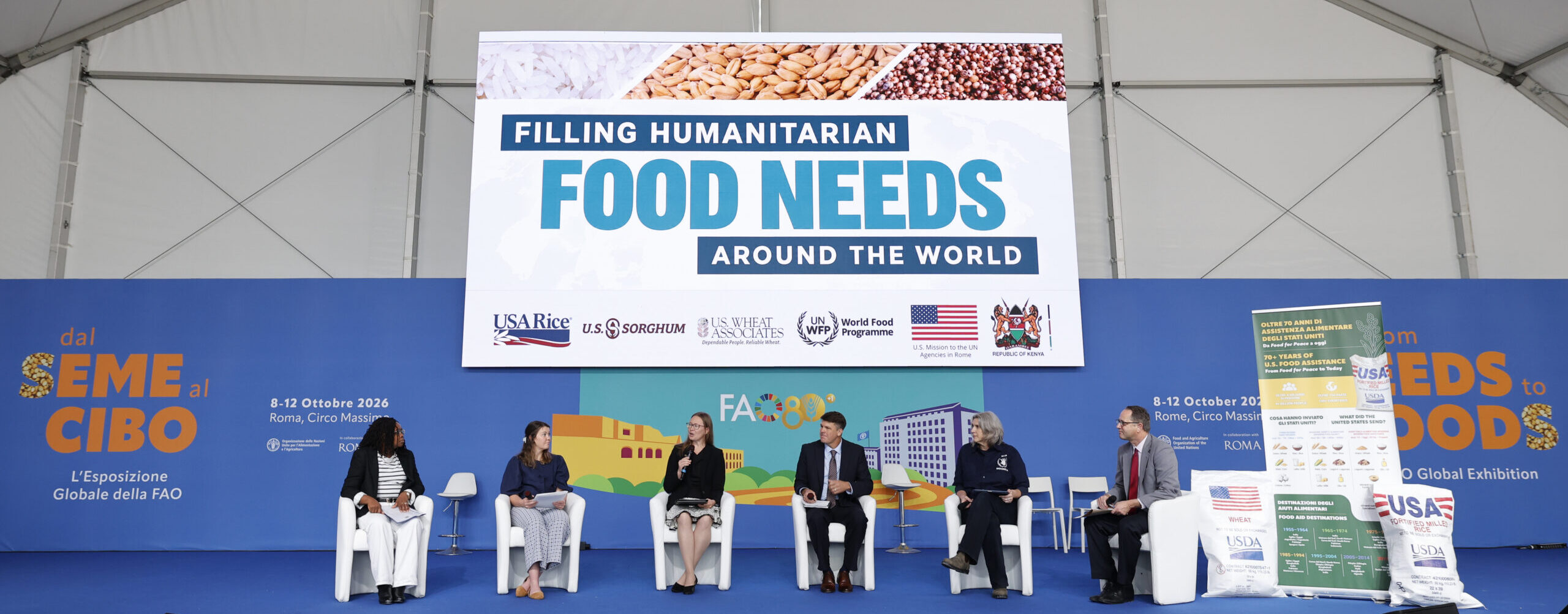
Every October, the United Nations Food and Agriculture Organization (FAO) hosts a week of events in Rome centered on World Food Day. This year’s “From Seeds to Foods” exhibition, held in mid-October, brought together around 300 exhibitors from more than 140 countries to showcase how food is grown, processed and delivered. It also hosted conversations on how innovation and cooperation can help improve food security.
For U.S. Wheat Associates (USW), the exhibition provided a platform to discuss food aid with agencies, partners and recipient countries shaping global food assistance. As part of the event, USW Director of Trade Policy Ryan Olson worked with the World Food Program (WFP) and colleagues from U.S. rice and sorghum groups to organize a panel called “Filling Humanitarian Food Needs Around the World.” The panel discussion focused on how U.S. agriculture and humanitarian partners are working together to improve global food security.
U.S. Wheat Highlights Food Aid’s Impact on Global Food Security
Amanda Hoey, CEO of the Oregon Wheat Commission and chair of the USW Food Aid Working Group, represented U.S. wheat growers on the panel. As both a leader and a wheat farmer who has seen U.S. food aid at the point of delivery, Hoey added a valuable perspective to the discussion.
“I live and work on a farm, in a state and in a country that specializes in the production of high-quality wheat,” Hoey told the panel. “At the heart of why we farm is growing nutritious, healthy food to feed people, from our own families to those in our broader global community.”
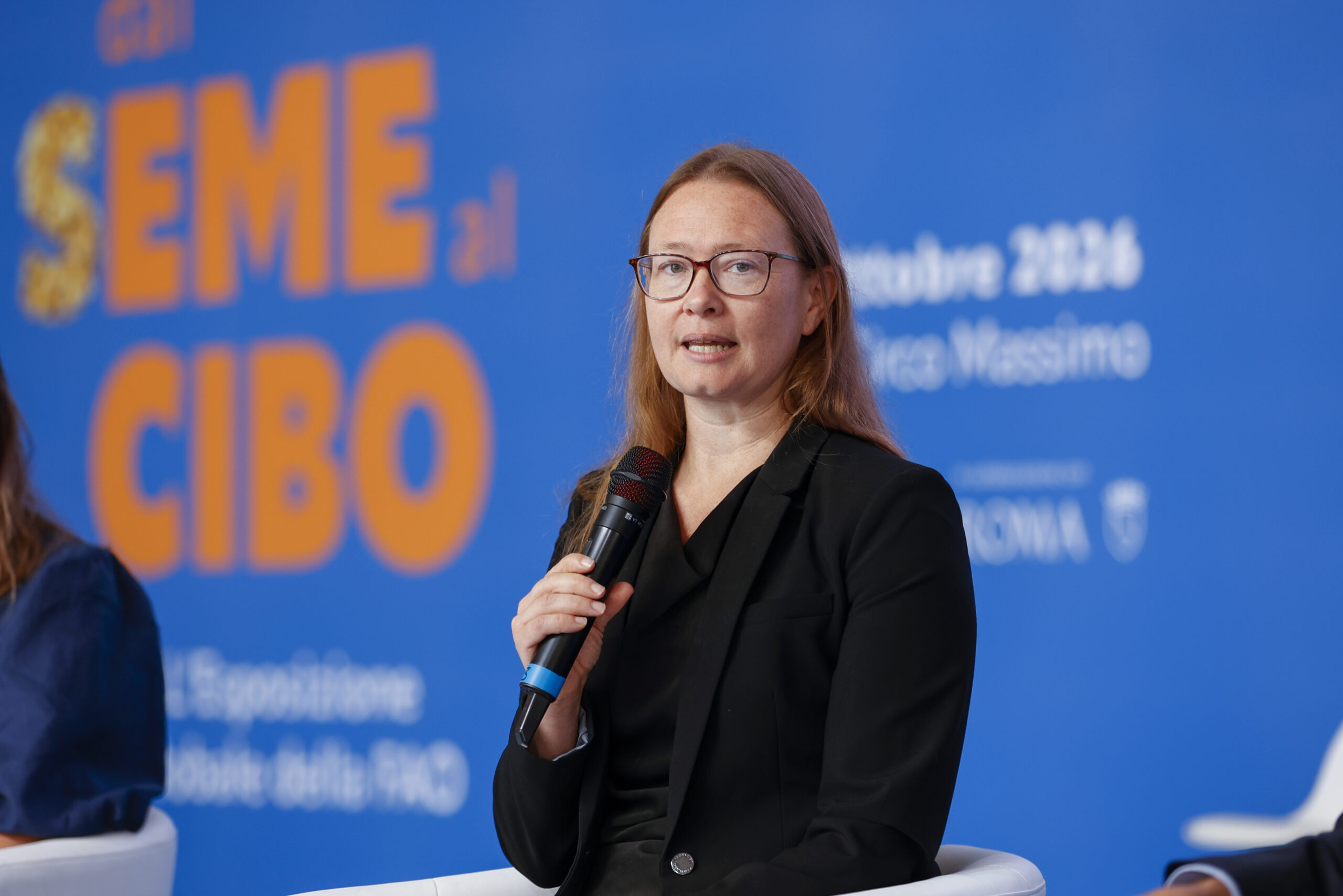
When asked about the history of U.S. food aid, Hoey highlighted wheat farmers’ role in creating PL 480, now known as Food for Peace, in 1954. Wheat was among the first commodities shipped through the program and has long made up more than half of U.S. in-kind assistance.
“Over the course of more than 70 years, Food for Peace in particular has proven to be a mutually beneficial program, meeting not only humanitarian purposes, but also supporting long-term relationships,” Hoey said. “It is a natural extension of our farming values that U.S. wheat farmers have a long-standing dedication to food assistance programs.”
In her remarks, Hoey reflected on her experience traveling to Kenya for a food aid learning journey that included the Port of Mombasa, a local flour mill, a vessel unloading company, WFP warehouses and the Kakuma refugee camp.
“That experience certainly shapes my approach and makes the direct connection from our farm to those consuming our wheat crop,” Hoey said.
Hoey also noted that the range of wheat grown in the United States helps with food aid. “In the United States, we take pride in our ability to grow six classes of high-quality wheat,” she said. “This diverse range of wheat types ensures that U.S. farmers can flexibly meet both the nutritional and cultural needs of food aid recipients around the world.”
While in Rome, USW arranged meetings between U.S. commodity group representatives and WFP procurement staff, as well as leaders from the IPPC, Codex Alimentarius and FAO. These meetings provided an opportunity to promote the value and sustainability of U.S. wheat and to discuss non-tariff barriers, logistics, contract specifications, policies and more.
“We need to strengthen cooperation between farmers, donor countries, recipients and commercial partners to ensure that a safe and nutritious crop is available and can be distributed to people in need,” Hoey said. “In the United States, we are actively working to strengthen this continuum.”