
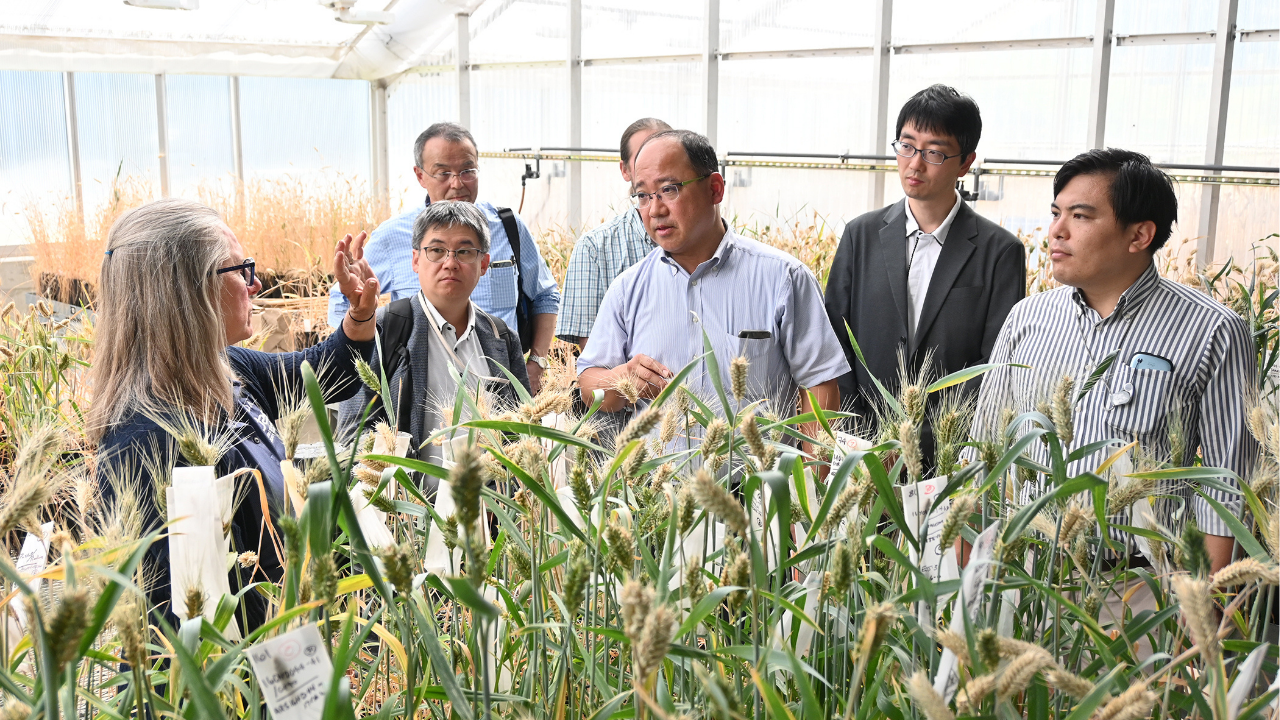
Making a sale takes a click of a button, but maintaining a market as large and long-lasting as Japan requires decades of shared commitment between U.S. wheat farmers and Japanese customers. Two trade missions this summer exemplify the success of these continued efforts – one bringing Japanese millers to the United States and the other taking the newly installed leadership of U.S. Wheat Associates (USW) to Japan as their first official trade visit.
“Our relationship with Japan is more than commercial, it is a deep-seated partnership built on decades of trust,” said USW President and CEO Mike Spier. “Through these reciprocal trade missions, we actively demonstrate our commitment to being a reliable supplier of high-quality wheat and continuing to reaffirm the personal connections that are essential to doing business in this large and loyal market.”
From Kitchens on Wheels to Trade Titan
The relationship between U.S. wheat farmers and Japanese customers predates USW’s start as an organization, dating back to a trade delegation organized by the Oregon Wheat Growers League (OWGL) in 1949 to explore opportunities to expand U.S. wheat sales to Japan. In 1956, the OWGL opened an office in Tokyo to share information about wheat foods, which led to additional farmer organizations joining the effort and the establishment of the Western Wheat Associates. In 1980, Western Wheat Associates merged with Great Plains Wheat to form U.S. Wheat Associates.
Market activities then focused on promoting the nutritional value of wheat foods, such as the “Kitchens on Wheels” initiative, which traveled through rural Japan to promote wheat foods to Japanese customers, and the introduction of bread to Japanese school lunch programs.
Since then, Japan has cumulatively purchased more U.S. wheat than any other country. Today, the work has shifted from the introduction of wheat foods to meeting the needs of highly advanced Japanese milling and baking industries, including high standards of quality, cleanliness and uniformity.
In the 2024/2025 marketing year, Japan imported 2.13 million metric tons (MMT) (nearly 78.3 million bushels) of U.S. wheat, including U.S. hard red winter (HRW), soft white (SW), hard red spring (HRS) and Desert Durum®. These sales are slightly higher than the five-year average and represent an almost 12 percent increase from the prior year. As of August 7, 2025, Japan has imported nearly 332,000 MT (about 12.2 million bushels) of U.S. HRW, SW and HRS wheat.
USW Leadership Renews Connections with Japanese Customers
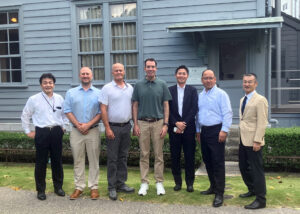
Given the continued importance of this market, it’s no surprise that USW leadership took their first official overseas mission to Japan. The delegation comprised of Spier, Jim Pellman, USW chairman and wheat farmer from North Dakota, and Brian Liedl, USW vice president of overseas operations – all of whom assumed their leadership roles this July.
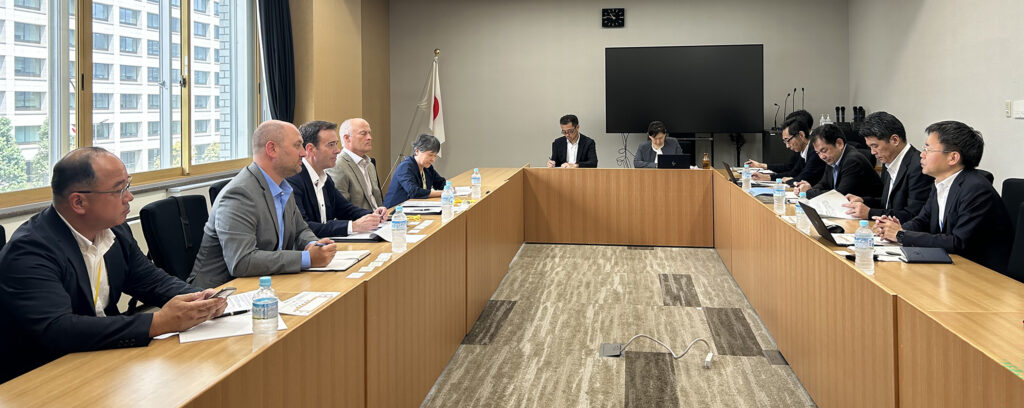
In Japan, the team met with the top four flour milling companies. Together, these companies account for more than 80% of the country’s flour sales. They also visited the Japan’s largest baking company and other end-users.
The USW delegation also visited the Seifun Museum, the original home of Nisshin Milling. This visit provided a powerful historical context, highlighting the beginnings of modern milling in Japan and how the company’s shift to high-quality U.S. wheat was instrumental in the success of this transformation. In meetings with Japan’s Ministry of Agriculture, Forestry and Fisheries (MAFF), the USW leadership expressed gratitude for nearly 70 years of successful cooperation and took the opportunity to catch up on the latest changes on both sides of the Pacific.
“As expressed by one customer, Japanese business culture is built on the principle of harmony,” Liedl said. “To succeed in the Japanese market requires strong relationships, not just contracts. USW fits nicely into this model because we are the U.S. wheat farmer’s representation in the Japanese market. Building these relationships matters deeply when doing business with Japan.”
Pellman appreciated the opportunity to talk with customers not just in meeting rooms, but also in more casual settings, talking about more than just business, but also family and farming. He added that he valued the ability to have honest conversations with Japanese buyers about the challenges of production agriculture. He talked with them, as he does with his children, about how wheat farmers need prices that sustain their business operations, just as Japanese end-users need to watch their own margins carefully.
“We export 50% of our wheat around the world, and we feed our own families with the other 50% with the same wheat they are using in their products,” Pellman said. “We all want good quality wheat and a reliable supply – and that’s what we are doing.”
Firsthand Farm Views Create Consistent Demand
Traveling to Japan is only one half of the reciprocal efforts that sustain the U.S.-Japanese trade relationship. Throughout the year, teams of Japanese customers come to the United States for a firsthand look at the current U.S. wheat crop and to explore the U.S. grain breeding, production, handling, inspection and export systems. Just weeks before the USW leadership team took off for Tokyo, a team of mid-level managers from the Japan Flour Millers Association (JFMA) traveled to Montana, Washington and Oregon from July 6 to 13, 2025.
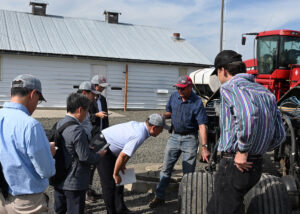
JFMA is the largest flour millers association in Japan, comprised of 21 companies, including the four that the USW leadership team met with on their mission. Each year, JFMA sends at least two teams to the United States – one executive team and a mid-level management team comprised of managers of quality assurance, production or procurement.
Supported by the Montana Wheat & Barley Committee, the Washington Grain Commission, and the Oregon Wheat Commission, the team’s itinerary was packed with visits to wheat farms, quality labs and other grain chain facilities. The team explored everything from new wheat breeding techniques to on-farm practices and the logistics of grain transportation, including shuttle trains and barges. The team also received essential updates on issues like the Snake River dam and took a deep dive into the safety measures, like lab testing and hold inspections, that ensure U.S. wheat meets Japan’s strict standards.
“This program enables team members to deepen their understanding of the current U.S. supply situation and motivates these managers to buy more U.S. wheat,” said Rick Nakano, USW country director in Japan, who led the team. “By seeing the U.S. wheat supply system from seed to shipment, the team members can confidently report back to their companies about the quality and reliability of the U.S. wheat crop, reinforcing the trust that is so crucial to the success of this trade relationship.
Trust Takes Time
More than business trips, these reciprocal trade missions exemplify how to build and maintain a lasting trade relationship. By traveling to each other’s home countries, U.S. farmers and Japanese millers alike keep the lines of communication open and continually reinforce trust in each other. The result is a partnership that truly stands the test of time.