
In Lagos, a Nigerian flour miller proudly printed off shipment confirmations for U.S. wheat vessels bought this year and shared them with a visiting group of U.S. wheat farmer leaders.
“We could literally see the results of years of investment on a piece of paper confirming delivery of U.S. wheat,” said Steelee Fischbacher, executive director of the Texas Wheat Producers Board and Association.
That moment captures what U.S. Wheat Associates (USW) works toward every day, and the numbers back it up. Nigeria is the 10th-largest wheat importer worldwide and the largest and most consistent buyer of U.S. wheat in Sub-Saharan Africa, ranking in the top five importers in recent years, thanks to years of U.S. Wheat’s market development work.
From October 17 to 28, three state wheat leaders traveled to South Africa, Tanzania and Nigeria to see what is driving continued growth in demand for wheat in Sub-Saharan Africa and what it will take for American farmers to capture those bushels.
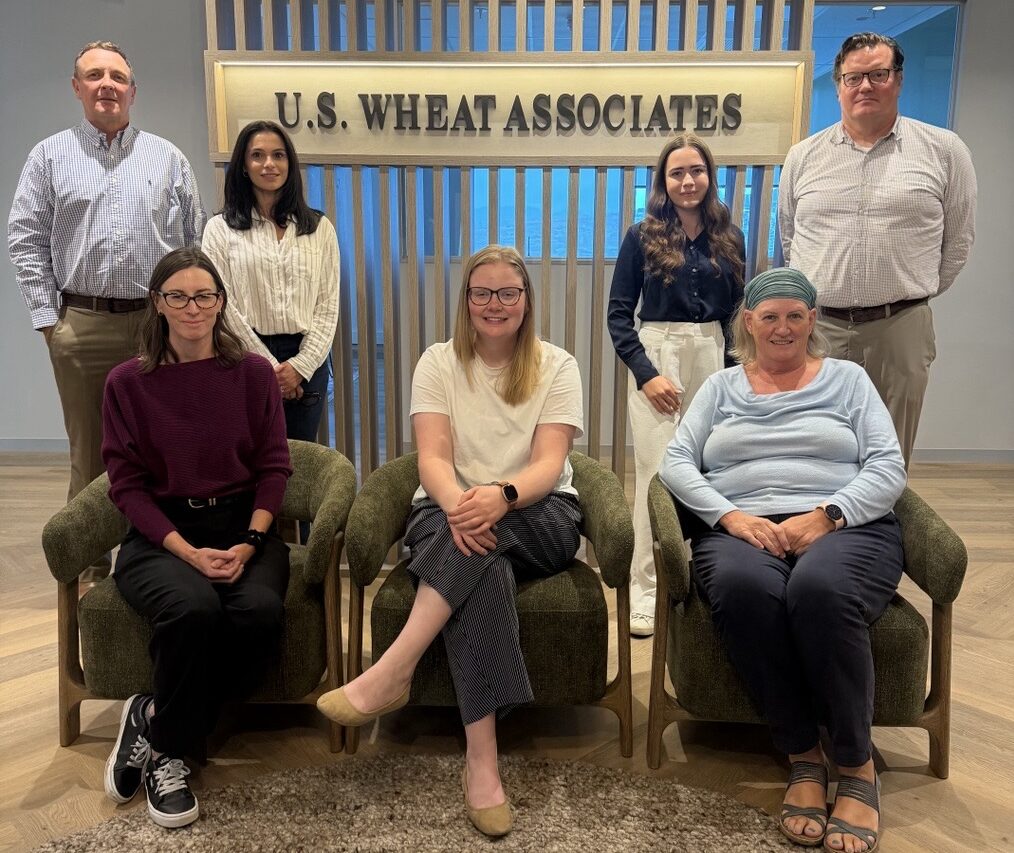
The 2026 Sub-Saharan Africa Board Team included Fischbacher; Brian Brooks, a fourth-generation farmer from Walsh, Colorado, and vice president of the Colorado Wheat Administrative Committee; and Sydney Balstad, who farms with her family near Fosston, Minnesota, and serves as treasurer of the Minnesota Wheat Research & Promotion Council. USW Assistant Director Kate Stephens of the USW West Coast Office led the team, joined by USW Regional Director Chad Weigand and Regional Marketing Manager Domenique Opperman of the USW Cape Town Office.
Board teams give farmer leaders a direct look at how their state wheat checkoff investments help build demand overseas. At nearly every stop, the team heard the same message: price opens the door, but quality, consistency and trust keep customers buying U.S. wheat.
Cape Town: The Regional Picture
The trip began at the USW Cape Town Office, where the team got a regional market briefing. U.S. Wheat works in 42 countries across Sub-Saharan Africa, where growing cities and populations are driving demand for bread, pasta and noodles. The region imports about 82% of its wheat and is one of the most price-sensitive in the world. U.S. wheat competes there against supplies from the Black Sea, Canada, Australia, the European Union and the Baltics.
For Fischbacher, the complexity of that competition was the biggest surprise.
“If the U.S. farmer doesn’t have a trusted representative in the room explaining the value of U.S. wheat across all segments of these milling companies, they could easily turn to cheaper sources without realizing the value of our crop,” she said.
Balstad was surprised by something different: how far USW’s education work reaches.
“I wasn’t aware of how many educational programs U.S. Wheat leads around the world, and not just in the United States,” she said.
South Africa: The Right Wheat for the Right Product
South Africa grows about half of the wheat it needs and imports the rest. At one of the country’s largest mills, the team watched wheat become everything from bakery flour to cake flour.
“It is comforting to see that making flour across the ocean is actually pretty similar to making flour here at home,” Fischbacher said.
Brooks was struck by the equipment.
“The mills are top of the line,” he said. “That’s really cool to see. I was not expecting that.”
In Pretoria, the team met with milling and food company leaders and with U.S. Ambassador to South Africa Leo Brent Bozell III to talk about the agricultural trade relationship between the two countries.
Millers described how they match each class of wheat to a specific product. They also explained how U.S. soft red winter and hard red winter are earning a place as they move into higher-value products, even as cost remains a concern.
What stayed with Balstad was the people.
“It was how eager the millers are to learn,” she said. “They seem to really take pride in their craft and want to improve their product.”
From South Africa, the team continued on to Tanzania, a very different type of wheat market.
Tanzania: Building Ahead of Demand
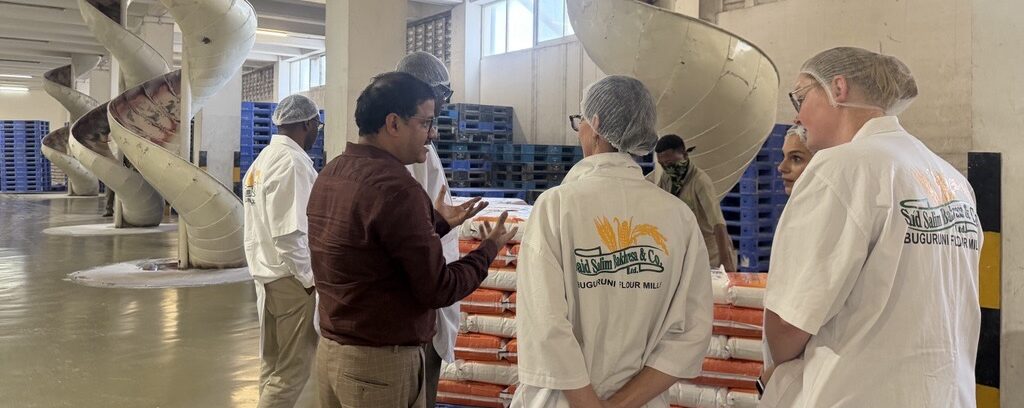
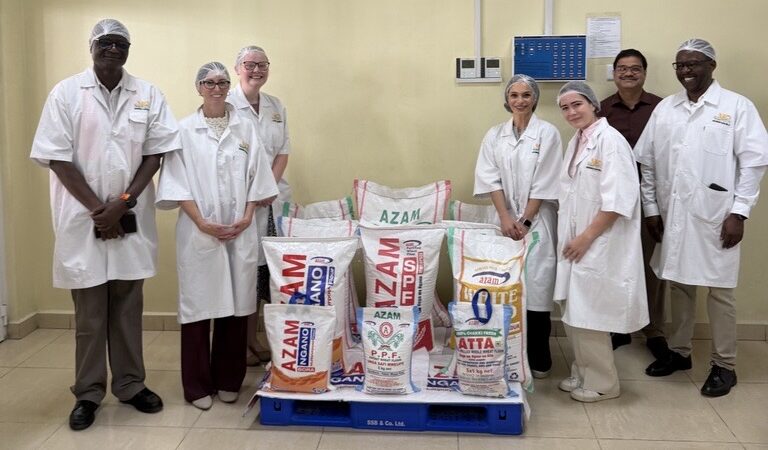
In Dar es Salaam, the team toured a large flour mill with agricultural specialists from the U.S. Embassy. Tanzania buys more than 90% of its wheat from abroad. With a population of more than 71 million, rising incomes and a growing tourism industry, demand is only increasing. USDA projected imports of about 1.55 MMT (57 million bushels) in 2026/2027.
What set this market apart was how far ahead millers are looking. They are building capacity before the demand arrives and eyeing exports to nearby markets. Most of Tanzania’s wheat comes from the Black Sea, Canada and Australia, with some U.S. hard red winter (HRW) wheat arriving through U.S. food assistance programs. That leaves plenty of room for U.S. wheat sales to grow.
Brooks saw that potential across the region.
“It is definitely a growing market. You can see the demand,” he said. “As the economic threshold improves, there is going to be more and more demand.”
That forward-looking mindset is what Balstad will remember most.
“Touring the Azam Mill in Dar es Salaam was pretty interesting,” she said. “Just how they were really thinking about their customer.”
From there, the team traveled to Nigeria, where U.S. wheat already has a much stronger presence.
Nigeria: The Region’s Biggest Customer
Nigeria was the final stop, and the one that showed what years of relationship building can do. With about 237 million people, it is the largest U.S. wheat market in Sub-Saharan Africa. Nigeria bought 1.57 million MT (57.5 million bushels) of U.S. wheat in 2025/2026, nearly double the year before, making it the fifth-largest buyer of U.S. wheat in the world.
In Lagos, the team met with flour millers and noodle makers. Like South Africa, Nigeria is price-sensitive, and millers can buy cheaper wheat from the Black Sea and the Baltics. Even so, many still want U.S. HRW wheat for its high protein and strong water absorption, which helps bakers make the high-volume loaves of bread desired by Nigerian consumers.
The team wrapped up with a major miller and longtime champion of U.S. wheat. Its executive has joined 10 USW trade teams to the United States and said meeting multigenerational farm families there gave him a deep appreciation for the farmers behind every kernel.
It was this buyer that proudly printed off the shipment confirmation of his 2026 wheat purchases from the United States. For Fischbacher, seeing these documents was the moment that will stick with her. It was proof, on paper, that trust and relationships turn into sales.
What They Took Home
From Cape Town to Lagos, the conversations came back to price, quality and reliability, and customers often talked about the value of having USW representatives in the room to explain what U.S. wheat delivers.
Brooks heard that at every mill.
“Every miller we talked to loves U.S. wheat. It’s just an affordability issue,” he said. “U.S. Wheat has done an extremely good job. They know what product we have to offer, and there’s no question about our quality. It all comes back to price.”
Fischbacher said the value of that representation is the message she wants to carry home to Texas.
“I hope that our Texas farmers can see the very real relationship between their investment in overseas staff and programs and eventual export sales,” she said.
Balstad pointed to the people on the other side of the table.
“Building a relationship with the end user is a crucial part of marketing wheat,” she said. “There are a lot of new millers in the Sub-Saharan African market, many of whom have recently moved up within their companies. It’s important to maintain those relationships by offering educational opportunities.”