
U.S. Wheat Associates (USW) contributes success stories to the USDA Foreign Agricultural Service (FAS) to demonstrate the return on investment of market development programs, supporting continued federal funding for programs that identify, build and maintain international demand for all six classes of U.S. wheat.
In Mexico, pan de muerto is a seasonally baked sweet bread sold leading up to Día de los Muertos celebrations in November. Thanks to baking seminars conducted by U.S. Wheat Associates (USW), supported by USDA market development funding, two leading baking companies in Mexico improved the process used to make their pan de muerto and other bread products in fall 2025, realizing improved product quality and added sales, while increasing their use of U.S. hard red winter (HRW) and U.S. hard red spring (HRS) wheat.
Using Market Access Program (MAP) funding, USW conducted two baking seminars in June 2025 in Mexico City to provide training for a medium-sized bakery chain with 214 stores, and a large supermarket chain operating 341 stores across 25 Mexican states. Led by Didier Rosada, a USW baking consultant, the objective of the seminars was to educate Mexican bakers on methods to improve their product quality and increase consumption while optimizing the use of U.S. wheat flour.
The seminars included several different products made using the sponge and dough method, which allows for simple and rich formulations that can produce versatile products. Rosada focused on teaching the bakers the benefits of the sponge and dough process, how to convert production processes to include this method, and how to work with long fermentation times to improve product consistency. The baking seminars were conducted using a flour blend of 80% U.S. HRW and 20% U.S. HRS wheat.
The baking seminar for the medium-sized bakery provided intensive training for the technicians responsible for quality control, who will help train the rest of the company’s bakers. The baking seminar showed that using the sponge and dough method resulted in finished products with better flavor, texture, volume, and shelf life – all important attributes for Mexican bread quality.
The baking seminar for the supermarket chain aligned with the company’s focus on enhancing the quality of their baking facilities and products, including the development of a sourdough-based product line and the implementation of a new training program.
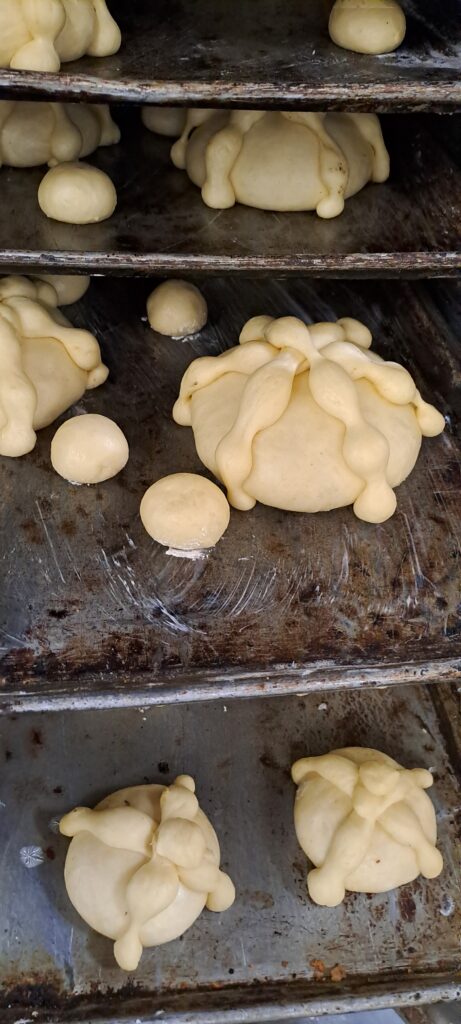
Shaped pan de muerto, a traditional seasonal sweet bread baked in Mexico for Día de los Muertos celebrations, ready for baking during USW seminars.
Participants were given evaluations before and after the seminars to measure the impact. The medium-sized bakery participants saw an average 30% improvement in scores, and the supermarket chain participants averaged a 7% improvement.
In October 2025, the supermarket chain launched a new single-serve product using the sponge and dough method – pan de muerto. The new product accounted for 0.6% of the company’s total sales in October, a strong showing for a new formulation that was competing against other bread products.
USW also followed up with medium-sized bakery six months after the seminar, and the company reported implementing the sponge and dough method for bolillo, telera, baguette, and pan de muerto production. The company also reported a 16% increase in pan de muerto sales after implementing the sponge and dough method, which contributed directly to improved product quality.
Overall, the increased sales of the breads produced with the sponge and dough method increased the medium-sized bakery’s flour usage by 740 metric tons (MT), equating to approximately 1,013 MT of U.S. wheat.
These seminars demonstrated that the Mexican bread market is evolving positively as customers are looking for better quality products. As a result, promoting the use of the sponge and dough method helps Mexican bakeries and supermarket chains produce higher quality products at a lower cost, while working best with flour milled with U.S. wheat. These companies’ widespread consumer following helps drive greater bread consumption and flour usage across Mexico.
This trend is no small feat in Mexico, which already ranks as the largest overall market for U.S. wheat. In 2025/2026, Mexico was the top buyer of U.S. HRW wheat, purchasing nearly 2.12 MMT (up 27% year-over-year), and the second largest buyer of U.S. HRS wheat, purchasing more than 839,000 MT.
Logistical efficiencies and advantageous geography give U.S. wheat farmers an advantage in the Mexican market compared to other world wheat exporters. Still, Mexico remains a dynamic and growing market where USW’s work helps to maintain satisfaction with U.S. wheat received and demonstrate the advantages of U.S. wheat in companies with growing market presences.
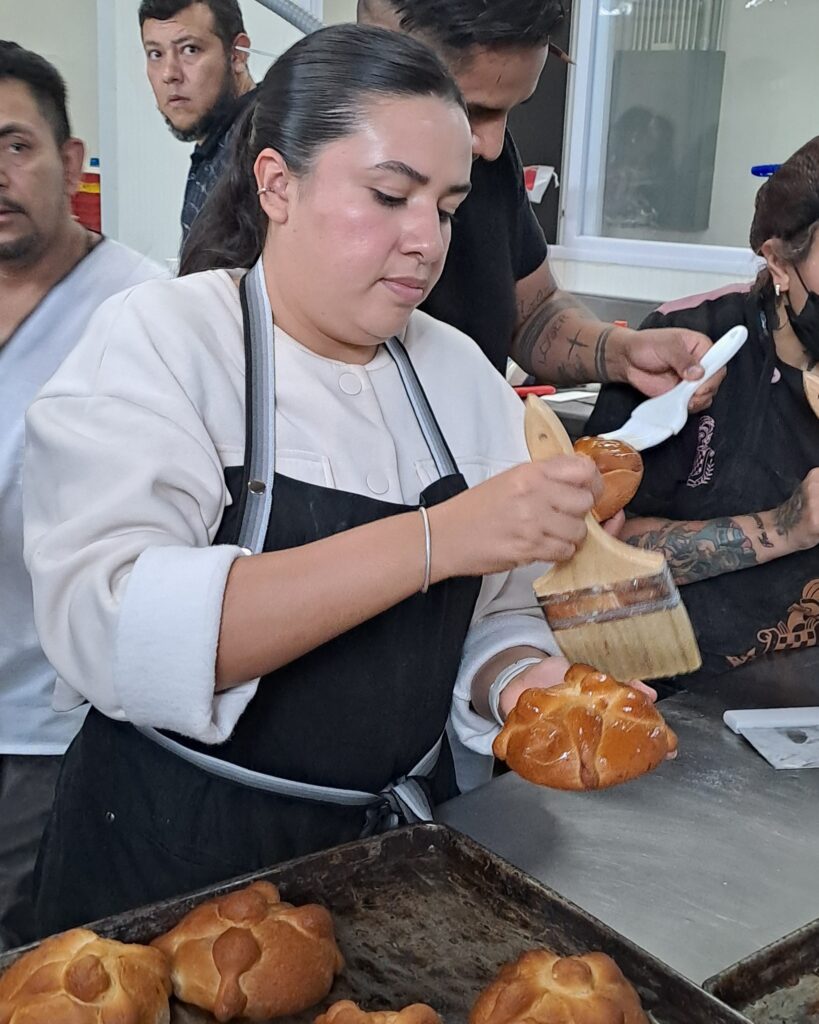
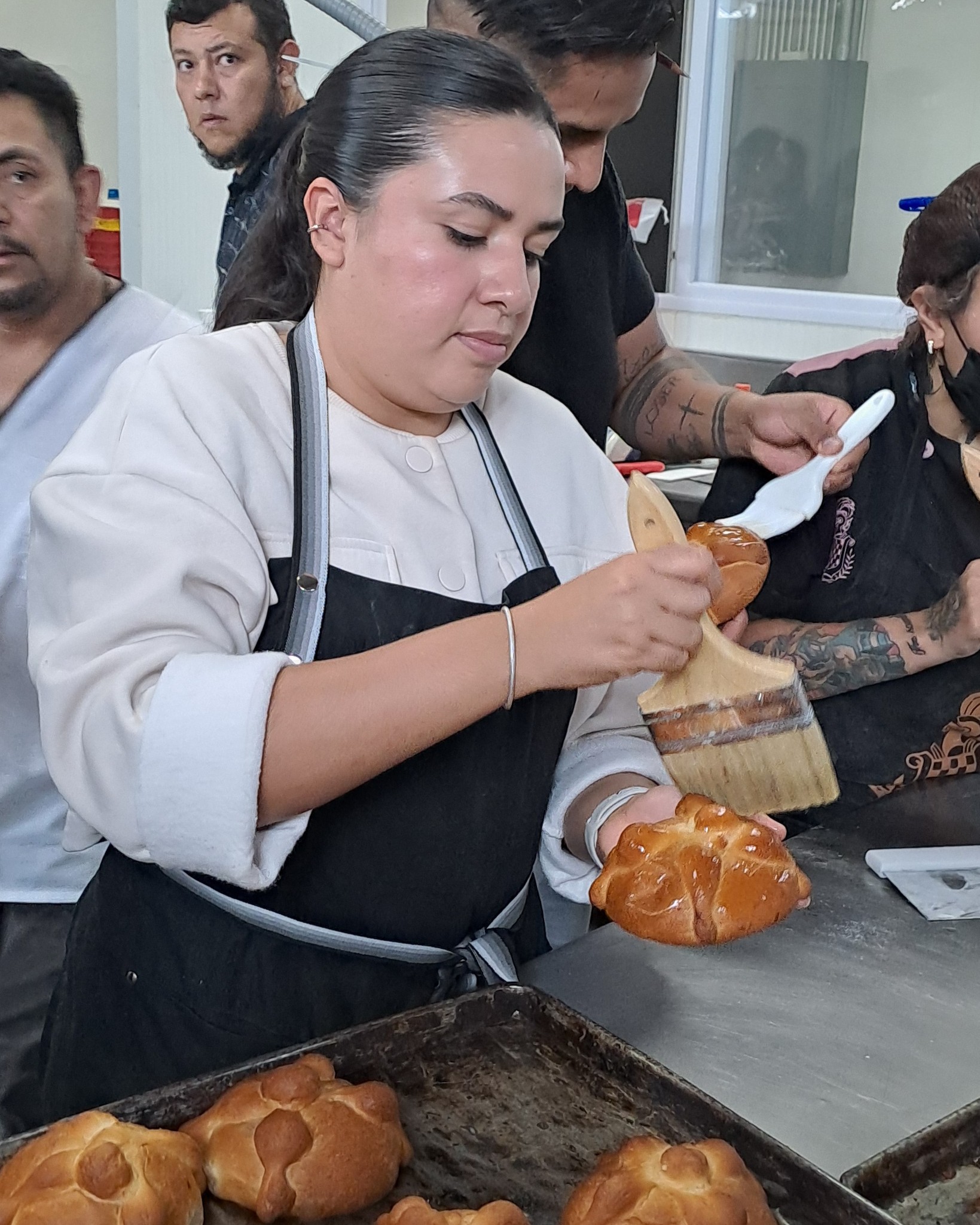
A Mexican baker applies a wash to pan de muerto, one of the successful products seminar participants learned to make using the sponge and dough method using U.S. HRW and HRS wheat flour.