
By Catherine Miller, USW Director of Programs
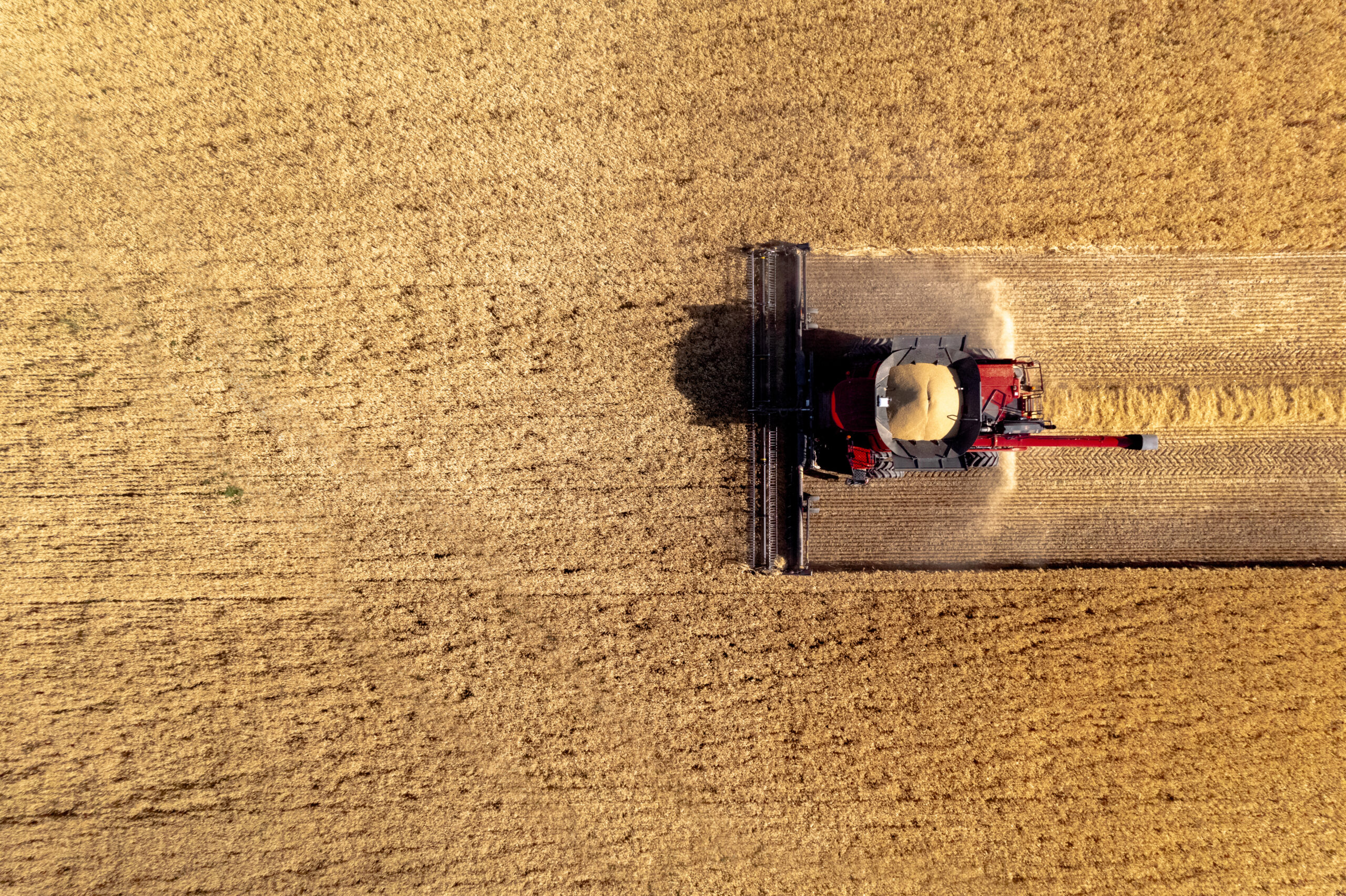
In between rain delays and dust storms, the 2026 U.S. wheat harvest is gaining momentum. Follow along as U.S. Wheat Associates (USW) tracks conditions and progress across wheat classes and growing regions in the USW Harvest Report.
Issued each Wednesday throughout the harvest season (typically May through October), the USW Harvest Report delivers timely updates directly from producers, state wheat commissions and industry stakeholders. These first-hand perspectives provide a clear, up-to-date view of crop conditions as they evolve.
Each report covers all major U.S. wheat classes, including hard red winter (HRW), hard red spring (HRS), soft white (SW), durum and soft red winter (SRW). By bringing together observations from across growing regions, the report offers a comprehensive snapshot of quality, yield potential and harvest progress.
“The weekly USW Harvest Report is part of our commitment to providing transparent and timely market insights,” said Erica Oakley, USW vice president of programs. “Our customers around the world truly value this data, which reinforces the value and reliability of U.S. wheat as they make informed buying decisions.”
USW Harvest Report Details Crop Progression
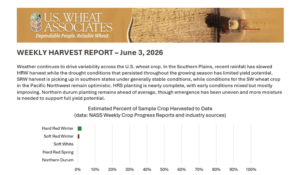
The latest USW Harvest Report was released on June 3, 2026, noting recent reports from across the growing regions highlight a highly variable start to the season, with weather driving both harvest progress and expectations.
In the Southern Plains, recent rainfall has slowed HRW harvest, while the drought conditions that persisted throughout the growing season have limited yield potential. Further north and west, drought conditions continue to weigh heavily on the winter wheat crop. Several states are reporting poor conditions and above-average abandonment, with limited potential for meaningful recovery despite scattered rainfall.
In contrast, SRW harvest in the southeast United States is picking up under generally stable conditions. Harvest will not kick off in the northern states, including Illinois and Ohio, for a while longer.
In the northern plains, HRS planting is nearly complete. The crop is off to a more favorable start, supported by generally improved weather patterns and timely moisture, though some more moisture will be needed throughout the shorter summer growing season. Durum conditions reflect the need for rain as emergence has been uneven due to recent dry, hot and windy conditions.
In the Pacific Northwest, the SW crop is developing under mostly favorable conditions, with milder temperatures and recent rainfall supporting progress, while producers continue to monitor potential disease and pest issues.
Stay informed, connected and ahead of the combines by reading the harvest report or subscribing to receive the report via email here.