
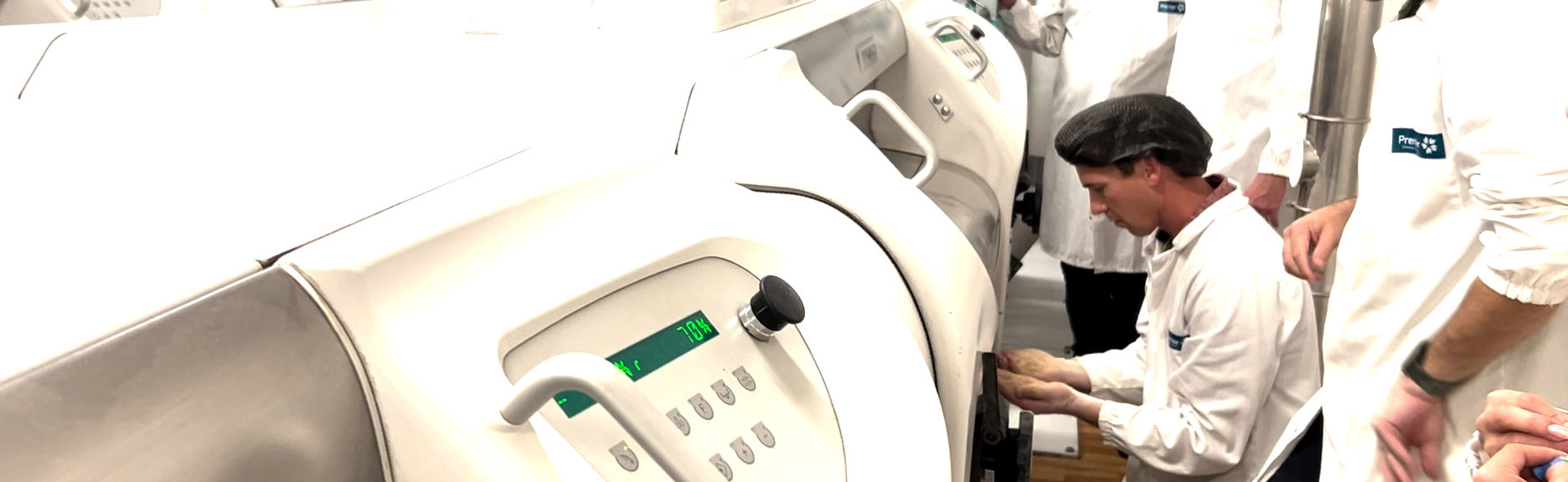
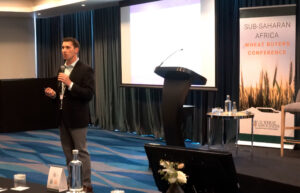
Shawn Thiele was a college freshman being nudged by a buddy when he casually stepped into a flour mill for the first time – the Shellenberger Hall flour mill on the campus of Kansas State University (K-State). By Christmas Break of his sophomore year, Thiele was working shifts inside a mill in Australia, part of an impromptu internship that gave the farm kid from Northwest Kansas a taste of milling on an international level.
Thiele, who today is one of U.S. Wheat Associates’ (USW) most valuable technical partners, admits he couldn’t have known where that nudge – or the subsequent experiences – would lead. Through instruction, mill consultations and international workshops, Thiele helps flour millers better understand U.S. wheat while improving efficiency, flour quality and profitability.
As associate director and flour milling and grain processing specialist for the IGP Institute at K-State, Thiele also teaches future milling professionals, both in the classroom and at K-State’s Hal Ross Flour Mill.
“I went to K-State because of its strong foundation in agriculture, but I wasn’t really sure what I wanted to do or what I wanted to major in,” Thiele said. “I had a friend who was a year ahead of me in milling science who said, ‘Why don’t you just give milling a try?’ I did, and I stuck with it. It’s been a great choice, because I get to teach but I also get to learn, sometimes on the other side of the globe.”
Solving Problems in Flour Mills
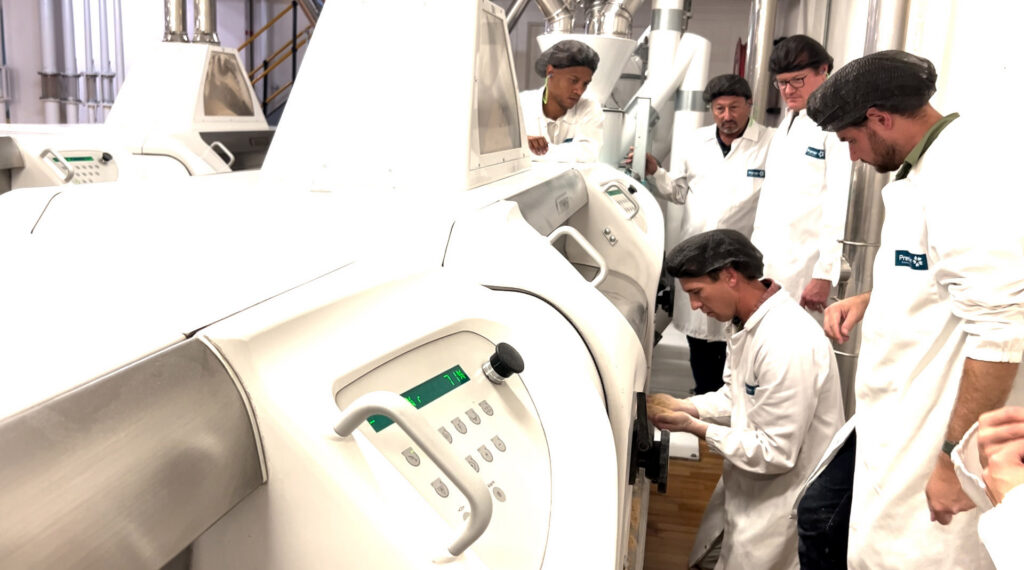
Every flour mill presents a different puzzle. For Thiele, those puzzles arrive as questions from millers looking to improve flour extraction, increase consistency and get more value from the wheat they purchase.
Whether he’s standing beside a roller stand in Asia, consulting inside a commercial mill in Africa or South America or leading a workshop at Kansas State University, the fundamentals remain remarkably similar.
“About half of the questions I get are common no matter what country I’m working in,” Thiele said. “Customers want to improve efficiency, get the best performance from the wheat they purchase and better understand conditioning, tempering or differences between soft and hard wheat milling. The other half are unique to that mill or market. Some are focused on flour quality. Others are trying to improve efficiency in very price-sensitive markets. My job with U.S. Wheat is to help them achieve their goals.”
That practical approach makes Thiele an important part of USW’s value proposition. While USW promotes the quality of U.S. wheat around the world, technical experts like Thiele help customers consistently achieve the performance they expect. The result is stronger confidence in U.S. wheat and long-term business relationships that benefit American wheat growers.
“Technical service is one of the greatest advantages U.S. Wheat offers our customers,” said USW President and CEO Mike Spier. “Shawn combines world-class milling expertise with the ability to solve real production challenges. His work builds confidence in U.S. wheat, and that confidence translates into long-term relationships that benefit wheat farmers across the United States.”
That expertise is demonstrated in mills around the world. Earlier this year, Thiele traveled to Thailand, where he conducted mill consultations and presented a national milling seminar on the functional characteristics of U.S. wheat classes and strategies for maximizing milling performance. In Indonesia, after customers increased purchases of U.S. wheat, he worked alongside production teams to optimize tempering practices, wheat blending, flour extraction and overall milling efficiency. Rather than simply promoting a product, USW demonstrated its commitment to helping customers succeed.
Built on Experience
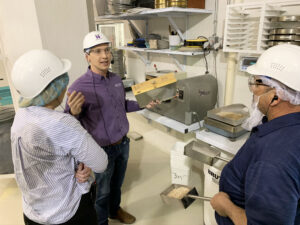
Thiele’s credibility begins with experience.
Before returning to K-State, he spent a decade in commercial flour milling, gaining expertise in production management, quality assurance and mill optimization at Quaker Oats in Cedar Rapids, Iowa. Earlier positions in durum milling, along with internships in Australia and at ADM in Kansas City, rounded out his industry background.
Today, he teaches IGP’s core milling and grain processing courses while developing specialized workshops, technical seminars and distance education programs for millers worldwide. He also conducts research that helps bring new practical milling opportunities into USW’s technical education programs.
Each fall and winter, Thiele joins USW’s Crop Quality Seminar series, where flour millers, grain buyers and food manufacturers review the quality characteristics of the newest U.S. wheat crop before making purchasing decisions. By combining laboratory results with practical milling guidance, the seminars help customers understand how U.S. wheat will perform in their operations while reinforcing USW’s reputation as a trusted technical partner. This fall, Thiele will participate in Crop Quality Seminars across North Asia.
Back Home in Kansas
Another nudge eventually brought Thiele back to Manhattan.
After several years in commercial milling, he and his wife wanted to return to Kansas to be closer to family. At about the same time, a former classmate and colleague reached out about an opening at K-State.
“A former college classmate I’d also worked with at Quaker had moved back to K-State and called me about an instructor position,” Thiele said. “I never really saw myself going back into education, but we’d just started a family and it made sense. I was able to move into academia while staying focused on milling.”
Today, he and his wife are raising three daughters, ages 15, 13 and 12. Frequent international travel requires planning, but being close to family helps.
“It’s a little easier these days because you can stay connected through FaceTime and other technology,” he said. “The biggest challenge is juggling schedules with sports and school activities. Fortunately, I can usually plan my travel with U.S. Wheat well in advance.”
His daughters have visited the Hal Ross Mill and have at least a basic understanding of what their dad does.
“They’ve each been inside the mill with me, so they have a rough idea,” Thiele said with a laugh. “I’m just not sure it’s really on their radar.”
Staying Connected
Beyond his work with IGP and U.S. Wheat, Thiele remains deeply involved in the milling industry. He serves on the technical committee of the International Association of Operative Millers (IAOM), stays connected with milling companies around the world and regularly interacts with former K-State students now working throughout the industry.
“We do the short courses at IGP, and that’s another way of continuing to learn about developments in the milling world,” he said. “The ability to stay connected with the industry, continue learning and see new things all the time is really rewarding.”
Looking back, Thiele’s career has been shaped by a series of unexpected opportunities: a friend who suggested a major, an internship halfway around the world and another friend who opened the door back to KSU – with a nudge that was, Thiele admits, probably unnecessary.