
South Korea remains one of the most valued U.S. wheat customers and a close economic and strategic partner. Through the first part of the 2026/2027 marketing year, South Korea ranks as the fourth-largest buyer of U.S. wheat, importing 141,000 metric tons (MT) (5.18 million bushels) of U.S. hard red winter (HRW) wheat, 228,000 MT (8.38 million bushels) of U.S. hard red spring (HRS) wheat and 337,000 MT (nearly 12.4 million bushels) of U.S. soft white (SW) wheat. For a nation of 51.6 million people, the country’s continued commitment to U.S. wheat underscores the importance of a relationship built on quality, consistency and trust.
To strengthen that relationship, U.S. Wheat Associates (USW) recently welcomed the Korea Crop Survey Team to the Pacific Northwest. The delegation was composed of professionals representing key sectors of Korea’s wheat value chain, including flour milling, bakery and confectionary, instant noodle and grain merchandising as well as ocean freight.
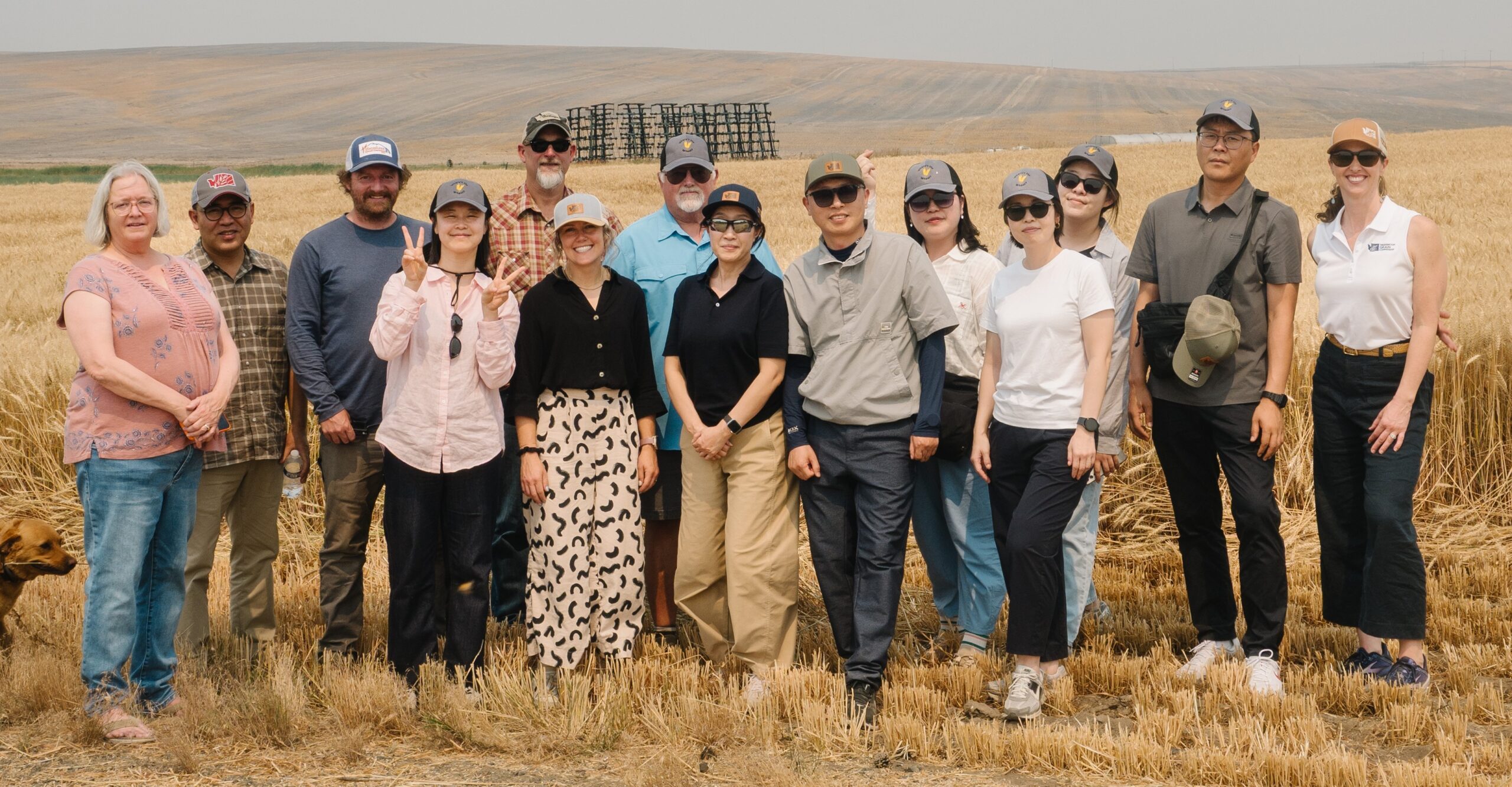
The annual crop survey program provides participants with a front cab-seat look at the U.S. wheat supply chain, from export facilities, quality testing and pesticide residue laboratories. Ultimately, the program is designed to help Korean customers understand why U.S. wheat remains one of the world’s most reliable and trusted sources of high-quality wheat while further strengthening the long-standing partnership between the Korean and U.S. wheat industries.
This year’s tour began in Portland, Oregon, effectively at the end of the U.S. wheat supply chain where wheat is loaded aboard vessels destined for overseas markets, including South Korea. The team’s first stop was the Wheat Marketing Center, where participants learned about the extensive quality testing conducted on new-crop SW wheat. The data gathered through these tests is paired with end-product evaluations and ultimately incorporated into the annual USW Crop Quality Report, a key resource distributed to customers around the world to help buyers make informed purchasing decisions.
The group also toured Export Grain Terminal (EGT), LLC, one of the Pacific Northwest’s most advanced export facilities build in 2012. Delegates learned how the high-speed grain terminal efficiently handles and loads wheat shipments destined for international customers.
The team also met with local grain merchandizers who provided an overview of current market conditions and harvest progress across the region. The Pacific Northwest wheat harvest is now underway, providing key information for customers preparing future purchases.
The Korean delegation also had the opportunity to meet with industry leaders and farmer representatives during a dinner hosted by the USW West Coast Office and the Oregon Wheat Commission. USW President and CEO Mike Spier welcomed the group and expressed appreciation for South Korea’s continued support of U.S. wheat producers.
“We value South Korea’s long-standing commitment to U.S. wheat and appreciate the confidence Korean customers have placed in our growers and supply chain over many years,” Spier said. “Your business is important to our farmers, our exporters and our rural communities.”
Amanda Hoey, CEO of the Oregon Wheat Commission, highlighted the strong connection between Oregon wheat producers and Korean consumers.
“The relationship between Pacific Northwest wheat growers and Korean food manufacturers goes well beyond individual sales,” Hoey said. “Korean consumers continue to choose products made with U.S. wheat because of its quality and our growers are proud to help meet those needs year after year.”
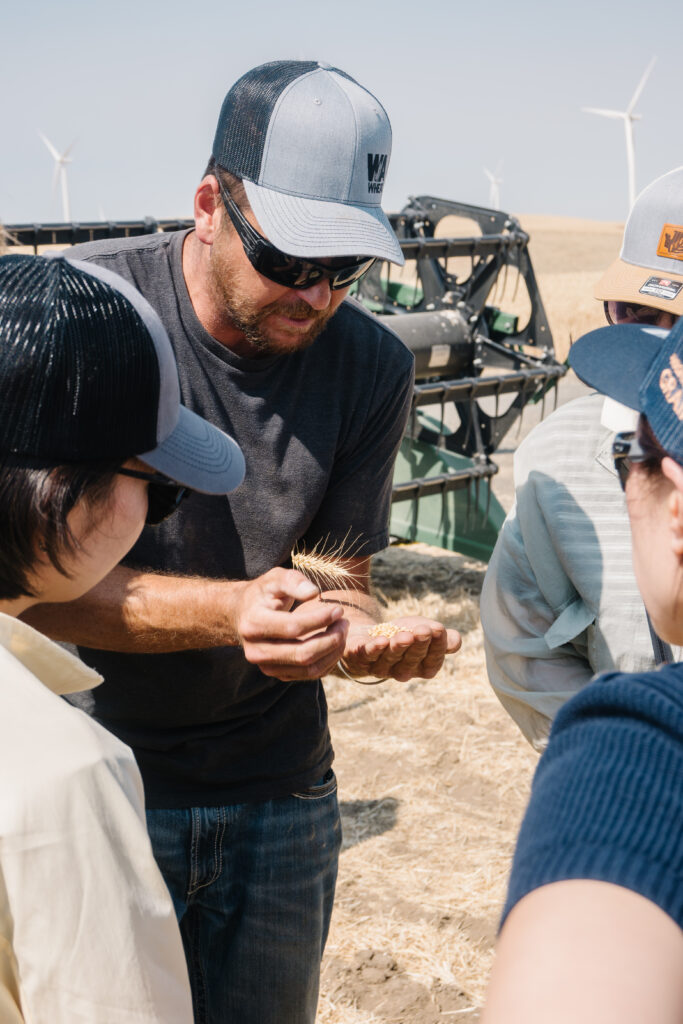
After completing the Portland portion of the program, the Korean Crop Survey Team traveled to Spokane, Washington, where they continued exploring the origins of the wheat they purchase. While in Washington, participants toured country elevator facilities to gain a better understanding of how wheat is collected, stored and transported from field to export terminal. The Korean delegation saw firsthand that the strength of U.S. wheat extends beyond favorable crop conditions. It is also rooted in the people, partnerships and commitment to quality that have made South Korea one of the most loyal and valued customers of U.S. wheat for decades.