
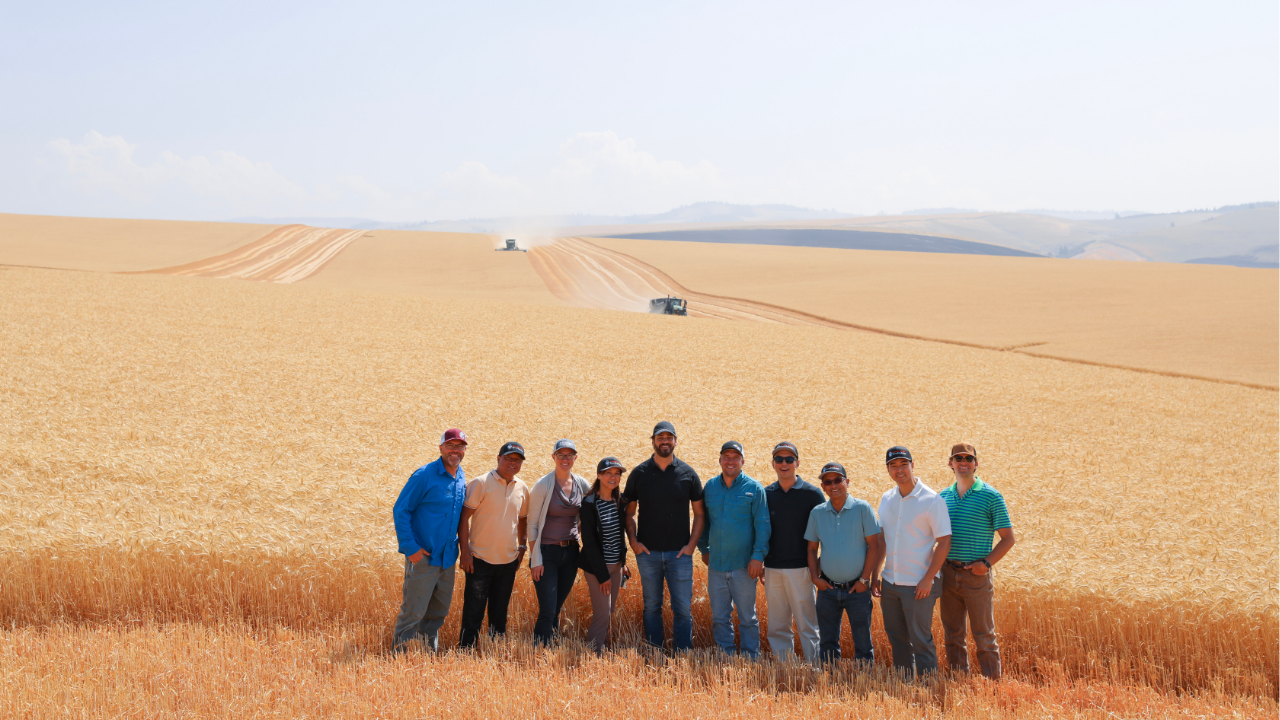
The Philippines is the world’s largest importer of both U.S. hard red spring (HRS) and U.S. soft white (SW) wheat – and that is no accident. For more than six decades, U.S. Wheat Associates (USW) and its legacy organizations have maintained an office in Manila and relationships with the country’s milling and baking industries.
Part of sustaining long-term success is USW’s work in providing information and training on wheat purchasing and grain quality as these industries undergo leadership transitions. And there is no better way to ensure that these new mill management and technical staff maintains a preference for U.S. wheat in an ever-evolving international trading environment than bringing them to the United States to walk through the entirety of the U.S. grain supply chain.
Taking A Firsthand Look at the U.S. Wheat Supply Chain
Exposing new leaders to that industry knowledge was the aim of a recent milling trade team from the Philippines that traveled to Oregon, Nebraska and North Dakota from July 30 to August 9. With support from the Oregon Wheat Commission, the Nebraska Wheat Board and the North Dakota Wheat Commission, the delegation explored university breeding programs, harvest fields, elevators, quality labs, U.S. flour mills, railways and more.
“These Philippine milling executives saw firsthand the efforts of our state wheat commissions and trade partners to ensure a steady supply of high-quality wheat,” said Joe Bippert, USW assistant regional director for South and Southeast Asia, who accompanied the team. “Our discussions also showcased the resources the United States offers to help Philippine mills improve profitability and competitiveness.”
Gaining a Deeper Understanding of the Farm-to-Flour Journey
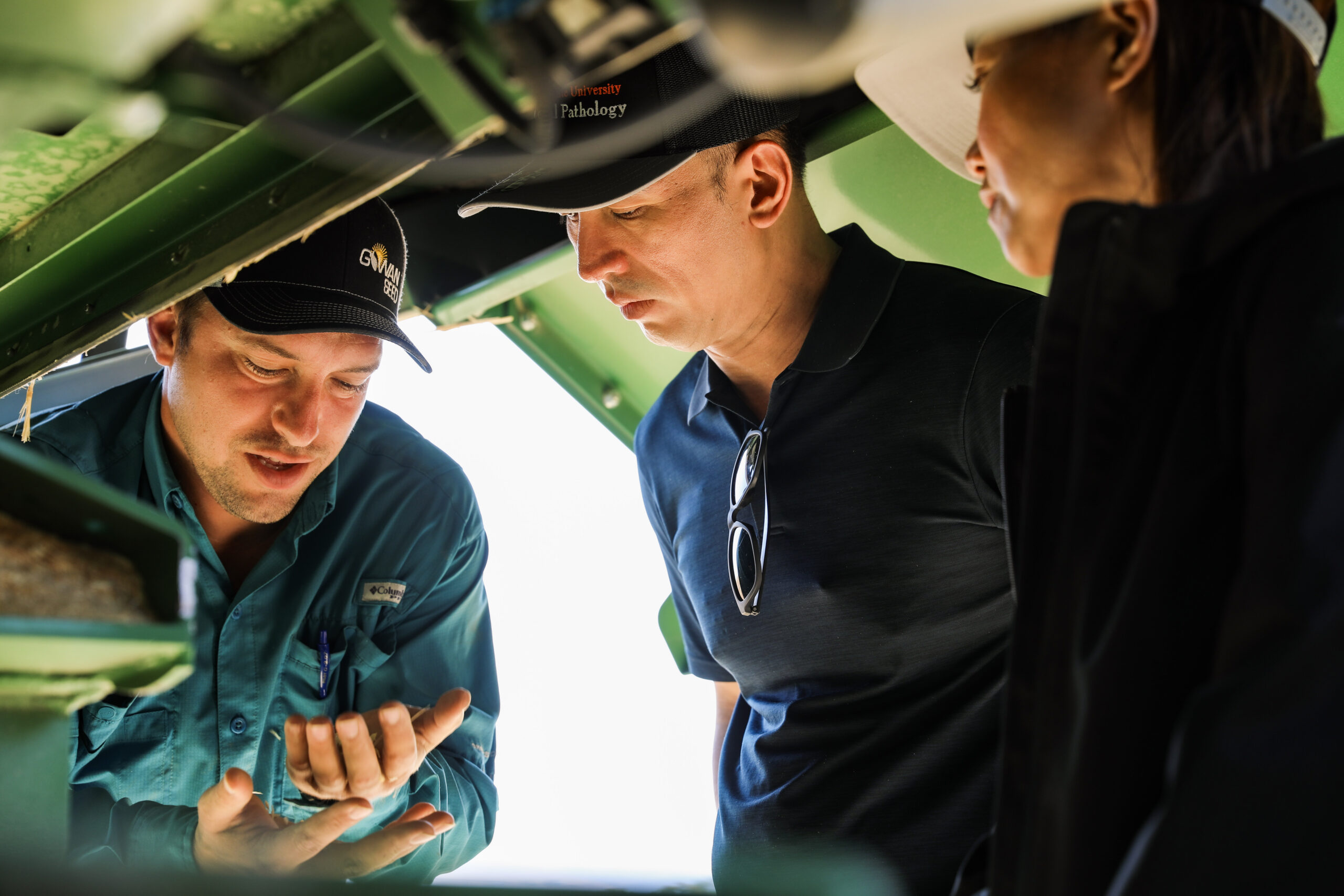
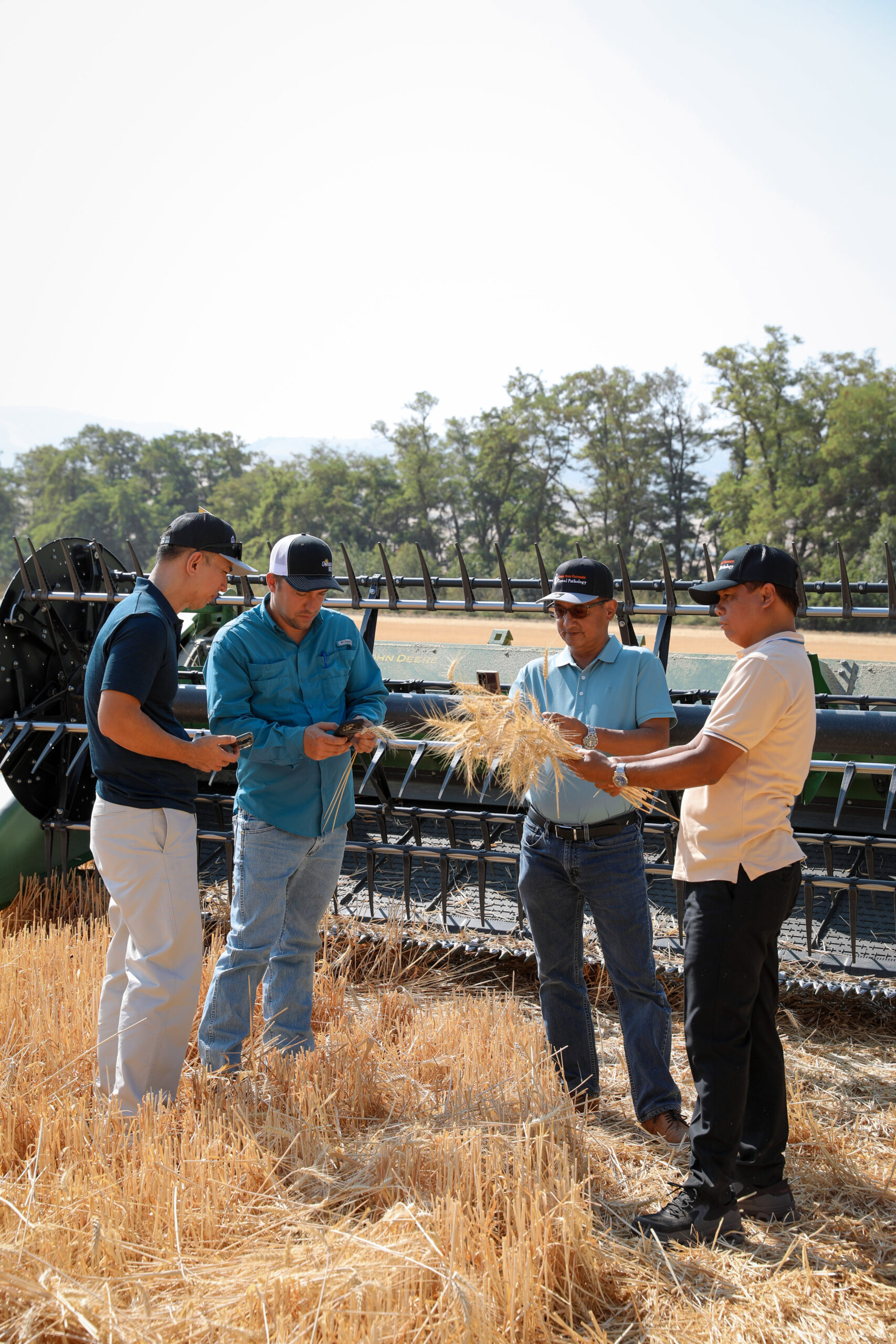
Riding in the combine during harvest was a highlight in Oregon. In North Dakota, the team spent three hours at another farm, examining every piece of equipment. One team member concluded, “This all just makes sense now.”
The team also engaged in a discussion on inland logistics at North Dakota State University, an important and complex piece of trading logistics that impacts pricing for these customers. And in Nebraska, customers asked how U.S. hard red winter (HRW) could be a suitable fit for noodle flour when competitively priced, with quick insights from both the wheat breeding and quality analysis experts.
Open discussions like these have contributed to the Philippines becoming one of the most important export markets for U.S. wheat. Furthermore, consumers maintain a strong preference for end products made with U.S. wheat.
Navigating Market Challenges and Recovery
Even with close relationships and favorable consumer preferences, there is still work to be done to drive sales. Most recently, three consecutive years of U.S. drought, coinciding with bumper crops from competing exporters, resulted in a steep decline in exports in the 2022/2023 marketing year to the lowest export levels since 2013/2014 – a 35% decline from peak sales in 2020/2021.
While not fully recovered to pre-drought levels, U.S. wheat exports are now rebounding, driven by an increase in available wheat supplies and competitive pricing. In the 2024/2025 marketing year, the Philippines was the second-largest overall market for U.S. wheat at nearly 2.55 MMT (nearly 93.7 million bushels). That total included 1.24 MMT (about 45.6 million bushels) of HRS and 1.23 MMT (nearly 45.2 million bushels) of SW, along with additional purchases of SRW and HRW wheat.
Teams like this one of milling executives are also a major contributor to market recovery. Six decades of market development work, alongside each era of mill leadership, have continued to reinforce a strong, enduring partnership that navigates the future of global trade side by side for mutual success.