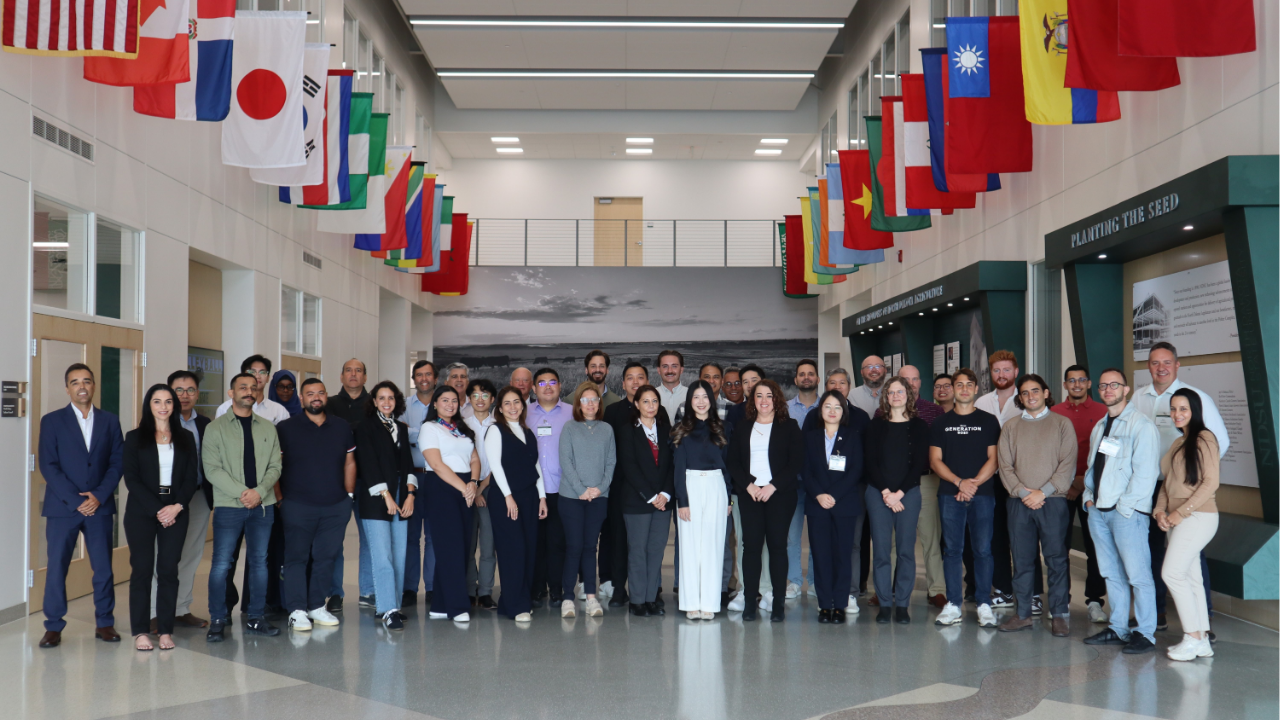
For more than four decades, multiple generations of world grain buyers have traveled to Fargo, North Dakota, to learn about the U.S. grain handling and marketing system. On the campus of North Dakota State University, the Grain Procurement Management for Importers short course at the Northern Crops Institute (NCI) is considered essential for building demand for U.S. wheat, as it helps global customers learn how to make informed purchasing decisions in an ever-changing and increasingly competitive world market.
“Producers can easily see the impact these courses have on wheat purchases by customers or potential customers,” said Erica Olson, director of marketing and research at the North Dakota Wheat Commission, one of four state wheat organizations that support the course. “Helping experts educate customers on the U.S. wheat system helps our customers build confidence in their purchasing decisions, helping to increase demand for our region’s wheat.”
The eight-day course took place this year from September 8 to 17, 2025. U.S. Wheat Associates (USW) sponsored nearly 40 participants, including customers and staff from 20 different world wheat markets. The course is designed to guide participants through the full complexities of international grain markets, ranging from risk management tools to freight options to purchase specifications.
“While risk management education is universal across other crops and origins to a large degree, the fact that this course looks at U.S. wheat futures, U.S. basis variables, U.S. rail dynamics and U.S.-specific quality parameters is unique,” said Jim Peterson, executive director of the North Dakota Wheat Commission. “This course helps drive additional demand for our wheat since these buyers know how to use risk management tools and know how our marketing system valuates quality.”
Building Knowledge and Connections
For USW overseas staff members, the information and practical knowledge gained by the customers they accompany to the course is equally as important as the connections they make with other global grain buyers and the access to subject matter experts both at the university and in the grain supply chain.
“We feel that knowledge is power, and so providing these customers with as much knowledge as we can puts us in a more competitive position,” said Joe Bippert, USW assistant regional director for South and Southeast Asia, who accompanied buyers from the Philippines, Thailand and Indonesia to the course. “They know there’s a team of resources out there to support them. That’s what we hope to continue as they navigate through some of the nuances and how it relates to their businesses.”
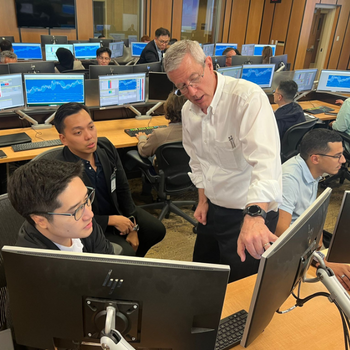
In addition to lectures and exercises, the course also includes applied training in the NDSU Commodity Trading Room, which features 32 computer stations that receive live information feeds for financial information, including equities and credit, as well as commodity market information on agriculture, energy and biofuels. Bill Wilson, NDSU professor and the founder of the course, explained that NDSU will sometimes even have U.S. grain traders tune in during these sessions to walk participants through how they interpret these data sources. He once had a participant question whether all these data sources were necessary, particularly the more costly subscription-only options, and reiterated that information is currency in the competitive world market.
“Your competitors have this information, and your suppliers have this information,” Wilson said. “It seems to me, you’d better have this information. I’ll never forget that as a teachable moment.”
To complete the experience, the course also includes field trips to local farms and agribusinesses. The capstone is a trip to either Duluth, Minnesota, or Portland, Oregon, to meet with port authorities, the USDA’s Federal Grain Inspection Service (FGIS) and the grain trade. The final visit also includes tours of export facilities, from shuttle loaders to barge loading facilities to export terminals.
Connecting for Competitive Advantage
This year’s course stood out based on a diverse set of participants and for their level of interactivity, especially in a trade environment often characterized as uncertain and tense. Frayne Olson, NDSU professor and course instructor, said he had prepared to have those tough discussions, but was surprised at the ability of this year’s group to ask good questions and work together to find ways to deal with the politics and get down to the business of buying grain.
“This was a fun, interactive group from all over the world with different backgrounds and different perspectives,” Olson said. “The world keeps changing, and that does raise a level of interest, but the same core topics have really been the foundation of what we’re trying to accomplish. Because once you know the base or the typical flow or how things usually work within the marketplace, you can determine what to do about changes, shifts or adjustments.”
The ultimate goal of the course is for these participants to return to their companies with the knowledge they need to buy grains, ideally from the United States. Those purchases may occur at the end of the course, after meeting with the grain trade, or later on when the right market opportunities present themselves.
“We made that impression, we made that connection, and so we’re hoping that will help them make that decision to buy U.S. wheat,” said Brian Sorenson, executive director of Minnesota Wheat Research and Promotion Council, who previously managed the course while working at NCI. “We support the NCI and their efforts because they work very hard to educate these buyers and give them experiences that they will never forget. And they are very confident that our wheat will be of good quality and a good value.”
Connor McGrath, a grain buyer from the United Arab Emirates, attended this year’s course to learn more about the U.S. supply chain and the flow of grain from the Northern Plains to different export destinations. He emphasized that lessons learned and the experiences connecting with other course participants left him ready to make immediate changes to his procurement decisions.
“One of my highlights is the connections we made within the global milling industry. We were all chiming in with ideas and how we could resolve issues, and a lot of those ideas were driven by things we learned in the course,” McGrath said. “I went back 10 times stronger now in how we can manage things from the U.S. specifically and how we can go back and look at things in the wider business.”
To gain additional perspective on the breadth and depth of the NCI grain procurement course, read these Q&A-style stories from the perspectives of the course’s founder and long-time leader Bill Wilson, Minnesota wheat council leader Brian Sorenson, USW overseas staff member Joe Bippert and course attendee and grain purchaser Connor McGrath.
Four Decades of Teaching Global Grain Procurement
The Lasting Impact of Grain Procurement Education
Connecting Future Leaders to the U.S. Grain Supply Chain
A Buyer’s Prospective on Grain Procurement Courses