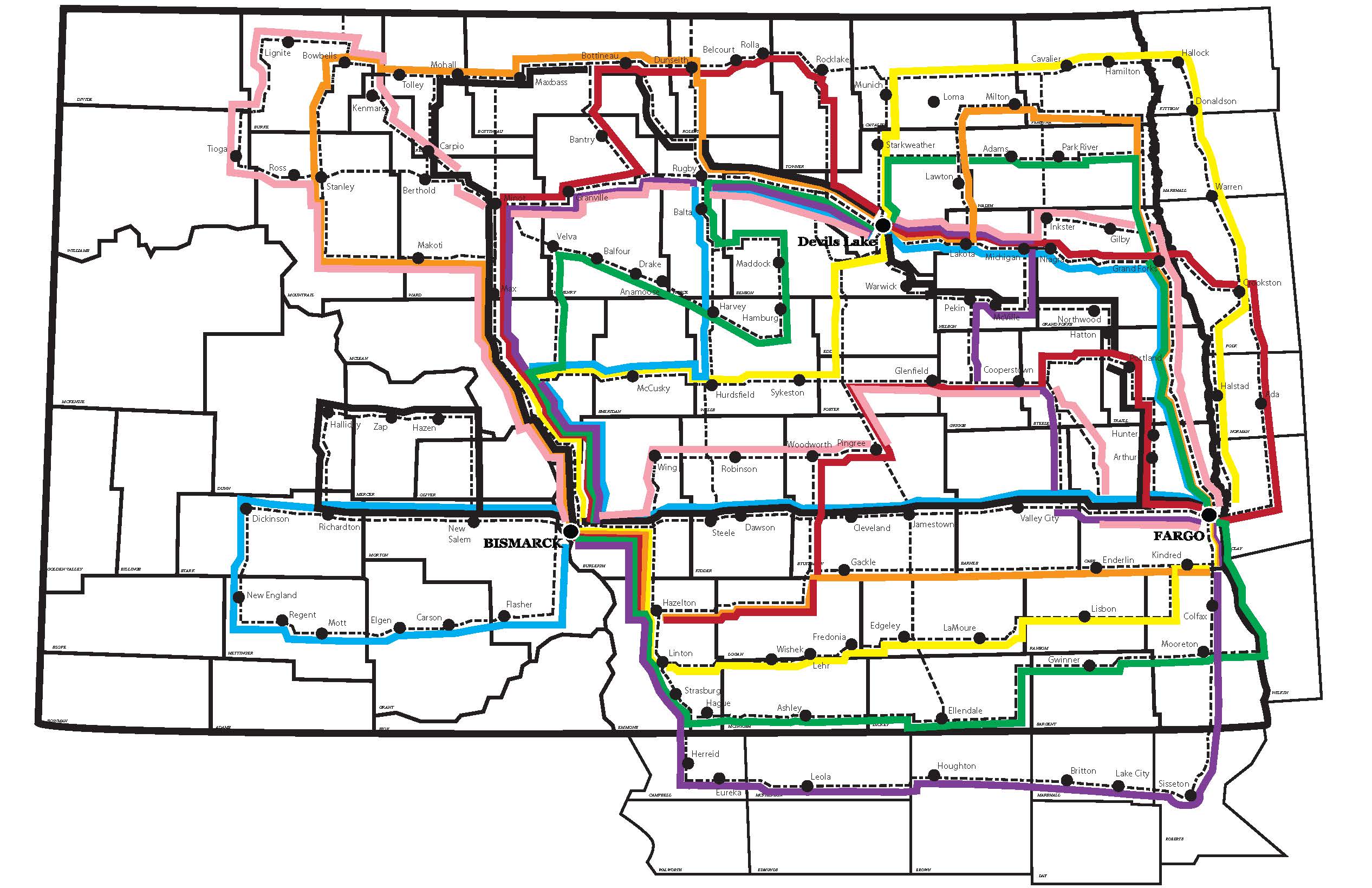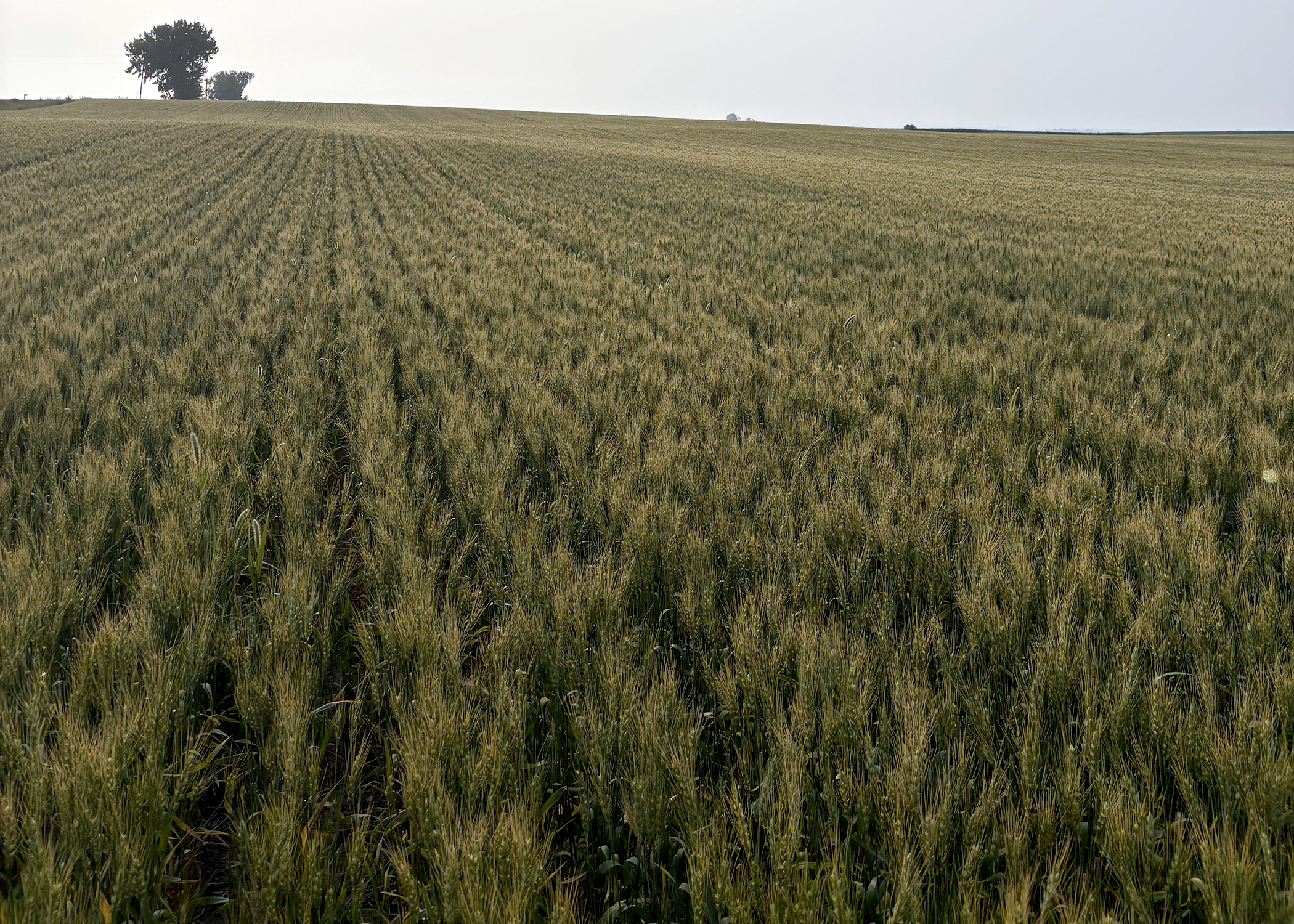
Arantza Quintero, technical specialist in the USW Mexico City Office, and two Mexican customers joined 40 other wheat industry stakeholders in July for a close-up examination of the 2026 wheat crop in North Dakota as part of the annual Wheat Quality Council (WQC) Spring Wheat and Durum Tour.
“We were fortunate to be welcomed by favorable weather conditions in North Dakota after several weeks of intense heat,” Quintero said. “Overall, we observed that the northern wheat crop appears to be in good condition.”
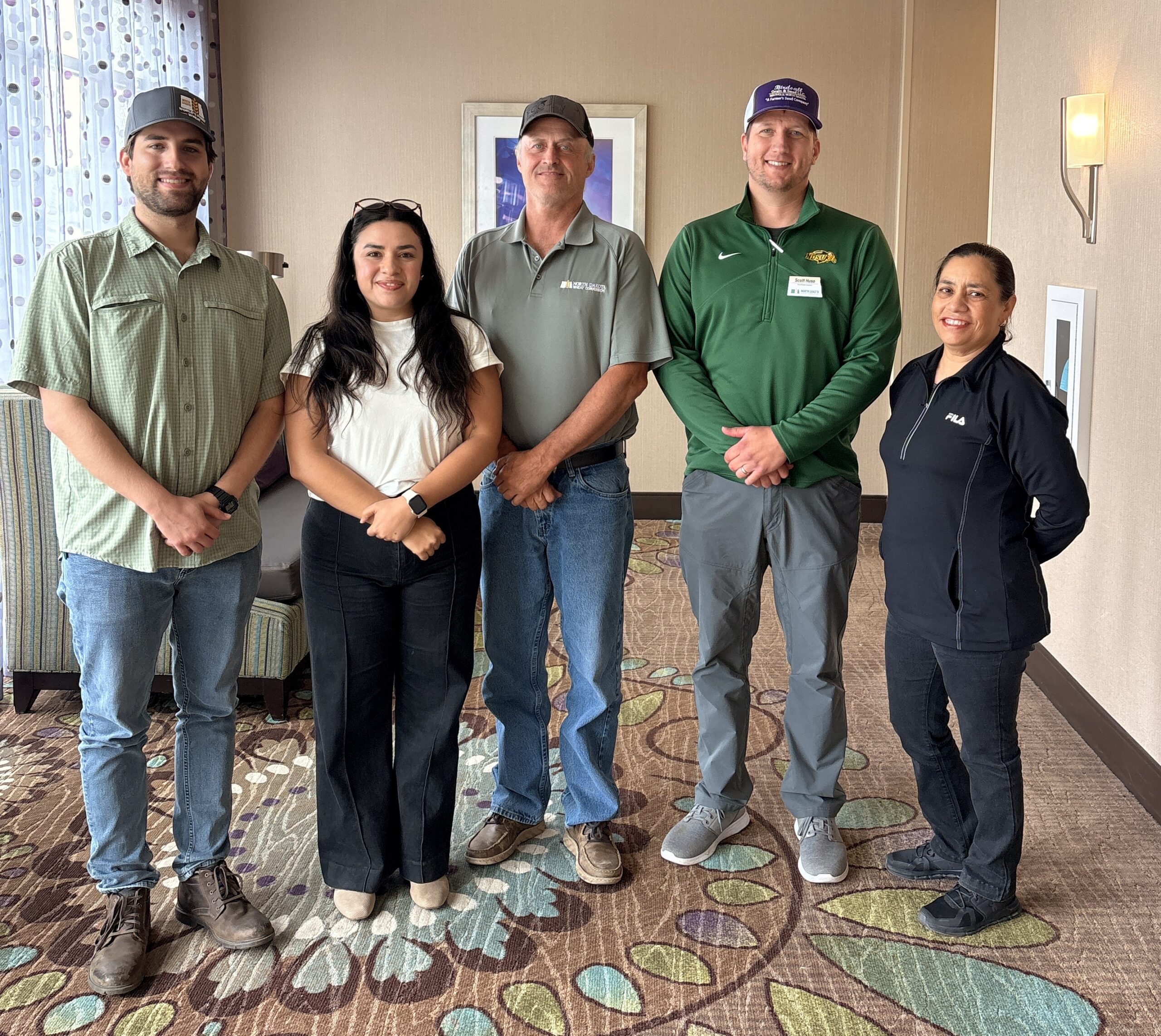
The tour started in Fargo, North Dakota, where the group gathered for an initial introduction and instructions. Following the briefing, the group toured North Dakota State University’s (NDSU) Agronomy Seed Farm (ASF) in Casselton. The farm produces the foundation seed for publicly released varieties of wheat, barley, oats and soybeans as well as research that provides data on the performance of those varieties in eastern North Dakota.
The next day kicked off the first day of field scouting on the tour. Quintero hopped in the vehicle with Dave Green, the recently retired head of the Wheat Quality Council, on the yellow route.
That evening, the day’s routes converged at Fort Abraham Lincoln State Park, outside of Bismarck. Collectively, the tour reported an estimated yield average of 46 bushels per acre for HRS wheat, based on 87 field stops.
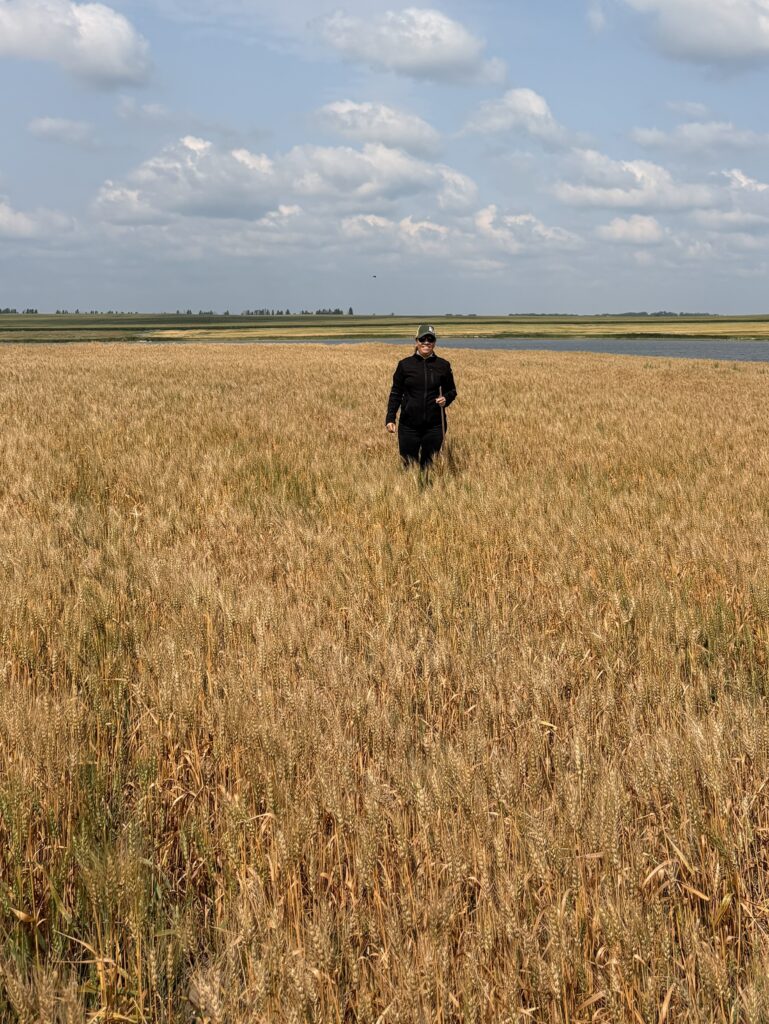
The next morning started early, and Quintero traveled with Sean Finnie, the interim head of the Wheat Quality Council. Along the black route, they stopped at Birdsall Grain and Seed near Berthold, North Dakota. Building on a farming foundation from the previous three generations of Birdsall’s, Mark Birdsall is a member of the North Dakota Wheat Commission and regularly participates in USW activities – making the stop even more impactful for connecting the dots between
“Mark and his family provided us with a tour of their seed and fertilizer facilities,” Quintero said. “This stop was a highly enriching experience that offered valuable knowledge.”
At the end of the day, Quintero met up with the rest of the tour in Devils Lake for the day’s round-up discussion. For day two, the estimated average was 48.1 bushels per acre for HRS wheat, based on 89 fields surveyed, and 48.9 bushels per acre for durum, based on 19 field stops.
Crunching the numbers together, the final three-day weighted average for the tour came in at 48.0 bushels per acre for both wheat classes, based on 238 total field stops. Average HRS wheat yield was 48.0 bushels per acre, compared to 48.2 bushels per acre for durum.
Quintero and her team members left for Mexico with firsthand perspective on the potential for this year’s crops. They reaffirmed confidence in the quality, reliability and value of the U.S. wheat supply chain.
“Traveling across North Dakoka, networking with U.S. wheat industry representatives and doing the yield calculations provides an excellent opportunity for our customers to get firsthand experience with U.S. wheat production,” said USW Mexico City Regional Vice President Mitch Skalicky. “The wheat tour not only provides important market intelligence about the U.S. wheat crop development but is also a valuable tool to build customer confidence in the U.S. wheat marketing system.”
Learn more about the 2026 Wheat Quality Council’s Spring Wheat and Durum Tour in this article from the North Dakota Wheat Commission.