
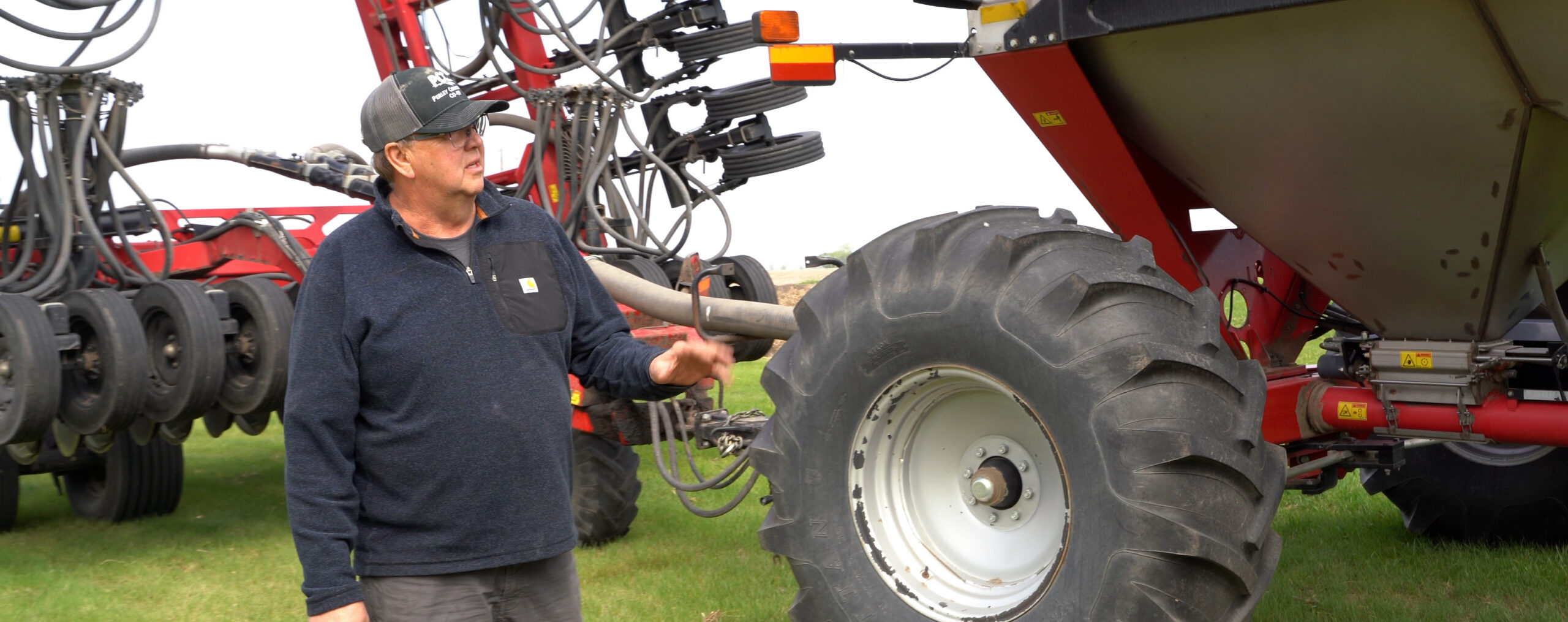
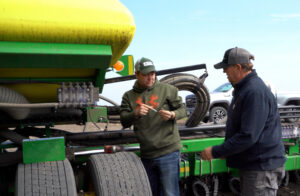
It was a brisk morning in late May when Mark Jossund swiftly strode across one of his emerging wheat fields near Hendrum, Minnesota, to get a good look at the 2026 crop.
There was no time to lollygag.
His son Carson was a quick drive away – and in need of assistance to plant corn. An even shorter drive from the corn planter, a tractor hooked to a field cultivator waited for one of the Jossunds to take the wheel.
All these things are what Jossund, a member of the U.S. Wheat Associates (USW) Board of Directors who will join the organization’s officer team in June, calls “playing in the dirt.” It’s a tongue-in-cheek nod to farming, widely considered one of the most demanding – and at the same time most rewarding – professions on the planet.
Spend a few minutes on the Jossund Family Farm by watching this short video
Years after he first climbed into a combine on his family’s farm, Jossund is still at it. And despite beginning to shift responsibilities to the next generation, he’s far from stepping away.
USW is set to benefit from Jossund’s job experience – and his careful planning.
“I’m not really close to being ready to retire from farming,” Jossund, who will step into the role of USW Secretary-Treasurer during the USW Summer Board Meeting in Fargo, North Dakota, said. “But I am always thinking ahead, and having my sons take over more of the day-to-day operations of our farm will give me more time to serve U.S. Wheat and other farmers.”
The Fargo meeting is only a short drive from the 5,000 acres of U.S. hard red spring (HRS) wheat, corn and soybeans Jossund, his wife Brendy and their children grow.
Involved On the Farm – and Off the Farm
Away from the farm, Jossund has been active in organizations that work on behalf of U.S. agriculture. Over the years, Jossund has served seven three-year terms on the Minnesota Wheat Research and Promotion Council. He has also contributed his time to organizations such as the Northern Crops Institute and the Minnesota Fertilizer Checkoff.
His long-standing involvement with U.S. Wheat reflects a broader commitment to advancing the industry. As Secretary-Treasurer, Jossund will bring a wheat farmer’s perspective to global conversations about production, trade and demand. He is particularly interested in research investments and international market development – two areas critical to the industry’s future.
“Throughout my time representing Minnesota on the USW Board of Directors, I’ve attended a lot of meetings, and in the past few years I’ve gotten much more involved,” he said. “There is always more to learn, but we have a good team and a good group of farmers on the board. There are challenges right now. Margins are tight for farmers. Input costs keep rising. The world is changing. I hope to bring value to U.S. Wheat and help other farmers as we face the challenges.”
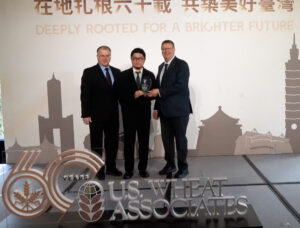
Through his work with U.S. Wheat, Jossund has gained firsthand insight into the standing of U.S. wheat in the global market. His first overseas trip with U.S. Wheat took him to Ukraine, Turkey and Egypt. Two years ago, he has visited Vietnam and China with a USW Board Team. This spring, he joined fellow USW Board Members in Taipei and Tokyo to mark milestone anniversaries for USW offices in those important markets.
Life Rooted in the Land
Jossund’s family began farming in the 1880s. Today, that original land, along with acreage connected to Brendy’s family, remains part of his farm. After college, he returned home and began farming with his father and brother. After his father passed away, Jossund continued collaborating with his brother until the two eventually split their operations.
“I really never thought about doing anything else,” he says. “It is a really good life.”
The three kids he and Brendy raised have been involved.
“My daughter helped during high school before moving to the Twin Cities, while our sons, Bryce and Carson, have become central to the farm,” Jossund said.
Carson, a University of Minnesota graduate with a degree in agronomy, returned home after college to farm full-time. Bryce works as a diesel mechanic but contributes evenings and weekends on the farm. Together, the brothers share a long-term goal of expanding the operation so they can both dedicate themselves fully to it.
That vision aligns with their father’s hopes.
A Modern Farming Operation
The Jossund farm crop rotation – wheat, corn and soybeans – is carefully managed to maintain soil health and maximize quality. Wheat is planted in spring, following the previous year’s soybean crop, a strategy that supports both productivity and sustainability. The farm operates with a minimum-till system: chisel plowing in the fall, followed by field cultivation in the spring before seeding and planting. This approach reduces passes over the field, conserving both time and resources.
This year, their HRS wheat was planted at the end of April, with strong emergence and a promising stand already established. As he inspected the emerging crop in late May, Jossund was pleased – but already looking ahead.
“We had an excellent start to this year’s crop, it looks good,” he reported. “In a couple of weeks, we will apply an herbicide application to take care of any broad leaves. And then later, toward the end of July, we will do a fungicide application. Then we will look forward to harvest in August.”
To be sure, Jossund does not sound like a farmer looking toward retirement.
There’s still dirt to play in.