
Tucked inside towering concrete shells, flour mills are anything but simple operations, and adjusting milling processes to optimize flour production from each of the six classes of U.S. wheat adds another layer of complexity.
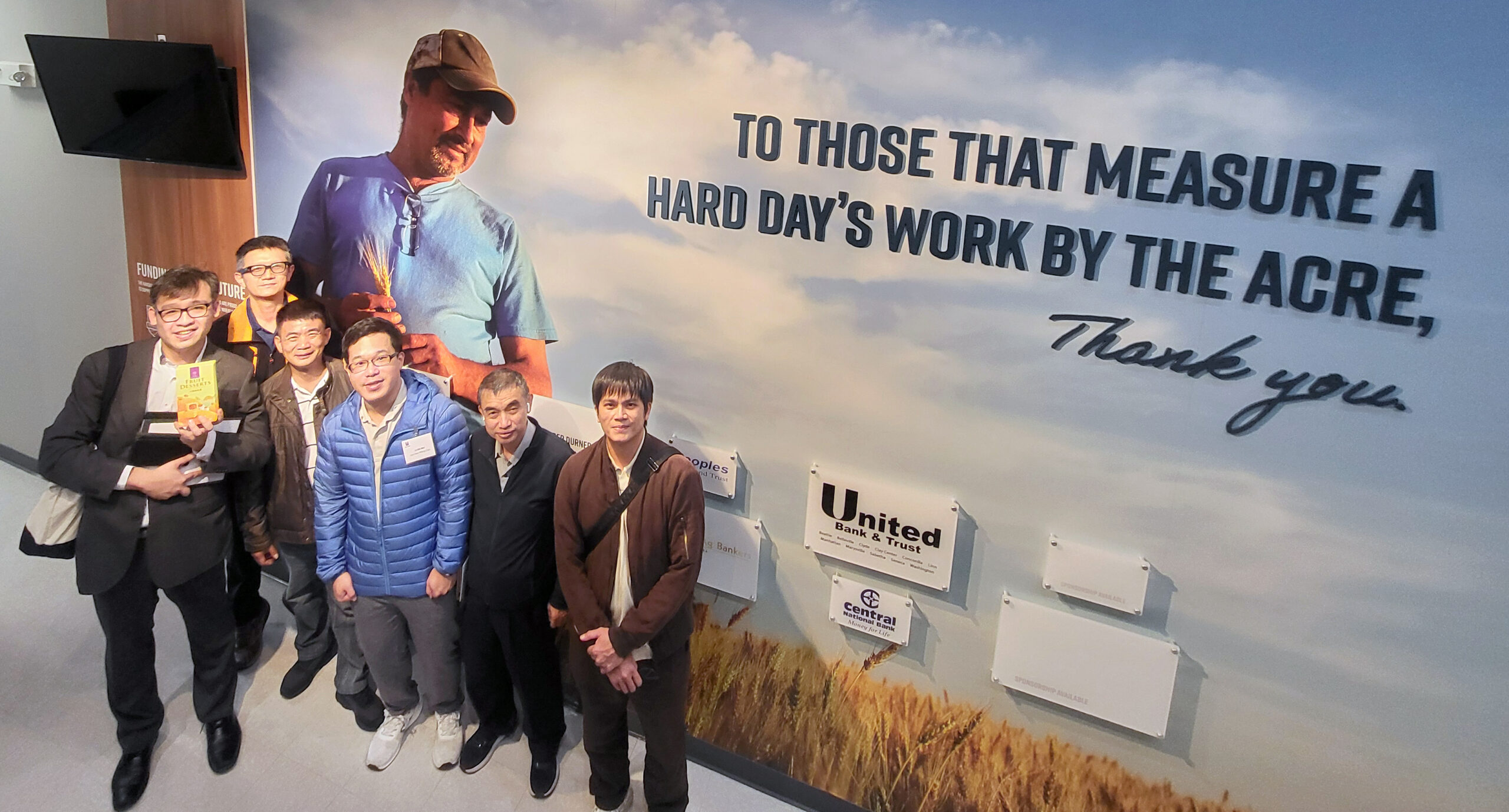
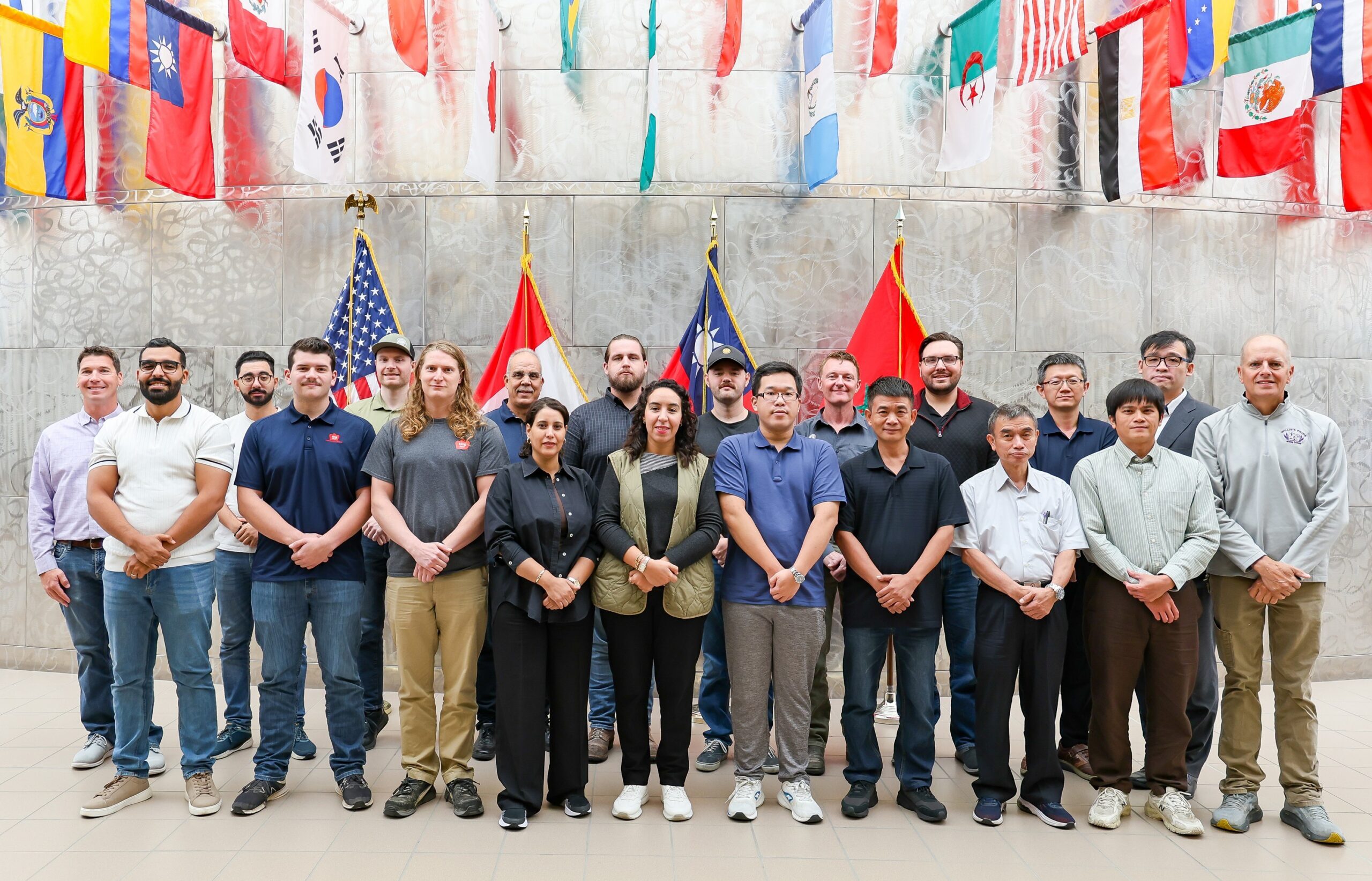
Flour milling professionals from Mexico, Morocco, and Taiwan recently traveled to Manhattan, Kansas, to gain hands-on experience with U.S. wheat classes during two milling courses in September at the IGP Institute on the Kansas State University campus.
Sponsored by U.S. Wheat Associates (USW), the millers joined larger groups of participants on the Kansas State University campus in Manhattan, Kansas, for two weeklong courses designed to deepen their understanding of the flour milling process.
Caribbean Millers Gain Practical Expertise with U.S. Wheat at IGP Basic Milling Course
The initial course – the IGP-KSU-IAOM Basic Milling Principles Course – combined classroom instruction with hands-on learning exercises. Participants studied the complete flour milling process, from wheat quality evaluation and cleaning through conditioning, grinding and finished flour production. U.S. Wheat sponsored six millers from Jamaica, St. Lucia, St. Vincent and the Grenadines, Suriname and Trinidad and Tobago to attend the course.
“In addition to increasing knowledge about milling systems and wheat quality, our basic milling course provides an opportunity to see firsthand how the different classes of U.S. wheat perform in the flour mill,” said Shawn Thiele, associate director and flour milling and grain processing specialist with the IGP Institute, who led the course. “Understanding the relationship between flour quality, process controls and finished product performance helps millers make better decisions that improve their mill’s efficiency and the quality of their flour.”
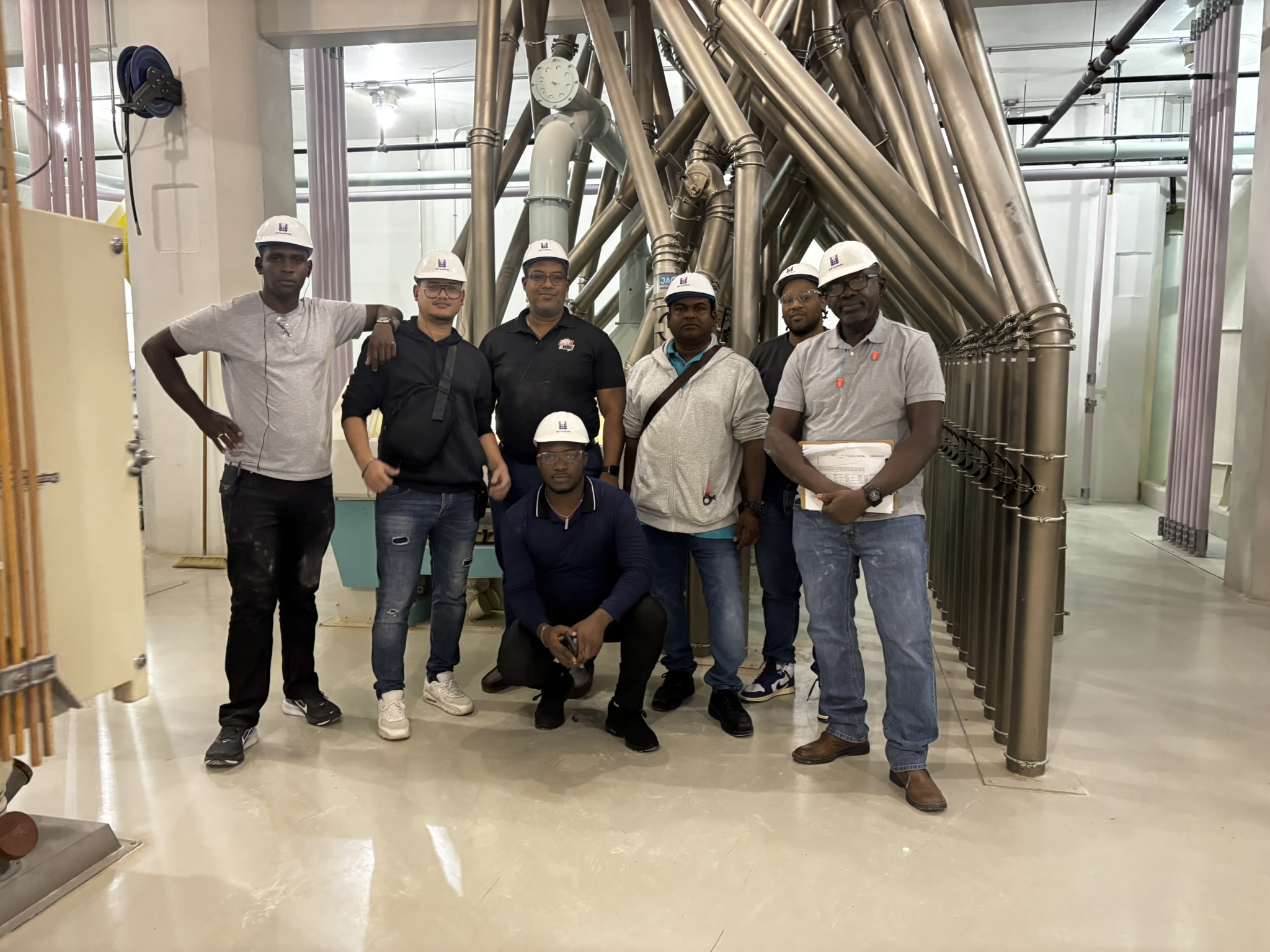
Accompanied by Pamela Rubio, program coordinator in the USW Mexico City Office, the Caribbean millers also worked alongside K-State instructors in the Hal Ross Flour Mill to adjust break releases, purifiers and reduction rolls to optimize a pilot run of hard red winter (HRW) wheat. The course concluded with instruction on dough testing methods, the impact of protein quality and ash content on flour performance and an exploration of flour fortification concepts.
“The millers enjoyed the hands-on portion of the course,” Rubio said. “They liked being able to see the flowsheet, follow the streams, adjust equipment and see how process conditions affected the milling results.”
Course Experience Bolsters Trust in U.S. Wheat
For international flour millers, practical training opportunities like the September IGP course provide an opportunity to make adjustments in the mill without impacting the company’s daily bottom line. Gaining technical knowledge and experience working with U.S. wheat classes helps reinforce the quality, reliability and value of U.S. wheat in their milling operations.
These technical education activities also play an important role in USW’s market development work by strengthening the long-standing partnership between U.S. wheat farmers and U.S. wheat customers. Continued success in the flour mill is a win-win scenario for U.S. farmers and global millers alike.
Two years ago, Wei-Lin Chou, Asian products and nutrition specialist in the USW Taipei Office, brought a group to the IGP basic milling course. At that time, more than half of his group held leadership, management or finance roles. The course helped participants understand how U.S. wheat can support consistent production of high-quality flour with fewer processing challenges.
“IGP’s milling course helped strengthen Taiwanese millers’ confidence in and commitment to U.S. wheat,” Chou said. “U.S. wheat currently holds up to an 80% market share in Taiwan and Taiwanese millers are willing to pay a premium for high-quality U.S. No. 1 grade wheat.”
Advanced Course Connects Milling Expertise with U.S. Wheat Performance
Planning ahead, Chou and the USW Taipei Office wanted to bring another group to the IGP Institute, this time for participants who work directly in production and have at least 10 years of experience. As a result, his delegation attended the IGP–KSU–IAOM Advanced Milling Principles, held the week after the basic course.
“I have worked in flour milling for more than 13 years, and throughout this time, I have continued to develop my expertise through hands-on experience with plant equipment and production processes, including wheat storage, wheat tempering, cleaning and conditioning, and flour milling operations,” said Po-Yi Huang, assistant plant manager in the production department at Top Food Industry Corp. in Taichung, in the middle part of west Taiwan. “By participating in the IGP course, I wanted to integrate my practical experience with academic theory, broaden my perspective, strengthen my analytical thinking and gain insights that will contribute to more effective plant management and production process improvements.”
The advanced course expanded on topics from the basic milling course, focusing flour mill and classroom discussions on specific topics, tools and practices to impact optimal machine adjustment, milling efficiency and flour quality. The course also allowed participants to troubleshoot specific mill issues to optimize efficiency and take part in discussions on milling logic and philosophy. Moving from the classroom to the flour mill allowed attendees to work through break releases, reduction settings, purification, sifting, and mill-stream evaluation, making the training even more meaningful.
“When millers understand the most effective techniques for processing each class of U.S. wheat, they can optimize their production lines and achieve more consistent results,” Chou said. “Over time, that technical knowledge can make U.S. wheat a natural fit for their operations and long-term production needs.”
This work is especially important in Taiwan, where many flour mills are transitioning leadership across generations, emphasizing the need for strong technical support and learning opportunities like the IGP milling courses.
“Supporting the next generation of millers is an important part of our work in Taiwan,” Chou said. “We will continue to provide younger millers with technical support and learning opportunities, just as we have supported millers over the past 60 years. Our goal is to build lasting confidence in U.S. wheat and help maintain – and, where possible, grow – market share for U.S. farmers in Taiwan.”
Technical Education Connects Millers from Morocco to Manhattan
The USW Taipei Office was joined by representatives from the USW Casablanca Office, which sponsored four instructors from the Moroccan Milling Training Center (IFIM) in Casablanca to attend the course. These instructors represented an important connection between IFIM and the Moroccan commercial milling sector.
“Bringing the IFIM instructors to IGP was particularly valuable because these instructors will transfer the knowledge and practical experience gained during the course to their students and other Moroccan milling professionals,” said Zakari Jallali, USW milling and baking specialist, who accompanied the group. “This exchange creates a multiplier effect that extends the impact of training beyond the participants themselves and contributes to strengthened milling expertise across the Middle East and North Africa.”
Jallali noted the course emphasized the importance of connecting wheat quality, milling conditions, flour quality and end-use performance, rather than looking at each parameter separately. He noted that the course, particularly the hands-on work at the Hal Ross flour mill, reinforced how small adjustments in the milling process can have a significant impact on extraction, flour quality, process efficiency, and ultimately mill profitability.
“The opportunity to work in the Hal Ross Flour Mill and see the relationship between theoretical concepts and real milling operations was particularly important to me,” said one of the Moroccan milling professionals who attended the course. “What we learned at IGP helped us see more clearly how wheat quality characteristics translate into milling performance and flour quality. The opportunity to work directly with U.S. wheat and U.S. milling technology was extremely valuable.
The connection between U.S. wheat farmers, their support for educational programs at the IGP Institute and USW’s work overseas was abundant throughout the one-week milling course. But the relationships beyond the classroom will also continue to stand the test of time.
“Thank you for producing high-quality wheat and for supporting the technical programs that allow customers around the world to better understand how to use it,” the Moroccan miller said. “We hope to continue building this technical connection between U.S. wheat farmers, U.S. Wheat, the milling industry in Morocco and the wider MENA region.”
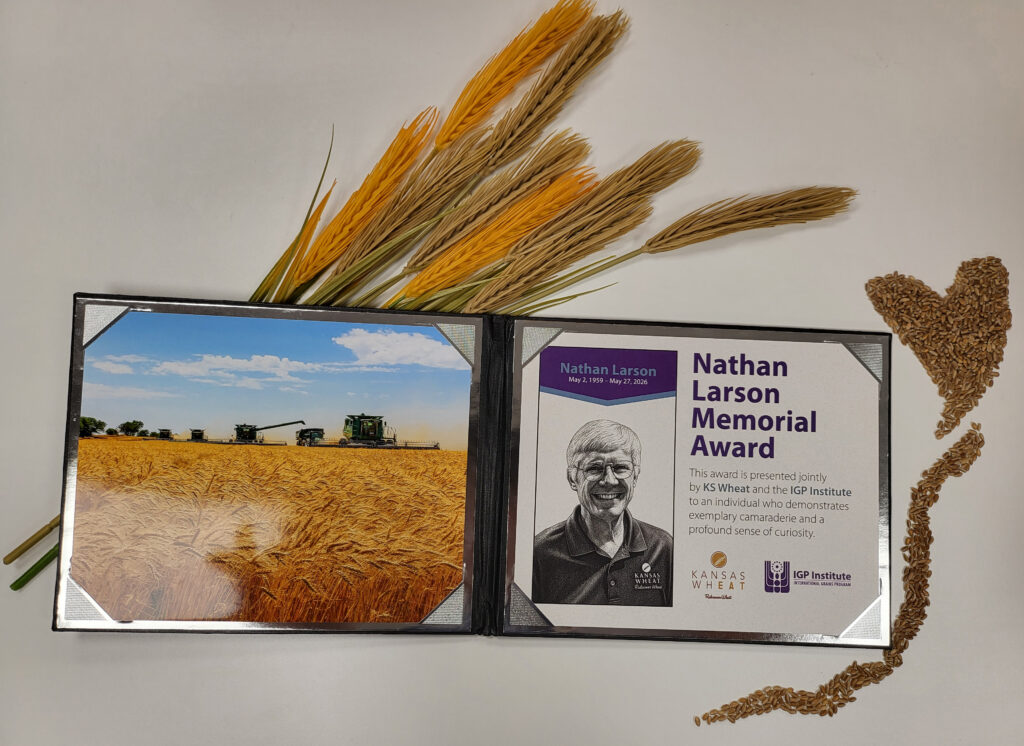
Nathan Larson Memorial Award Recognizes the Importance of Relationship Building
The course featured a dinner where each participant receives a course completion certificate. This year, USW Chairman Gary Millershaski drove five hours from his farm near Lakin to be at the course dinner, not only to interact with participants, but also to present the first Nathan Larson Memorial Award, given to a course participant who exhibited great interest, goodwill and enthusiasm in the subject matter and in the work of other course attendees.
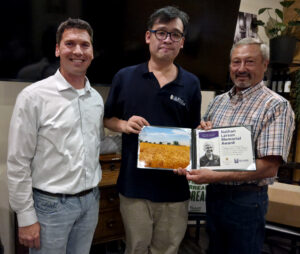
Nathan Larson was a devoted Kansas farmer near Riley, located just north of Manhattan, and a member of the Kansas Wheat Commission. He often joined course dinners to converse with course attendees and answer their questions about wheat farming. Larson passed away unexpectedly in May 2026, and this award honors his legacy as ambassador for all U.S. wheat farmers. Wei-Lin Chou was selected as the first recipient of this award, fittingly, as he had the chance to meet and talk with Larson when he attended the basic milling course two years ago.
“He was incredibly kind and deeply passionate about wheat and farming,” Chou said. “I still remember listening to his stories about wheat production and seeing how his face lit up as he spoke. He was equally interested in learning how people in Taiwan use U.S. wheat in the foods we eat every day. I am very grateful to the Kansas Wheat Commission and the IGP Institute for recognizing me with an award that carries such special meaning.”
With hearts and minds overloaded, the course participants from the Caribbean, Morocco and Taiwan each left with a similar message – U.S. wheat farmers are invested in the success of their global milling operations and stand ready to share crop quality information and technical knowledge to help them grow their business, in hopes that they remember the world’s most reliable supply of high quality wheat and the farmers that produce their primary ingredient each year.
“My grandfather is also a farmer and grows rice in Taiwan, so I’ve seen firsthand how much hard work farming takes,” said Yang-Hsueh Chu, the production team leader of Hong Ming Enterprise Co., Ltd., who attended this year’s advanced course. “I truly appreciate the dedication of U.S. wheat farmers. Thanks to their efforts, we’re able to produce flour and turn it into many different wheat foods for people to enjoy.”