
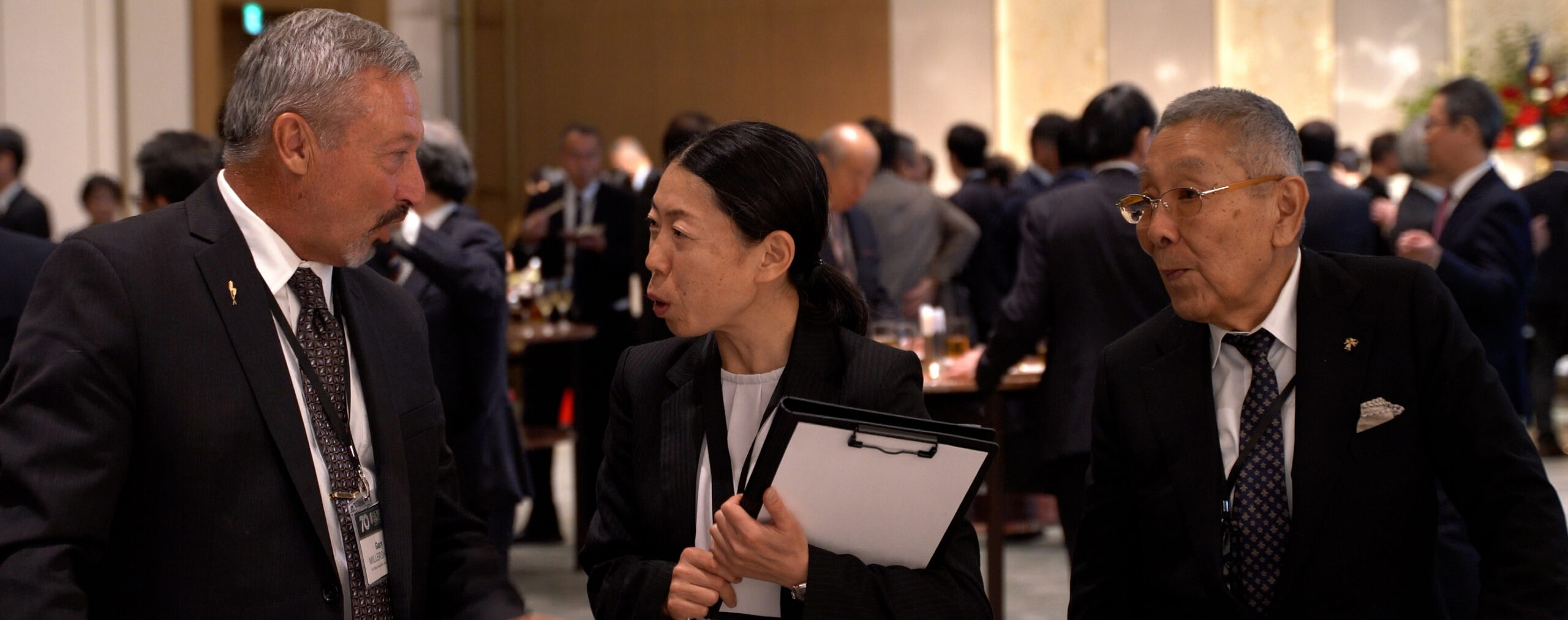
Standing in a Nigerian flour mill, Gary Millershaski couldn’t have imagined the thought forming in his head would eventually become a line repeated by fellow wheat farmers and by U.S. Wheat Associates (USW) staff around the world. The message was shared once again last month at the USW Summer Board Meeting in Fargo, North Dakota – this time as text on a large screen during a presentation by Chad Wiegand, USW regional director for Sub-Saharan Africa.
“It’s not what we did yesterday, but it’s the knowledge we accumulate today to make us better understand how to deal with the market and make more sales tomorrow.”
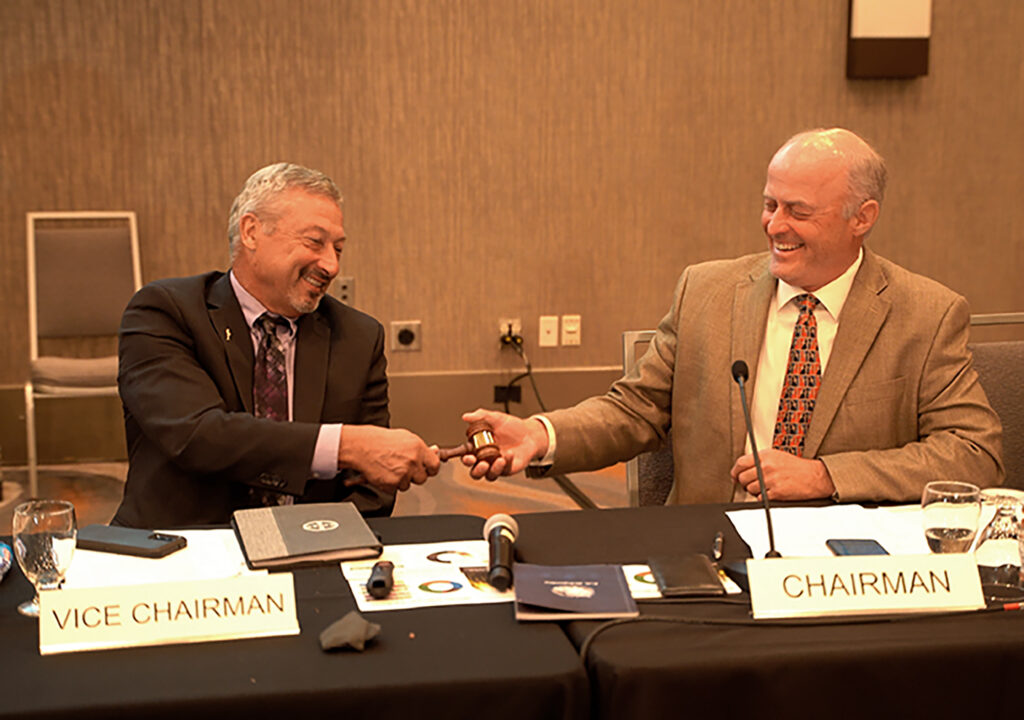
That statement, uttered by Millershaski in early 2024 as a USW Board Team trip to South Africa and Nigeria wound down, has become something of a guiding principle for the Kansas wheat farmer. Coincidentally – or not – the recent board meeting where it was last shared was the beginning of Millershaski’s one-year term as USW chairman.
“On that trip to Africa, we had been meeting with millers and wheat buyers, while also looking at the markets and learning about consumers,” Millershaski said. “At one point, Catherine Miller (USW director of programs) put me on camera so I could share what I was learning. The statement came from me having a reality check while we were in those markets. The millers and buyers were eager to share reasons why consumption of wheat food products has been lower there. Poverty is so prevalent. It changes your perspective.”
A few months later, Millershaski, who had served on the USW Board of Directors representing Kansas, would be elected to the USW officer team, serving first as secretary-treasurer and then as vice chairman. Now, as chairman, he represents wheat growers while helping guide USW staff members who work with customers in more than 100 countries to promote the value of all six classes of U.S. wheat.
An Important Time
Millershaski’s leadership arrives at an important moment for the industry. Following several years of weather-related production challenges, shifting global trade dynamics and increased competition from major wheat-exporting nations, U.S. wheat exports rebounded during the 2025-2026 marketing year. Exports climbed nearly 15 percent to 23.7 million metric tons (MMT) – about 870.8 million bushels – the highest export volume in five years. Those gains reinforce the importance of the work performed by USW, whose overseas offices provide technical support, market development and relationship-building.
Still, despite recent successes in the export effort, Millershaski is quick to share another one of his reality checks. The global wheat market will provide plenty of major challenges during his tenure.
“There are headwinds ahead, and we will meet them head-on,” he said. “The thing about farming is that to be successful at it, you can never get too high or too low, no matter how good things are or how bad they are. You must learn and keep going. For U.S. Wheat, we must do the same, keep sharing information about U.S. wheat and keep building relationships with our global customers.”
For Millershaski, building those relationships are based on lessons learned on the family farm.
Five Generations Rooted in Kansas
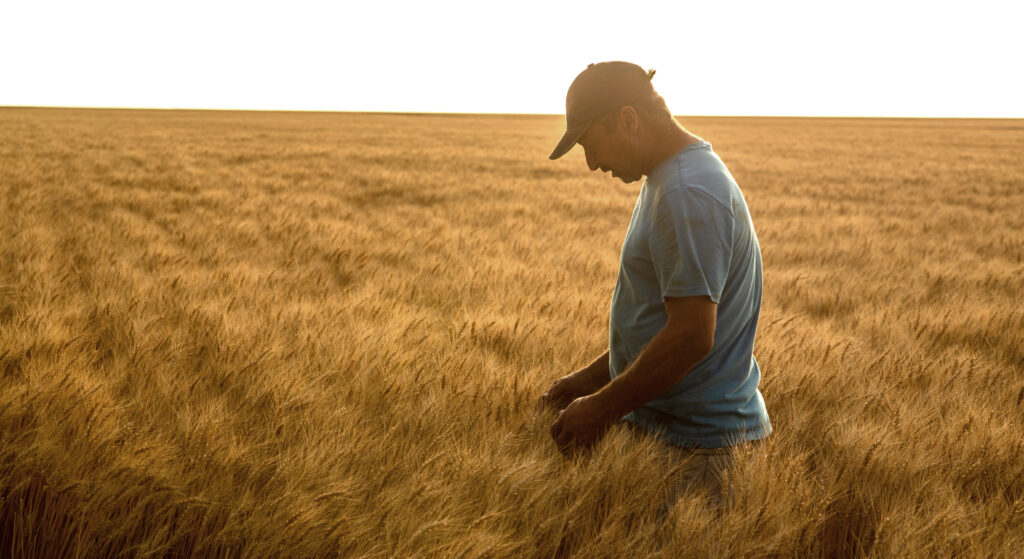
Millershaski farms near Lakin, Kansas, where wheat has long been the cornerstone of the family’s operation.
“I’m a third-generation farmer and my wife, Jana, is a fourth-generation farmer,” he said. “Three decades ago, when we got married, we had a farming operation that consisted of her father, me and our two boys – so we had three generations farming the fields together. We were like the Three Musketeers: all for one, one for all.”
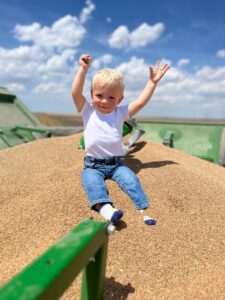
Today, following the passing of Jana’s father, the operation includes Millershaski, his wife, sons Jeremy and Kyler, and a new generation waiting in the wings – Kyler’s young son, Henry.
Wheat is the top crop grown by the family.
“Wheat is on one-third of our ground, while another third sits idle, building moisture, and then the other third has either corn or grain sorghum planted on it. We also raise cattle through a cow-calf operation,” Millershaski said. “The thing about wheat is that it is the base for the whole crop rotation. You get a good crop of wheat, you have good residue. It holds the weeds back. It helps to conserve moisture. It starts the process, and after we have corn or sorghum, we fallow and then we raise wheat again. The process starts over.”
That practical understanding of crop rotations, soil conservation and long-term sustainability has shaped Millershaski’s approach to leadership.
Building a Career of Service
Although farming remains his full-time occupation, Millershaski has spent nearly two decades serving the wheat industry. Since 2007, he has held leadership positions with the Kansas Association of Wheat Growers, served as chairman of the Kansas Wheat Commission and completed Class VII of the prestigious Kansas Agricultural and Rural Leadership (KARL) program.
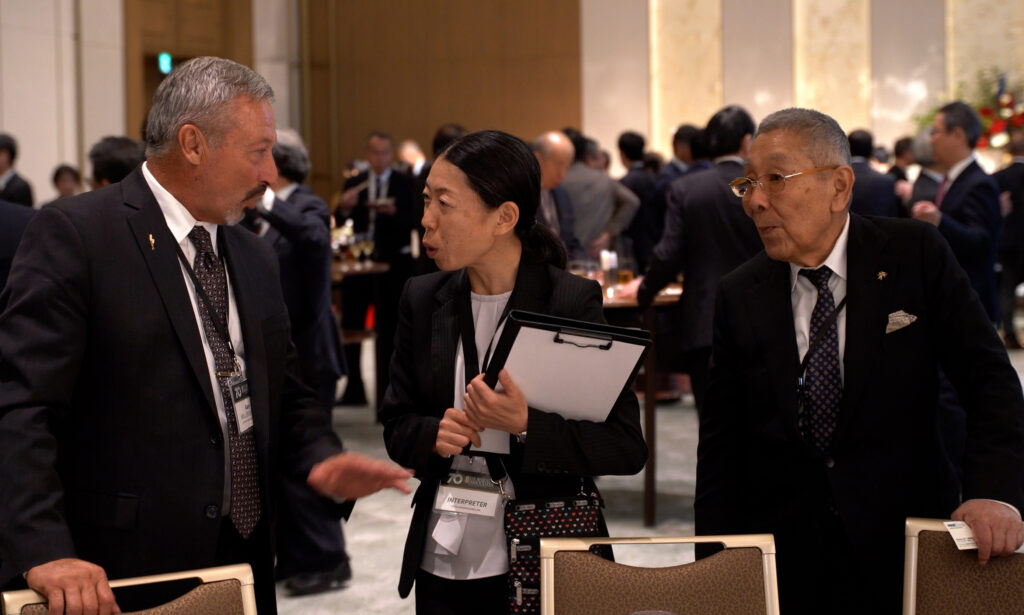
His service expanded to the national level through U.S. Wheat. The chairman position requires far more than attending board meetings. USW leaders regularly travel overseas to meet with millers, bakers, government officials and grain buyers, strengthening customer confidence in the reliability and quality of U.S. wheat.
In the past, along with the 2024 trip to Africa, Millershaski has participated in trade missions to Mexico, South Korea, Singapore and Indonesia.
“It is a pleasure to have discussion with our international customers and hear them talk about their businesses,” he said. “Sometimes you are reminded that they are running their businesses just like we U.S. wheat farmers run our businesses. We have things in common. We all have opportunities and we all have challenges. Communicating the realities to customers around the globe helps strengthen partnerships while giving overseas buyers a better understanding of the economic pressures, such as rising farm input costs, facing U.S. producers.”
Learning Never Stops
Millershaski believes effective leadership requires continuous learning.
That philosophy led him to participate recently in the Bayer Leadership Program, a joint initiative of Bayer CropScience and the National Wheat Foundation that prepares emerging leaders for service in state and national wheat organizations. The program focuses on governance, advocacy, media relations and board responsibilities while encouraging collaboration among leaders.
“I wanted to participate in the Bayer Leadership Program to familiarize myself with current and future state wheat leaders,” Millershaski said. “I’m really impressed with this group of individuals. Just putting everybody in the same room, doing the same work – the way everybody works together is priceless.”
The experience reinforced something he has learned repeatedly through USW’s international work: the best solutions often come from sharing ideas and building relationships. That same lesson emerged during the Africa board trip that inspired his now well-known quote about accumulating knowledge for future success.
“Instead of focusing always on immediate sales, sometimes we have to see visits into foreign markets as an opportunity to better understand customers’ needs, improve communication and strengthen markets for future generations of wheat farmers,” Millershaski said.
Looking Toward the Next Generation
Whether walking Kansas wheat fields, meeting flour millers in Asia, visiting customers in Africa or representing U.S. wheat producers in boardrooms, Millershaski carries an even and consistent perspective on farming. The same goes for his duties and responsibilities – not to mention the brisk travel schedule he inherited – in the new role of as USW Chairman.
No matter where he’s at, he remains most energized by what happens back home.
His sons, Jeremy and Kyler, now represent the fifth generation to farm the family’s land. Both have acreage of their own yet continue working together in the family operation.
Even more exciting for Millershaski was the arrival of Henry, fully expected to represent the sixth generation to work the family farm.
“He’s only one and a half years old,” Millershaski said. “But he loves everything we do on the farm – tractors, sprayers, the cows. You can’t imagine how it brightens your day when you see your children wanting to do what you do. And now your grandchild is doing the same thing, it’s really a good feeling.”