
Days after another successful risk management course teaching international buyers how U.S. grain moves from farm to foreign market, the Northern Crops Institute (NCI) announced a significant change to next year’s Grain Procurement Management for Importers program.
In 2027, a course will be devoted entirely to U.S. wheat.
That decision reflects the growing number of international wheat buyers looking for a deeper understanding of how to purchase, manage and move U.S. wheat in a complicated global marketplace.
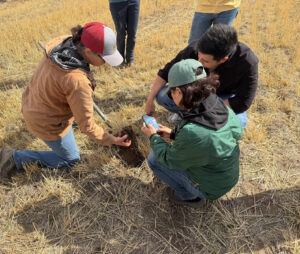
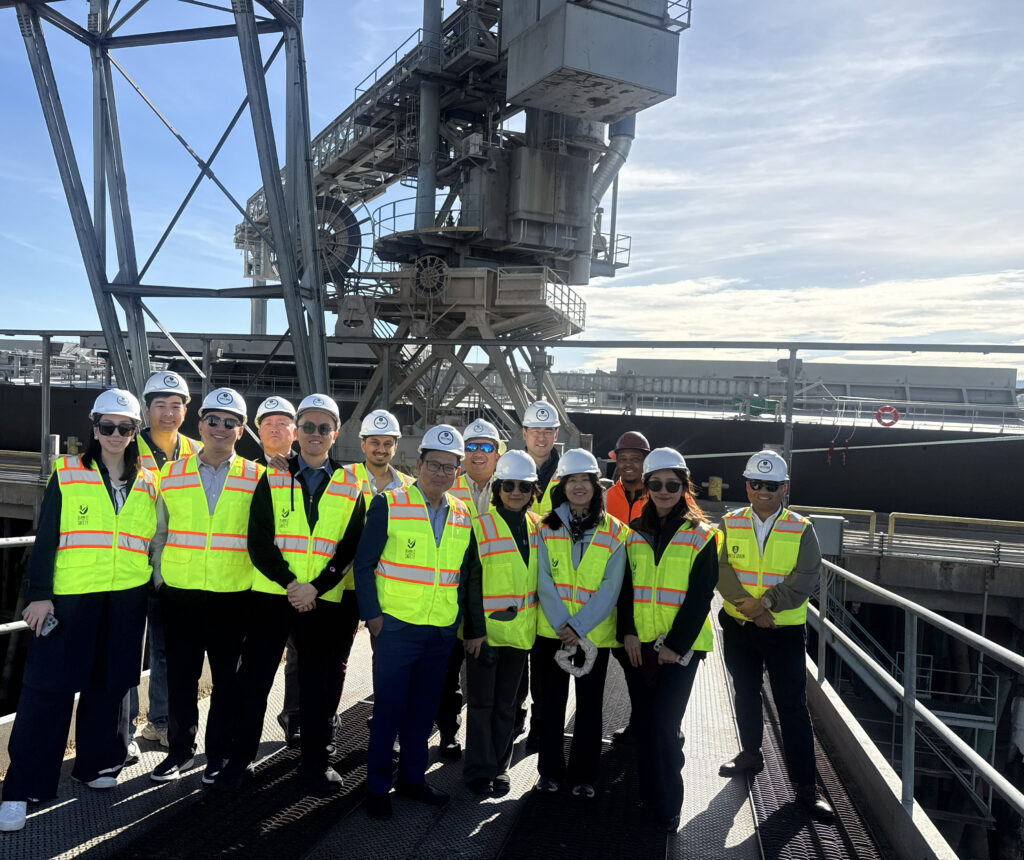
This year’s course took place late last month, with U.S. Wheat Associates (USW) sponsoring more than two dozen flour millers and purchasing agents from markets around the world. USW staff from its Casablanca, Manila and Beijing offices brought participants to Fargo, North Dakota, for five days of classroom instruction before splitting the group for visits to farms in North Dakota and export facilities in New Orleans and Portland.
“We’ve offered this course now for 43 years, and it has gotten big enough – there are enough participants from U.S. Wheat Associates alone to justify having a session specifically for wheat,” said Casey Peterson, program development manager at NCI. “It’s a pretty significant move, and it says a lot about the interest in wheat purchasing and procurement.”
Peterson will meet with USW Programs staff during the organization’s winter meetings in Washington, D.C., in February to begin working out details for the wheat-specific course.
Learning the business
For an international flour miller or importer, buying U.S. wheat can look like a numbers game. Futures prices flash across a screen. Basis is calculated. Freight is quoted. Quality specifications are compared. The NCI course gives buyers a chance to step away from their desks and follow that wheat.
Over the course of eight days, participants moved from classroom to Northern Plains farms, through elevators and transportation systems, and eventually to export facilities on the Mississippi River and Pacific Northwest. Along the way, they met farmers, grain handlers, traders and others who connect a wheat field with a flour mill on the other side of the world.
The five days of classroom work was equally practical. The curriculum covered cash and futures markets, basis, hedging, grading standards, contracts, freight, supply and demand, logistics and weather forecasting. Participants also practiced futures trading and risk management in a simulated environment.
Two years ago, NCI added a progressive case study to put those lessons to work.
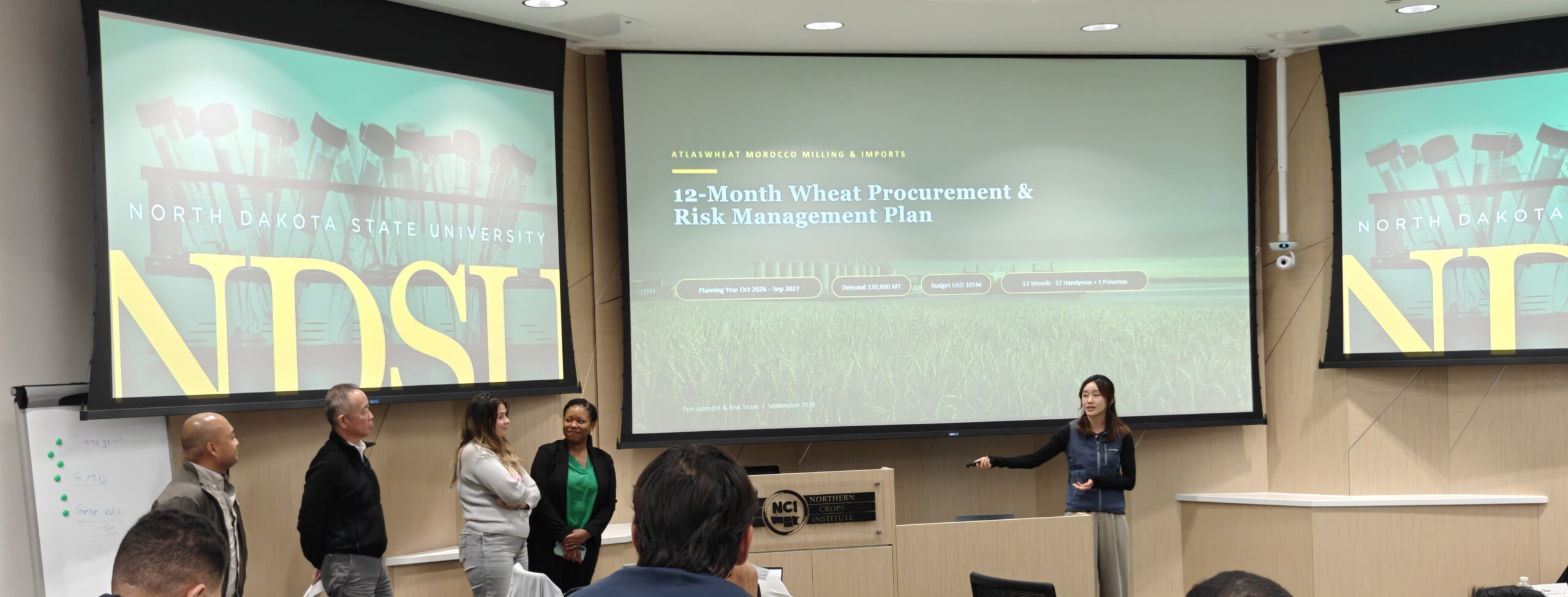
Teams made up of people from different countries, regions and jobs are assigned a fictional company and asked to develop a 12-month procurement plan. Each day brings new information and another decision, requiring them to apply what they have learned, Peterson explained.
Seeing the supply chain
Tarik Gahi, USW Assistant Technical Director and Administrative Manager in Casablanca, brought commercial flour millers from Morocco and Egypt, along with representatives of the Moroccan milling federation and the Moroccan state grain agency.
“This cross-section of commercial buyers and regulatory stakeholders represented significant buying power and institutional influence across two of the region’s primary wheat import markets,” Gahi said.
Following the wheat from North Dakota fields to river export terminals gave participants a closer look at the U.S. supply chain and the systems supporting its reliability, grading accuracy and logistical efficiency.
The case study reinforced those lessons, Gahi noted. Teams considered market conditions, evaluated risk-management strategies and developed procurement plans before defending their decisions before their peers.
Building relationships along the way
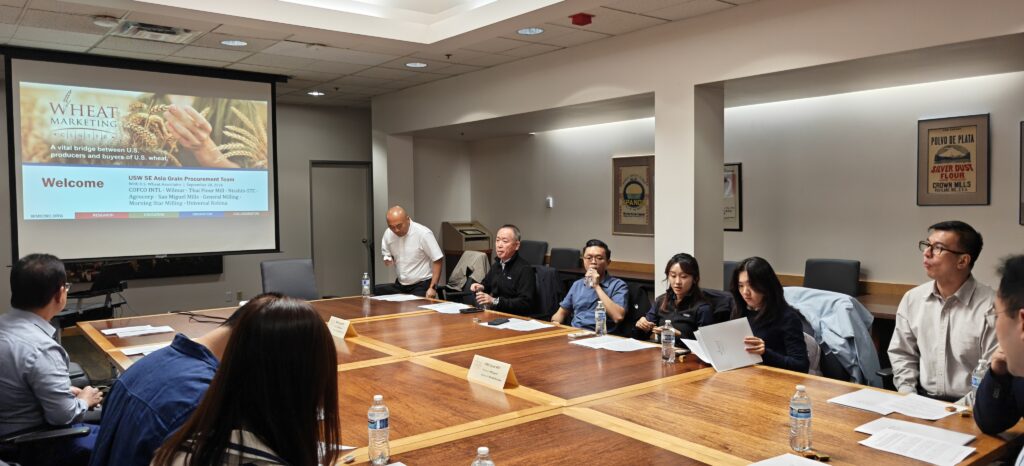
The course also provided something less tangible but just as valuable: time for buyers from different markets to learn from one another.
Tyllor Ledford, USW assistant regional director for South and Southeast Asia, brought representatives from leading flour milling and grain trading companies in Thailand, Indonesia, the Philippines and Singapore.
“These markets collectively account for approximately 20% of total U.S. wheat exports and represent nearly one-third of the top 10 U.S. wheat export markets,” Ledford said.
Participants compared procurement practices, talked through market challenges and exchanged ideas about managing an increasingly complicated global wheat market. For some, the experience was an introduction to an industry they had previously understood mostly through numbers and reports.
Kaiwen Wu, USW marketing specialist in China and Hong Kong, brought two COFCO representatives — one responsible for hedging and the other for sales. It was their first USW overseas activity, Wu said.
They toured farms, saw U.S. inspection procedures and visited warehousing and transportation facilities. They also met directly with grain traders.
“They were deeply impressed by how American farms operate in an efficient and sustainable manner,” Wu said. “Their meeting with traders was highly practical, as it provided valuable face-to-face communication.”
That personal interaction with U.S. industry may be one of the course’s most important lessons, Ledford, who previously worked as USW’s Market Analyst, acknowledged.
“A buyer can study a U.S. wheat specification from an office in Shanghai, Singapore, Casablanca or Cairo, but standing in a wheat field, walking through an elevator or talking face-to-face with a trader adds something a market report can’t provide,” she said.