
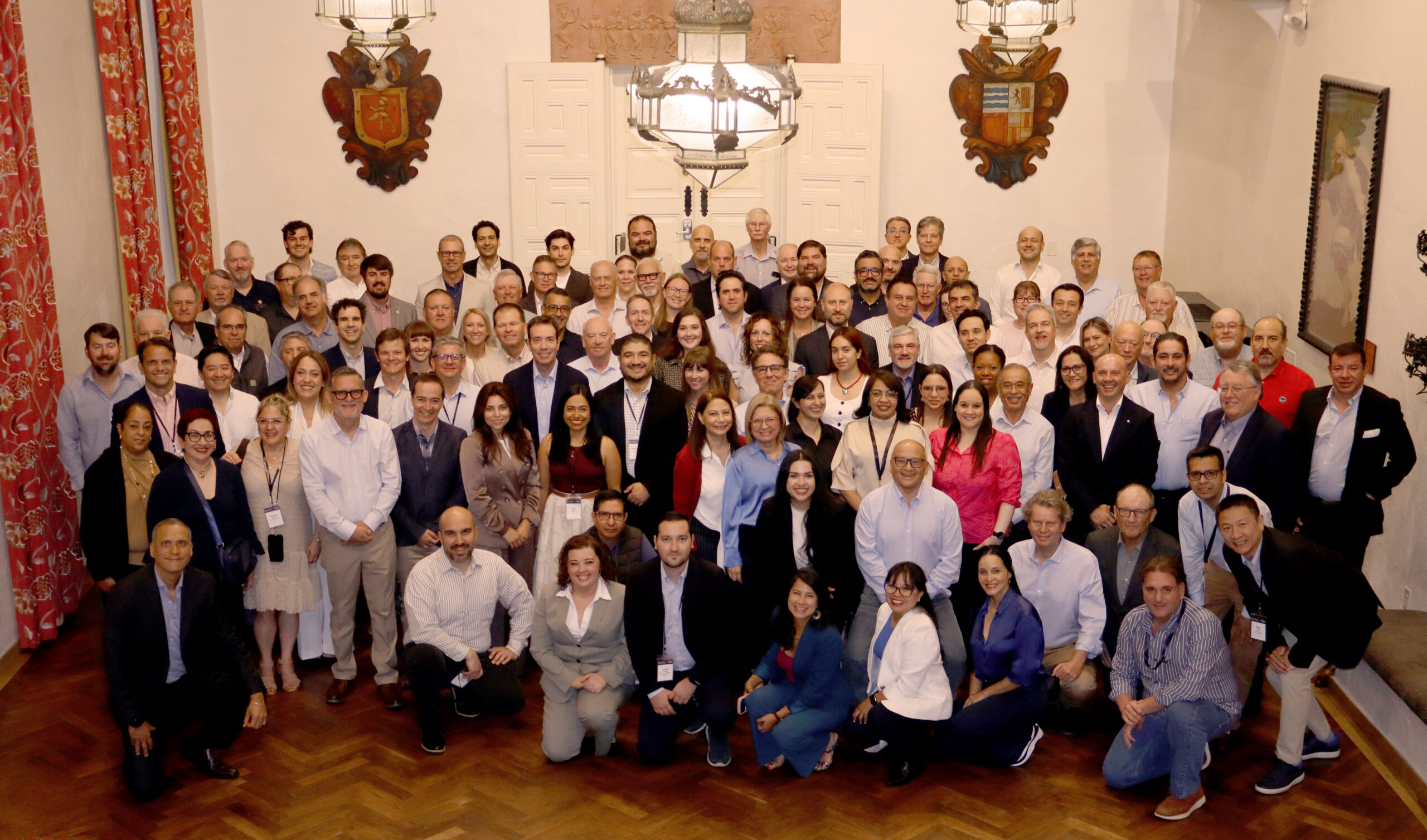
U.S. Wheat Associates (USW) has worked to build regional partnerships in Latin America and the Caribbean for more than 60 years. Part of those efforts include connecting farmers, exporters, importers, millers and others through buyers conferences, like the 2026 Latin American & Caribbean Buyers Conference (LABC), which took place in late July in Santa Fe, New Mexico. The conference included a cross-section of more than 140 representatives from 14 countries, including 12 U.S. wheat farmers.
“The LABC offers a valuable opportunity to strengthen relationships, exchange ideas, and explore emerging trends shaping the future of the wheat industry,” said USW President and CEO Mike Spier. “The relationships built and partnerships strengthened through events like the LABC are a cornerstone of our industry’s success. By bringing together producers, customers, exporters, and technical specialists, we deepen the relationships that have helped make U.S. wheat a dependable source of quality and end-use value throughout the region.”
Deep Dives into Supply, Logistics, and Quality
Daniel Whitley, administrator of the USDA’s Foreign Agricultural Service (FAS), opened the conference with welcome remarks, noting that U.S. wheat farmers continue to adopt innovations that allow them to grow more wheat with fewer inputs and emphasizing that the United States remains the most consistent supplier of high-quality wheat in the world. These advancements, paired with USDA’s commitment of support, continue to benefit both U.S. wheat farmers and their customers around the world.
“You will always have FAS as a partner in your trade endeavors,” Whitley told the group. “As you go and we continue to grow and develop what we do together, know that USDA will always be there with you.”
The first day of the conference focused on supply and demand, managing price risk, global trade flows, and trade policy updates. A logistics and transportation panel covered updates on how U.S. wheat moves to market, including the Columbia River, the Mississippi River and U.S. rail logistics.
An additional panel focused on updates on quality, performance and investment for five of the six U.S. wheat classes. Staff members from the Kansas Wheat Commission, North Dakota Wheat Commission, Washington Grain Commission and Ohio Corn and Wheat Growers Association provided insights from their regions on the U.S. hard red winter (HRW), hard red spring (HRS), durum, soft white (SW) and soft red winter (SRW) wheat crops.
The second day of the conference focused on additional topics, including milling key performance indicators (KPIs) related to financial performance, exporter insights, a freight market outlook and investment programs available to buyers.
Connecting Private Sector Buyers and Wheat Producers
USW has organized the LABC at two- or three-year intervals since 1994, rotating between locations in the United States, Mexico, the Caribbean and South America. Over the years, the core purpose of the conference has stayed true – providing information and connections to increase market opportunities for U.S. wheat farmers – but the composition of the participants has changed.
Mitch Skalicky, USW’s regional vice president for Mexico, Central America, the Caribbean, and Venezuela, explained that one of the most considerable changes over the years is the shift away from government buyers to private sector wheat importers. Today, those private sector importers, typically flour milling companies, are the target audience. These customers are regular contacts for U.S. Wheat through in-country technical assistance or trade servicing or programs in the United States like trade team missions or educational programming.
“The LABC is just really an outstanding opportunity to get everyone together in one location and have the convenience to share moments, experiences, and knowledge,” Skalicky said. “In some respects, it’s like having 10 or 12 trade missions in one location in three days.”
Miguel Galdos, USW Regional Director for South America, noted that 24 different milling companies from South America attended the LABC, representing an important part of the milling capacity in South America.
“The LABC is, and always has been, important because buyers have the opportunity to have firsthand information about the U.S. wheat crop and marketing system,” Galdos said. “These interactions strengthen the relationship between the farmer and the final user of the wheat they produce—the milling companies. The LABC attendees have the opportunity to visit with our U.S. wheat farmers and better understand all the efforts that take place to produce the quality of wheat exported to Latin America.”
Creating Market-to-Market Learning Opportunities
In addition to learning from speakers and the U.S. state wheat commission staff and farmers present, an additional value of the buyers conference is bringing these individuals from different markets together, allowing them to connect and learn from each other outside the formal program.
Galdos noted these connections are also important components of USW’s regional strategy, like connecting milling companies from Colombia and Ecuador to discuss opportunities for combination cargoes from the United States.
“Our buyers will take back the information we have reinforced during the two days of the LABC—the United States is the most reliable choice in the market,” Galdos said. “We are also sharing different exporters, players, or information that helps give them more alternatives to use for buying U.S. wheat—like promoting combination cargoes. We are working to create better bonds between different buyers in the region and, at the same time, create more opportunities for U.S. wheat within our market.”
Sebastián Hoyos represented Rafael del Castillo in Colombia—the oldest continuously operating company in Colombia. U.S. Wheat regularly interacts with Rafael del Castillo by providing information on crop quality, sponsoring company staff for educational courses, and bringing representatives to the United States to see how wheat is grown and transported to markets like Colombia.
“The support we have from U.S. Wheat is always so meaningful,” Hoyos said. “The transparency, the information, what we’ve seen firsthand from farmers about how difficult it is sometimes—we always receive good information, and we are here to be partners in a long-term relationship.”
“It’s good to be here to get to speak to all the millers around Latin America and also get to know the U.S. farmers here. It feels like a family. We are all millers. We want to get the best wheat possible and mill it. So everyone is looking for the best outcome here.”
Hoyos and the other LABC attendees left Santa Fe with new business connections, reaffirmed relationships and additional knowledge on how to achieve those good outcomes. Similarly, staff members from all five of the USW offices present at the LABC are already hitting the road to continue their efforts to find new, innovative ways to help increase the exports of U.S. wheat around the world.