
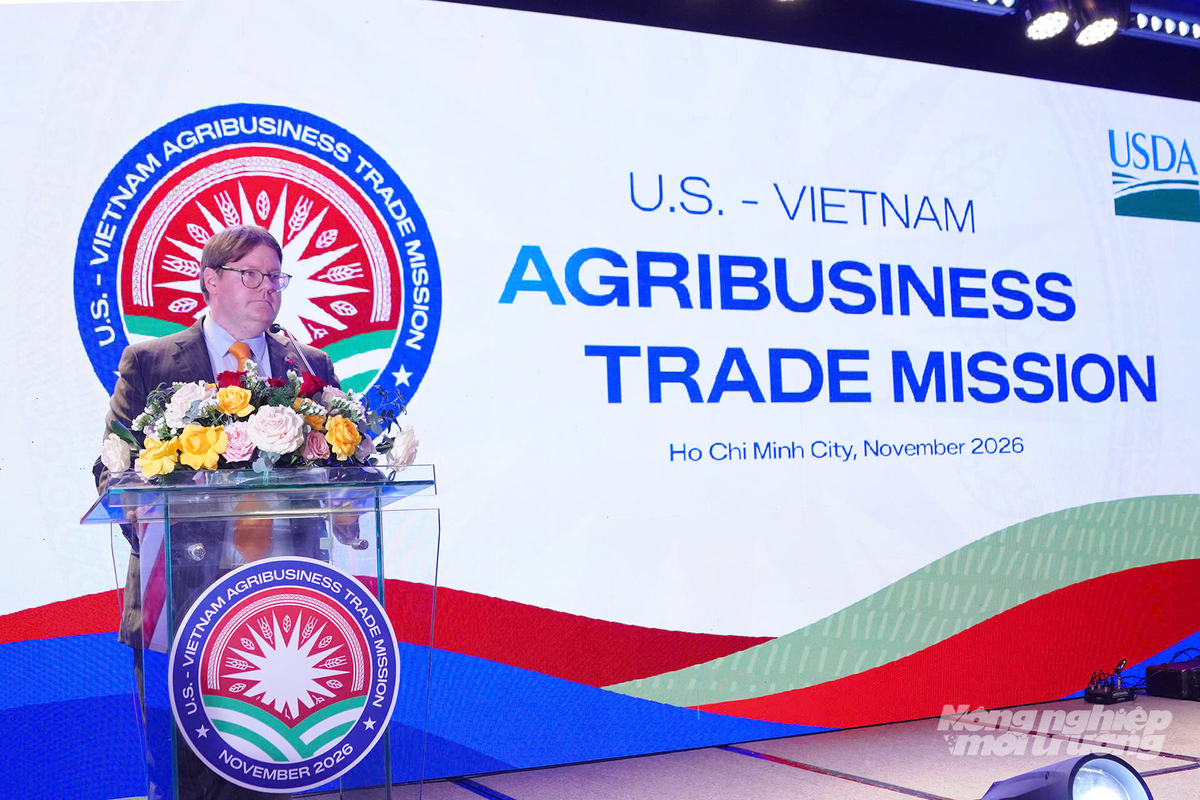
Vietnamese demand is increasingly driven by premium bakery and fast-food products, meaning U.S. wheat can provide competitive advantages through consistent performance. That was the message U.S. Wheat Associates (USW) Bakery, Biscuit and Noodle Technologist Ivan Goh carried during the recent USDA Agribusiness Trade Mission to Vietnam in November.
“The opportunities for U.S. wheat in Vietnam extend beyond volume growth to supplying the functional characteristics required by expanding industrial and higher-use applications,” Goh said. “This USDA mission allowed us to show the delegation the impact of flour quality on production and explain how U.S. Wheat’s market development work in Asia is translating to adoption of new technologies and introduction of new products that favor U.S. wheat classes.”
Goh joined U.S. Deputy Secretary of Agriculture Stephen Alexander Vaden on the USDA trade mission, along with 43 U.S. businesses, 37 agricultural trade and industry organizations and representatives from the California, Kansas and Wisconsin state departments of agriculture. The mission aimed to connect U.S. exporters directly with Vietnamese buyers, importers, and distributors to expand sales opportunities in one of Asia’s most dynamic and growing markets.
One highlight for Goh on the mission was touring ABC’s burger and bun production line. Goh shared valuable insights with other participants on the U.S. wheat specifications behind ABC’s flour, helping them better understand the bakery process and the role quality wheat supplies play in finished-product performance.
He also linked U.S. Wheat’s technical service work with ABC to the larger objectives for the Vietnamese market. ABC senior management previously participated in a USW-led Korean Baking Workshop and later adapted a production line to commercially test a manju product introduced during the program, one example of technical assistance progressing from training to commercial-scale application.
“Through ongoing technical service and engagement with Vietnamese flour millers and end-product users, we have identified multiple U.S. wheat classes as well-suited to evolving end-use requirements in the market,” Goh said. “Vietnam is a good example of how U.S. Wheat is working to build on long-term market development work to lock in wins for U.S. farmers as incomes rise and consumer demand shifts.”