
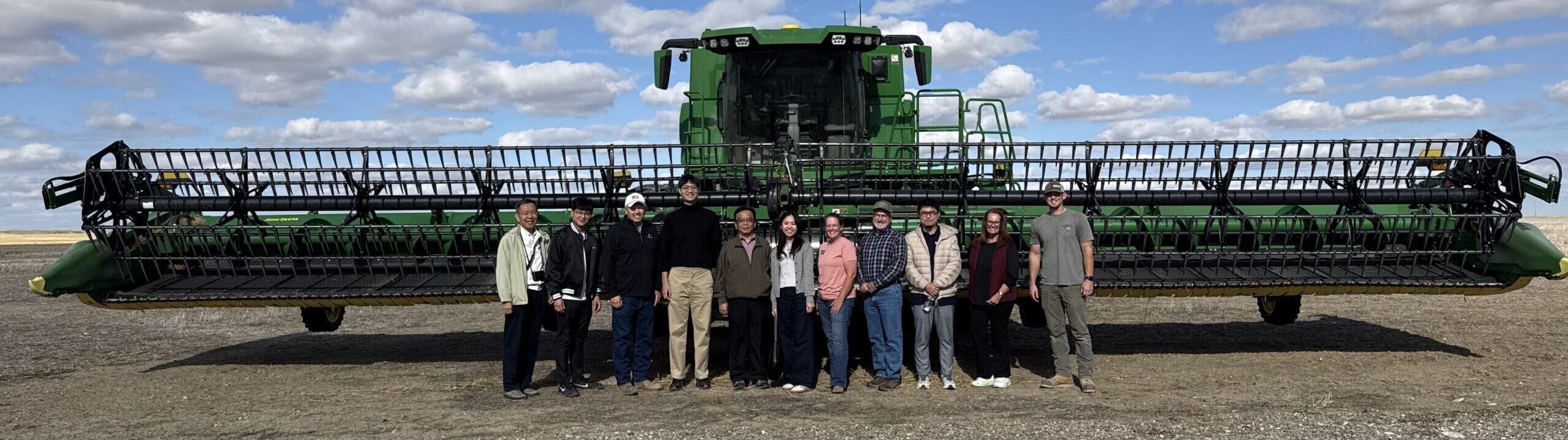
Taiwanese flour millers visited North Dakota, Montana and Oregon in mid-September to see how multiple U.S. wheat classes move from farms to export channels and ultimately are used to produce a wide range of wheat foods consumed in Taiwan. Organized by U.S. Wheat Associates (USW), the team’s agenda was packed with visits to wheat farms, grain elevators, laboratories and export terminals.
The team participants represented the Taiwan Flour Millers Association (TFMA), which purchases wheat for all 13 of Taiwan’s flour mills. Collectively, these mills are loyal customers of U.S. wheat, ranking as some of the largest buyers of U.S. hard red spring (HRS), hard red winter (HRW) and soft white (SW) wheat. Each class of wheat provides different quality characteristics that allow Taiwanese millers to produce flour for a broad range of end-products from noodles to breads to cookies to pre-mixes.
That loyalty is also evident in the majority market share U.S. wheat farmers enjoy in Taiwan, averaging around 80% over the last decade and 78.2% in calendar year 2025.
“Taiwan’s millers depend on U.S. wheat for many different products, so understanding the quality and functionality of each class is extremely important,” said Yi-I Huang, USW country director in Taiwan, who accompanied the team. “This trade mission gave customers an opportunity to follow that wheat from the farm and research programs through the handling and export system.”
Taking an In-Depth Look at Wheat Quality
The team’s time in North Dakota provided an in-depth look at wheat quality. At North Dakota State University, participants toured the Spring Wheat Quality Lab and learned about the university’s spring wheat breeding program. Visits with the North Dakota Wheat Commission, Northern Crops Institute and a country elevator added perspective on crop quality, end-use performance and the transportation system that moves wheat from producing areas to customers.
In Montana, the team continued tracing the supply chain through research, quality assurance and commercial handling. Stops included the Montana State Grain Laboratory and United Grain Corporation. Additionally, the team received an impressive demonstration of a drone at the Western Triangle Agricultural Research Center.
“What impressed the group members the most during their time in Montana was the producers’ willingness to apply to new technology and artificial intelligence (AI) to their production, which can ultimately lead to stronger sustainability,” Huang said.
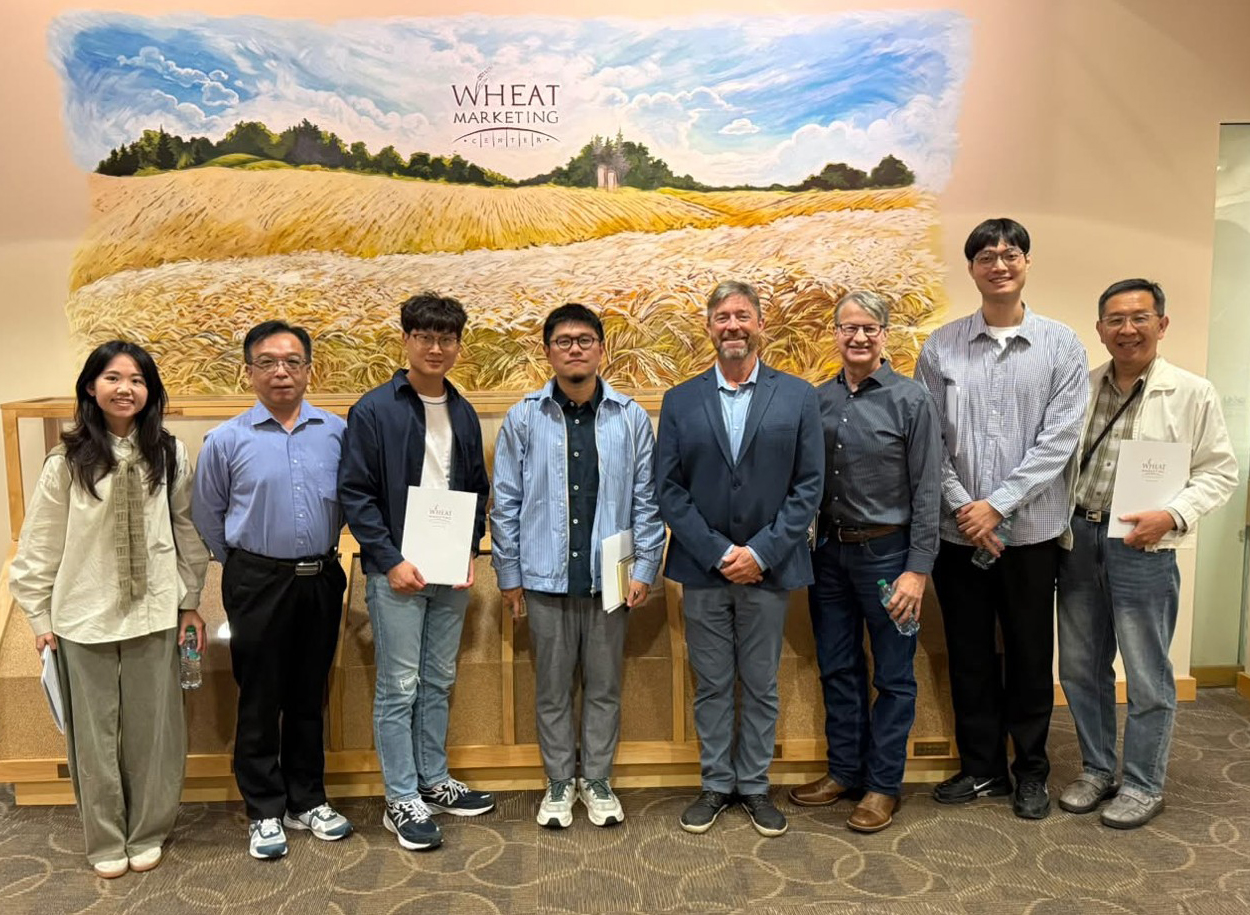
The final leg of the trip in Oregon connected wheat production with the export system that supplies customers across the Pacific. The team toured Columbia Export Terminal and the Wheat Marketing Center in Portland before traveling into eastern Oregon for a farm visit and tour of a river terminal. The Oregon stops also provided greater exposure to SW wheat and its role in Taiwan’s flour market.
Building Confidence in U.S. Wheat Quality and Supply
With the support of the North Dakota Wheat Commission, Montana Wheat & Barley Committee and the Oregon Wheat Commission, the team gained firsthand insights into the systems behind the different classes of wheat Taiwan purchases. The relationships made and strengthened during these trade missions are especially important in a market where wheat is used for a diverse mix of foods. Noodles, including instant noodles, account for 36% of Taiwan’s wheat food consumption. Breads, buns and rolls represent another 27% while traditional Chinese wheat products account for 18%. Cakes, pastries, biscuits and cookies add additional demand for wheat with different characteristics.
“Having access to multiple U.S. wheat classes gives Taiwan’s millers options to meet the quality needs of a very diverse market,” Huang said. “Whether the flour is destined for noodles, bread, steamed products or other foods, our customers need consistent wheat that performs the way they expect.