
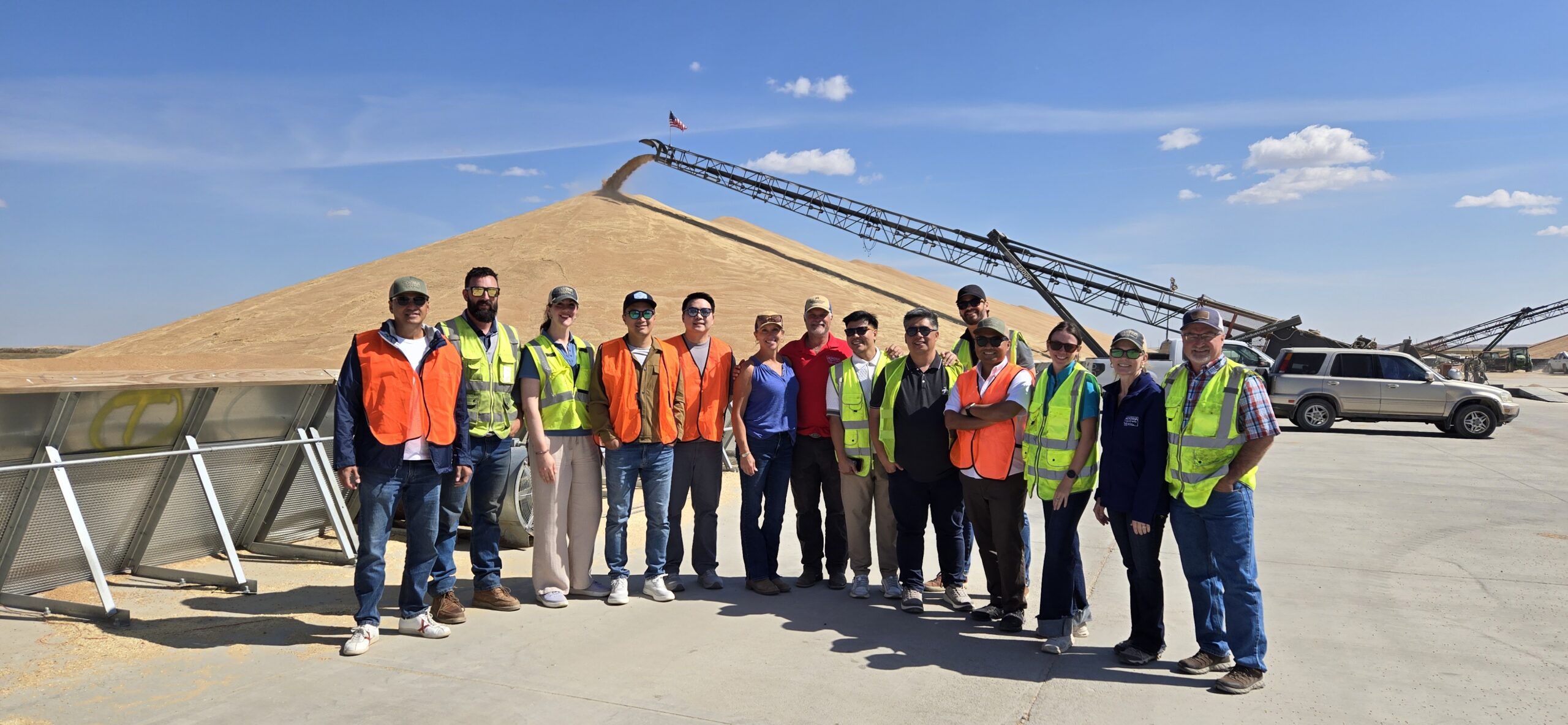
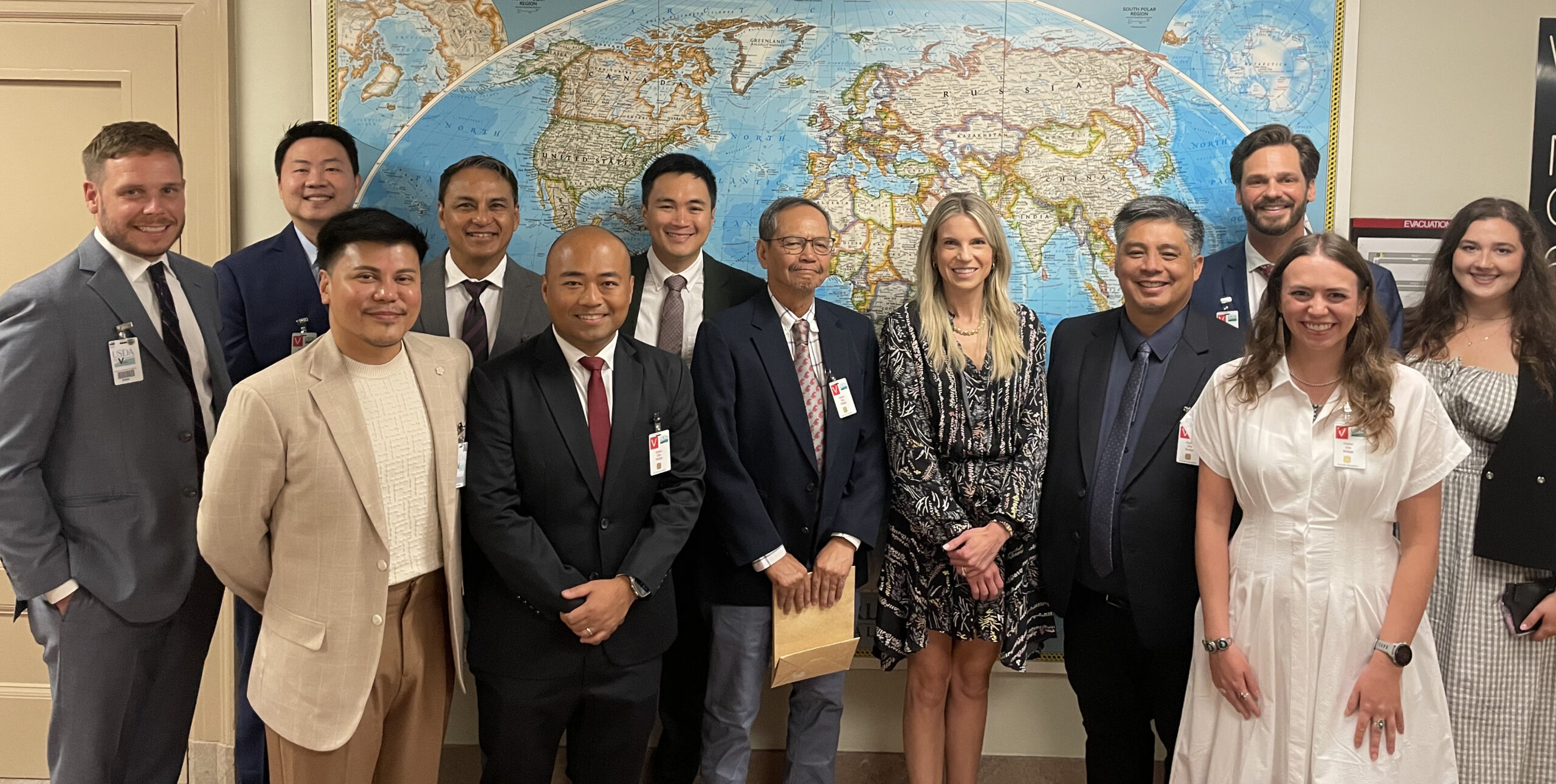
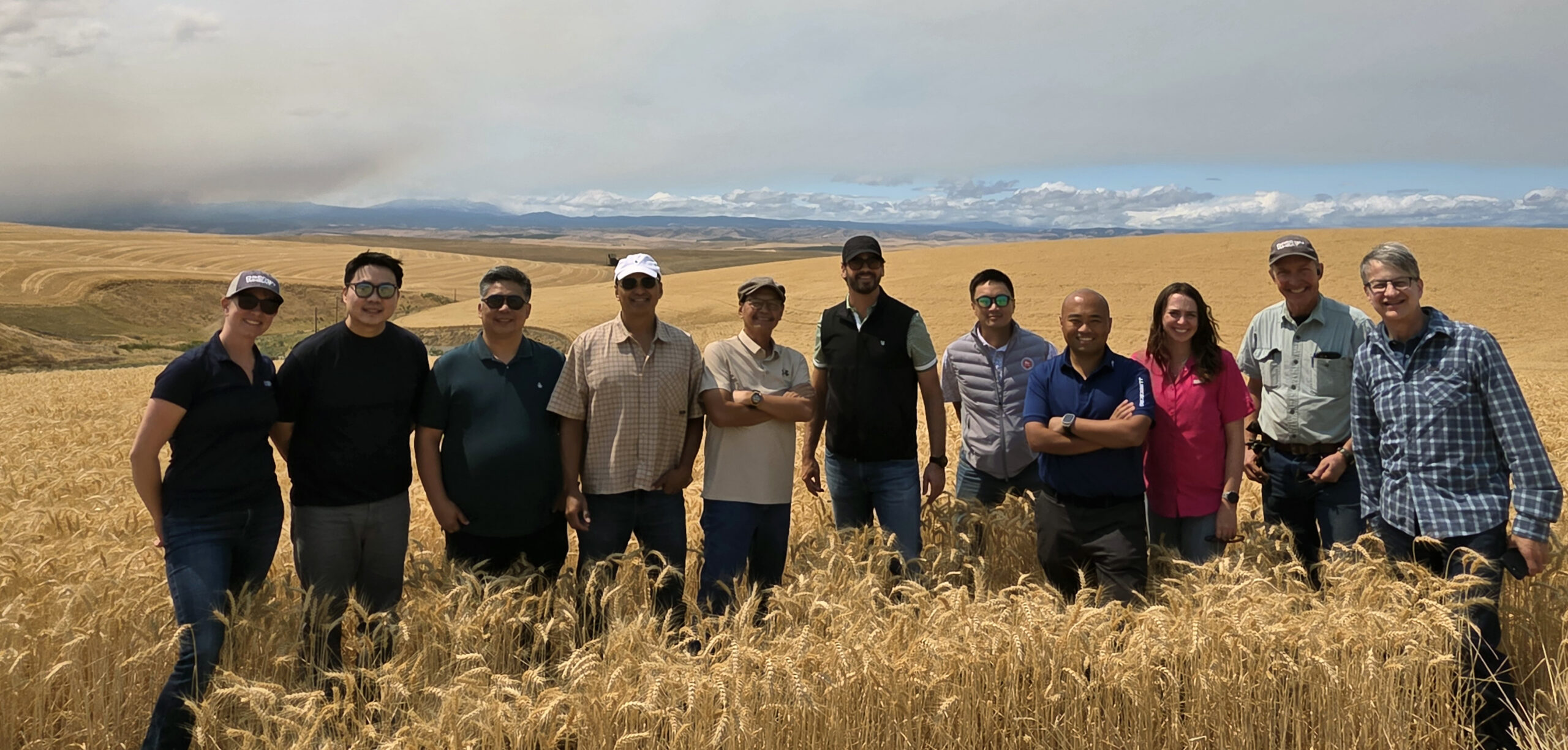
A recent U.S. Wheat Associates (USW) program brought together “heavy hitters” from some of the Philippines’ largest flour milling companies for a trade policy focused mission to Oregon, Montana and Washington, DC.
The team members’ companies account for more than half of total flour milling capacity in the Philippines, purchasing more than 1.3 million metric tons (MMT) (47.8 million bushels) of U.S. wheat in the 2025/2026 marketing year. They joined representatives from the Philippine Association of Flour Millers (PAFMIL) and USW to strengthen relationships with U.S. producers, exporters and policymakers while addressing one of the most significant trade issues in the Philippine milling industry: the upcoming expiry review of anti-dumping duties on Turkish flour.
Anti-Dumping Duties Support Philippine Millers and U.S. Wheat Farmers
While enhancing understanding of the U.S. wheat supply chain is always an objective of USW programs, the primary goal of this team was to provide U.S. support for the Philippine flour milling industry’s efforts to extend their government’s anti-dumping duties on Turkish flour.
The Turkish government employs a complex, inward processing scheme that creates incentives for its milling industry to export flour regardless of price, distorting and disrupting flour markets around the world. As a response, the Tariff Commission of the Republic of the Philippines originally imposed anti-dumping duties in 2014 of up to 16.19%, which combined with the country’s MFN (Most Favored Nation) tariff rate of 7%, were enough to reduce imports of Turkish flour by more than 70 percent and allow the Philippine milling industry to increase production of flour needed to make high-quality Philippine wheat food products.
This outcome was the direct result of PAFMIL successfully demonstrating that unfairly priced Turkish flour imports threatened to cause material injury to domestic millers, which they have continued to do as anti-dumping duties were extended. In 2023, the Philippine government passed the latest extension for those measures after determining that Turkish exporters would likely continue dumping flour into the market if the duties were removed.
At its peak before the duties were enacted, Turkish flour captured approximately 9% of the Philippine flour market, displacing the equivalent of more than 200,000 MT (7.35 million bushels) of U.S. wheat demand. Without the duties, low-priced Turkish flour could once again enter the market in significant volumes, undermining investments made by Philippine millers and disrupting market conditions for both the domestic industry and U.S. farmers.
As the second-largest market for U.S. wheat, with annual purchases averaging 2.5 MMT (91.9 million bushels), and the largest destination for both U.S. soft white (SW) and hard red spring (HRS) wheat, this issue remains highly relevant on both sides of the Pacific. The current anti-dumping measures are scheduled to expire on January 14, 2027, and Philippine millers are preparing evidence to support another extension.
Trade Mission Talks Turkish Flour Coast to Coast
The efforts of U.S. wheat farmers have helped PAFMIL secure previous extensions of the anti-dumping duties, which is why PAFMIL once again came to ask for their support and encouragement. This year’s program began in Portland, Oregon, where participants met with grain exporters, toured export facilities, received briefings from the USW West Coast Office and the Wheat Marketing Center and learned more about the inspection, logistics and quality assurance systems that support U.S. wheat exports. The team also participated in a briefing and grain grading session by the USDA’s Federal Grain Inspection Service (FGIS), providing a firsthand look at the systems that help ensure the reliability and consistency of U.S. wheat for overseas customers.
The group then traveled to Montana, where visits with growers, grain handlers and industry organizations highlighted the long-standing partnership between U.S. wheat producers and Philippine millers. Discussions emphasized a shared commitment to quality and reliability, the importance of the Philippine market to U.S. farmers, and the role fair trade plays in supporting both industries. Team members also shared updates on the Turkish flour case and its implications for Philippine millers and U.S. wheat producers.
The DC portion of the program focused on the policy implications of this case. Meetings with USDA officials, trade policy experts and consultants provided participants with additional insight into the Turkish flour case, the expiry review process and the importance of maintaining a rules-based trading environment.
By bringing together industry leaders, growers, exporters and policymakers, the team reinforced the long-standing partnership between Philippine millers and U.S. wheat farmers. As the anti-dumping case enters its next phase, the program highlighted the shared interest of both industries in maintaining a transparent and competitive marketplace that supports continued growth and opportunity for U.S. wheat exports and the Philippine flour milling industry.