
Promoting U.S. wheat in 42 countries that occupy a massive 9.3-million square mile expanse requires purpose, planning, perspective and – the most important “p” word in Chad Weigand’s vocabulary these days – patience.
There are going to be great years in Sub-Saharan Africa, Weigand says, and there are going to be less-than-great years. But Weigand is less concerned about the year-on-year changes, and more focused on the future growth potential of the region.
“There are always ups and downs in a market this size, but our focus is on the long term in this region,” Weigand, U.S. Wheat Associates (USW) Regional Director for Sub-Saharan Africa said. “We stay true to our mission. When it comes to our work, we focus on finding opportunities for U.S. wheat and then showing millers and bakers the advantages of each of our six classes of wheat. That work paid off this past year with increased exports, but here we are in a new Marketing Year, and we are working hard to face challenges and match or exceed what we just accomplished.”
Numbers Reflect Solid Year
Marketing Year 2025-26 saw U.S. wheat exports to Sub-Saharan Africa increase by 138%, making it one of the strongest year-over-year growth performances among USW’s international regions. Nigeria, Africa’s most populous nation and one of the world’s largest wheat-importing countries, recorded a particularly notable increase. U.S. wheat sales to Nigeria rose approximately 95% during the marketing year. The gains reflect years of relationship building, technical support and market development work.
Purpose, planning, perspective . . . and patience played roles, too.
The first-ever USW Sub-Saharan Africa Wheat Buyers Conference, held in Cape Town in April 2025, led to direct sales of U.S. wheat. The conference, organized by USW’s Cape Town staff, introduced or reintroduced buyers of U.S wheat, bringing farmers from several states to meet millers and bakers face-to-face.
It was a big step in an ongoing effort.
“U.S. has looked at the big picture in this region for a long time,” Weigand explained. “Starting from a relatively low base of wheat consumption, there is a lot of room for growth. As incomes rise and people move into urban areas, demand for products like bread, pasta and baked goods continues to increase. The demographics are compelling. This is the fastest-growing region in terms of population. It is also the youngest population in the world.”
USW’s Cape Town Staff
Sub-Saharan Africa is home to some of the world’s fastest-growing economies. Many countries in the region are recording annual population growth rates of 2% or higher, with some approaching 2.5%. At the same time, an expanding middle class are changing dietary habits and increasing demand for wheat-based foods. Countries such as Nigeria, Côte d’Ivoire, Senegal and Ghana stand out as markets with significant growth potential.
For USW, the challenge is turning that potential into actual sales for U.S. wheat producers.
It takes people to do that.
USW has maintained a presence in the region through its office in Cape Town, South Africa, which serves as a hub for activities throughout the massive region. Weigand credited much of the organization’s success to the regional team.
“We have an excellent staff in our Cape Town office,” he said. “Things get busy with so much territory to cover. I really credit how well our staff works with our customers and how well each person represents the U.S. wheat industry.”
The team includes Program and Marketing Specialist Domenique Opperman, Finance and Administration Manager Cathy Marais and Administrative Assistant Heather Wagner.
The Cape Town staff conducted more than 14 technical and educational activities during the past year, reaching millers, bakers and food manufacturers across multiple countries.
Market Challenges Remain
The opportunities are substantial, but so are the obstacles, Weigand acknowledged.
Sub-Saharan Africa remains one of the most price-sensitive regions in the global wheat trade. Buyers often have access to lower-priced wheat from competing exporters, including Russia, Ukraine, Canada, the European Union and Baltic suppliers.
At the same time, U.S. farmers face drought, escalating input costs and challenges of their own to maintain their earned reputation as the world’s most reliable supplier of wheat.
Weigand is confident in the supply side of the equation. But competition and pricing fluctuations means USW must do more than simply promote U.S. wheat. The organization must demonstrate the product advantages that can justify a higher purchase price.
“We try to demonstrate the value of U.S. wheat,” Weigand explained. “When U.S. wheat is not the most affordable wheat on the market, we show buyers what they can get from that investment.”
The technical education, milling training and baking demonstrations help customers understand how different classes of U.S. wheat can improve product quality, consistency and profitability. One recent example involved a series of baking seminars conducted in late 2024.
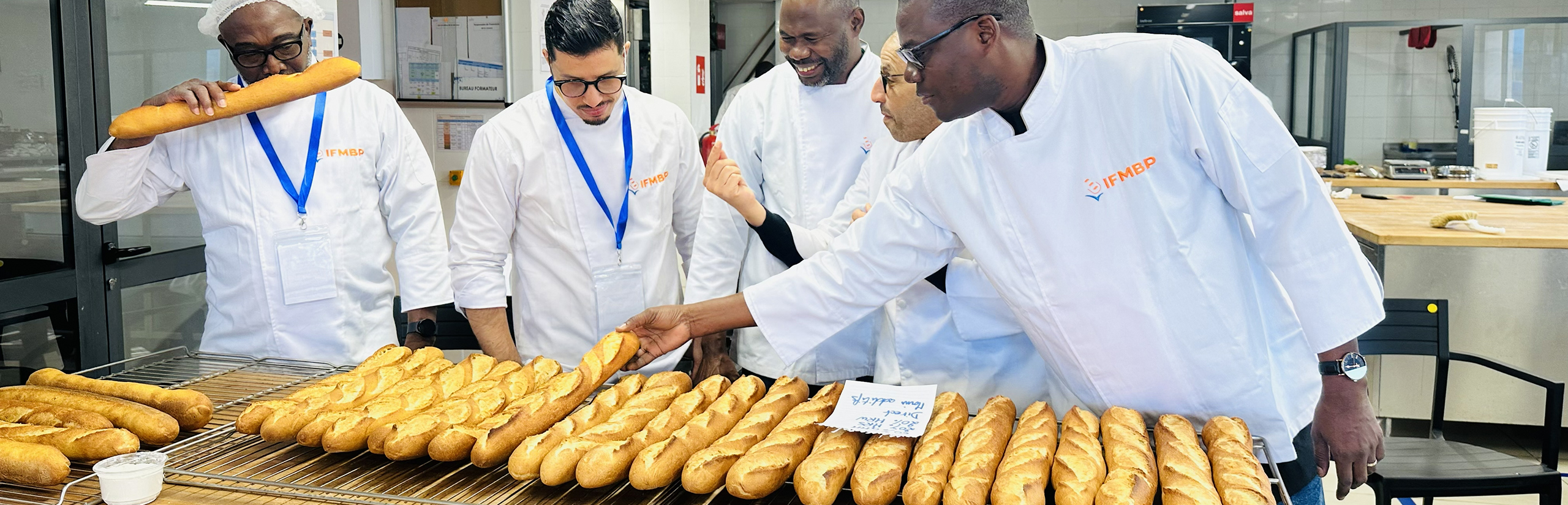
USW brought together millers and bakers from Senegal and Côte d’Ivoire to demonstrate the performance of blends containing Hard Red Spring and Hard Red Winter wheat. The focus was on French baguette production, a staple bakery product in many West African countries.
The seminars helped local industries gain confidence in using U.S. wheat for high-quality baguette production.
The results were tangible.
According to Weigand, the training contributed to increased purchases of U.S. wheat in both countries during MY 2025-26, as buyers became more comfortable incorporating U.S. wheat into their flour blends.
Weigand Utilizes Strong Background
Weigand has spent much of his professional career helping connect U.S. wheat farmers with customers around the world. He oversees USW market development activities across a diverse region where rising populations, rapid urbanization and growing demand for wheat-based foods are creating new opportunities for U.S. exports. At the same time, many countries in the region face challenges ranging from infrastructure limitations and currency fluctuations to shifting trade policies and intense competition.
Weigand’s agricultural career spans more than two decades and combines experience in production agriculture, international marketing and export development. He joined USW in 2009 as Market Analyst in the Arlington, Va., Headquarters Office before transferring to Mexico City as Assistant Regional Director in 2011. He became Assistant Regional Director in Sub-Saharan Africa in 2018 and was promoted to Regional Director in 2020.
Building Demand
Looking ahead, USW plans to continue investing in technical education and customer training. One of the organization’s major initiatives will focus on pasta production, a rapidly growing segment throughout the region.
“Pasta consumption has been averaging about 5% to 7% growth in many markets,” Weigand said.
To capitalize on that trend, USW will partner this year with the Northern Crops Institute in Fargo to conduct a specialized pasta course that demonstrates how U.S. wheat blends can be used to produce high-quality pasta products.
Additional programs will include a contract and value course designed to help buyers better understand wheat procurement decisions and the economic benefits of U.S. wheat quality.
USW also plans to conduct a soft wheat product development course at the Wheat Marketing Center in Portland. The training will highlight the use of soft red winter (SRW) and soft white (SW) wheat classes in confectionery products, pastries and other baked goods that are becoming increasingly popular among urban consumers.
A Market for the Future
For U.S. wheat farmers, the significance of Sub-Saharan Africa extends beyond today’s export numbers. The region’s combination of rapid population growth, urbanization and rising incomes suggests that wheat consumption could expand dramatically in the coming decades. The United Nations projects Africa’s population will continue growing faster than any other major region of the world through mid-century.
That makes market development efforts especially important.
As Weigand emphasized in Fargo, the region may be challenging and highly competitive, but the fundamentals point toward long-term opportunity.
“For U.S. Wheat and the farmers we represent, success in Sub-Saharan Africa could help secure an important source of future demand at a time when global competition for wheat markets continues to intensify,” he said. “Population growth rates will affect demand and what we plan to do with our work, and our activities is to move the needle to increase consumption. That’s what will also move the needle for U.S. wheat exports into this region.”