
Every farm kid loves a good combine ride, and the same rings true for U.S. wheat customers around the world. From the spring to the fall, teams from around the world travel to the United States – organized by U.S. Wheat Associates (USW) and supported by state wheat commission members – to hopefully hop in the buddy seat.
More importantly, these trade teams help customers meet the farmers who provide high-quality U.S. wheat, learn about the U.S. wheat supply chain and gain a new appreciation for the performance and value of U.S. wheat classes.
“Giving trade teams the full picture of the U.S. supply chain is the plan for each itinerary, including the opportunity for face-to-face conversations between farmers and wheat buyers from around the world,” said Catherine Miller, USW director of programs, who works as a matchmaker between USW’s overseas offices and state wheat commissions to put together a specialized itinerary specific to each team’s needs. “The agenda for each team changes depending on the needs of each customer and market, but the overall goal remains the same – demonstrate the reliability, quality and value of U.S. wheat to the world market.”
Along with Miller, the USW West Coast Office also helps organize the busy trade team season. With teams from around the world traversing the lower 48 states, find below a quick summary of some of the most recent teams, their objectives and what information they will take home to their organizations as purchase decisions are made.
South American Technical Trade Mission
June 7-13, 2026
Idaho, North Dakota, Nebraska
A group of wheat buyers and milling experts from Chile traveled to Idaho, North Dakota and Nebraska in mid-June to get a closer look at the U.S. wheat market and how it can help their mills produce better flour. In each state, the team toured flour mills, wheat farms, quality labs, research facilities and production facilities.
The group represented Chile’s largest milling organization, which buys wheat on behalf of eight member mills. The technical trade mission focused on demonstrating the competitive advantages of U.S. wheat, providing quality and performance relative to international competitors like Canadian Western Red Spring (CWRS).
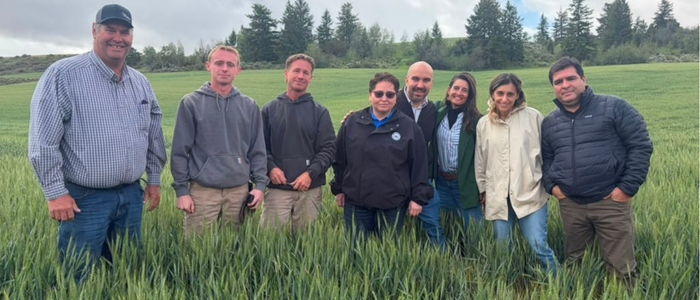
“Chile leads South America in per-capita bread consumption, but the market is competitive as the country is highly trade-integrated with more than 35 trade agreements with 64 different countries,” said Andres Saturno, technical manager in the USW Santiago Office, who accompanied the team. “Trade missions like this one allow U.S. wheat farmers to showcase the advantages of the U.S. grain supply chain and prove the quality and performance of U.S. wheat classes compared to other suppliers.”
The team left with a much deeper understanding of the U.S. grain marketing system, where U.S. wheat originates and how it can work in their mills. That kind of knowledge builds confidence in buyers who keep coming back.
Learn more about this team in this article by the North Dakota Wheat Commission.
Sub-Saharan African Trade Team
June 13-20, 2026
Kansas, Minnesota, North Dakota
Two leaders from one of Nigeria’s largest flour milling companies traveled to Kansas, North Dakota and Minnesota in June for a firsthand peek at the harvest and to discuss global trade dynamics and wheat breeding innovations.
While in Kansas, the team toured the IGP Institute and the Kansas Wheat Innovation Center to discuss global trade dynamics and demand drivers and to see firsthand the advancements happening with wheat breeding technology. The team also took a quick stop by the K-State agronomy fields north of campus to check out the ripe wheat.
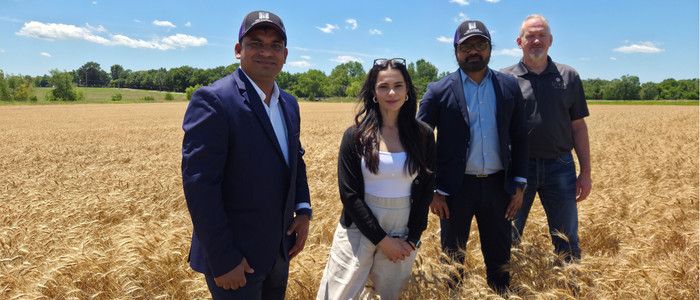
“In competitive markets like Nigeria, there is nothing more valuable than connecting the leading flour mills directly with the people working in the U.S. wheat supply chain,” said Domenique Opperman, USW regional program and marketing specialist for the Sub-Saharan Africa Region, who accompanied the team to Kansas. “These face-to-face interactions allow global buyers to gain firsthand insights that reinforce the value that U.S. wheat brings to their operations.”
After leaving Kansas, the team toured the wheat supply chain in North Dakota and Minnesota as part of their fast-and-furious travels across the United States. They took all they learned back to Nigeria, armed with the insights they need to make informed purchasing decisions in the upcoming year.
Learn more about this time in this article by the Kansas Wheat Commission.
Peru Trade Mission
June 29-July 3, 2026
South Dakota, Montana
A delegation of five Peruvian milling executives — representing more than 85 percent of Peru’s total milling capacity — spent a week touring wheat fields, farms and grain facilities across South Dakota and Montana from June 29 to July 3, part of a USW trade team visit aimed at building long-term relationships between U.S. wheat producers and one of Latin America’s largest wheat-importing countries.
The delegation included representatives from Peru’s largest flour miller, a Peruvian pasta and cookie manufacturer, and several other family-owned Peruvian milling companies. The team included young professionals who will soon be making purchasing decisions for their companies, and the trust built through in-person visits like this one is what ultimately drives sales.
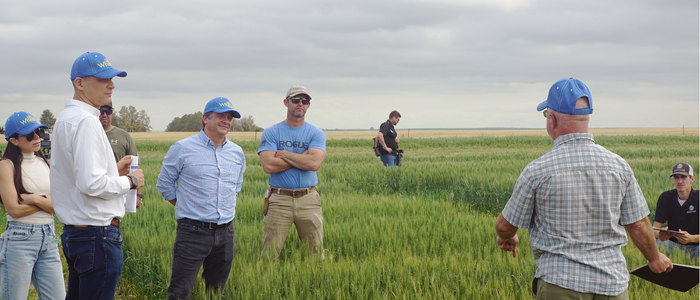
“All business in South America is based on confidence,” said Miguel Galdos, USW regional director for South America, who led the team. “You can give an excellent price to any milling company in Peru, but if they have not had the opportunity to shake your hand, they are not going to buy a dollar from you. It is important for our customers to see firsthand how wheat is produced, and by whom. These are not multinational corporations — they are families. One of the most important goals for a U.S. wheat farmer is to leave a better farm, better land, for the next generation, and that is something our customers remember.”
Learn more about this team in this article by the South Dakota Wheat Commission.