
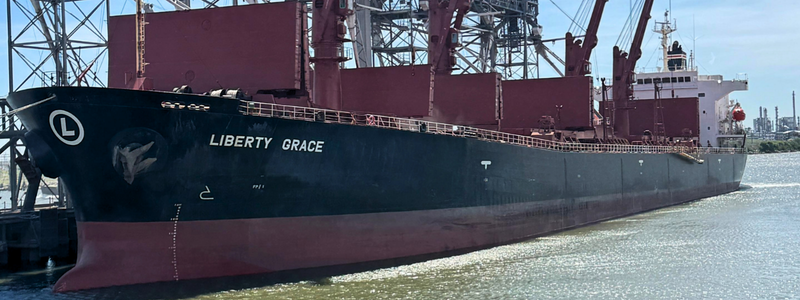
The American flag waving in the wind from her mast was not the only symbol of international diplomacy carried by the Liberty Grace as the bulk vessel pulled into the Port of Mombasa in Kenya. The U.S. hard red winter (HRW) wheat in her cargo holds represents the first chapter in a complex but important tool for market development: monetization through the U.S. Food for Progress (FFPr) program.
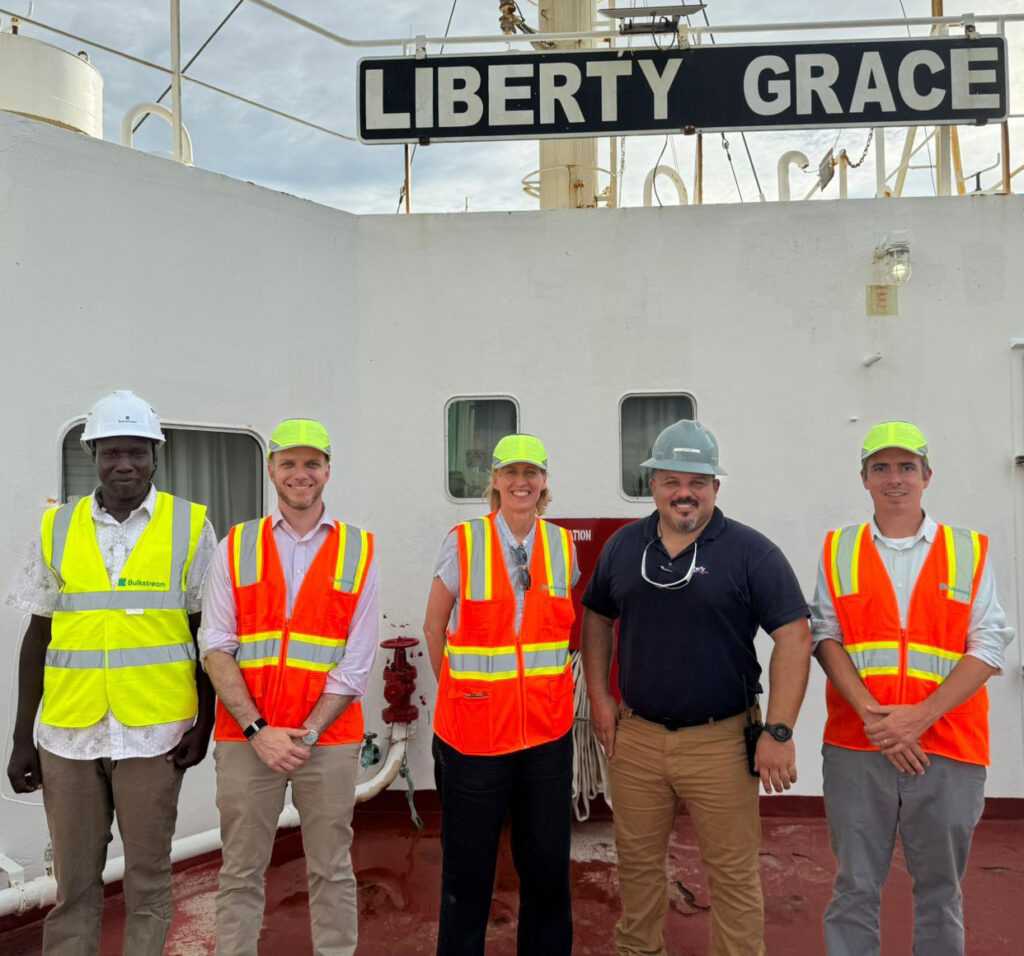
At the busiest port in East Africa, the U.S. HRW wheat was unloaded from the ship, with Susan M. Burns, Chargé d’Affaires at the U.S. Embassy in Nairobi, on hand to observe. From here, the wheat will move into the hands of regional millers and be used to demonstrate the quality, reliability and value of purchasing wheat from the United States.
Meanwhile, the proceeds from the sale will be used to benefit both Kenyan livestock producers and suppliers of their feed ingredients, including U.S. sorghum farmers. The result is a win-win project for American farmers, Kenyan livestock producers, and all those who help facilitate trade between the two.
“This is a big win for both American and Kenyan farmers,” said Burns in a release, after visiting the port and watching the vessel discharge the U.S. wheat shipment. “We are excited to see expanded trade, as well as a focus on supporting Kenyan livestock producers by developing systems to produce higher quality animal feeds at a lower cost.”
Global Food Assistance Rooted in U.S. Farmer Advocacy
American wheat farmers were the first to champion using commodities to support market development in overseas markets. In September 1953, Peter O’Brien, a young Kansas farmer, suggested donating grain to countries in need during a county meeting. Those comments sparked a grassroots movement, leading to the creation of the Food for Peace program, which provides direct in-kind donations, rather than monetizing commodities like the Food for Progress program.
The driving force behind today’s modern food assistance programs remains the same as those original conversations: assist people in developing countries and as their economies grow, they become new potential buyers of U.S. exports.
For decades, the U.S. food assistance programs have largely stayed true to and expanded upon this original purpose. Under the Food Security Act of 1985, the Food for Progress program was created to provide another tool for the USDA to use to address food security, agricultural development and expand trade. Under the program, U.S. food commodities – wheat being the largest commodity used in this way – are typically donated to a non-government organization (NGO) for use in a specific country. The NGO can then sell that commodity to local processors or traders and use the proceeds for development projects.
In September 2025, the U.S. Department of Agriculture (USDA), which manages the FFPr program, awarded Counterpart International, a global non-profit organization that partners with local organizations around the world to build sustainable communities, 69,600 metric tons (MT) (2.56 million bushels) of U.S. wheat to use for its Livestock Innovation and Feed Transformation (LIFT) Project.
Putting the Proof in the Flour
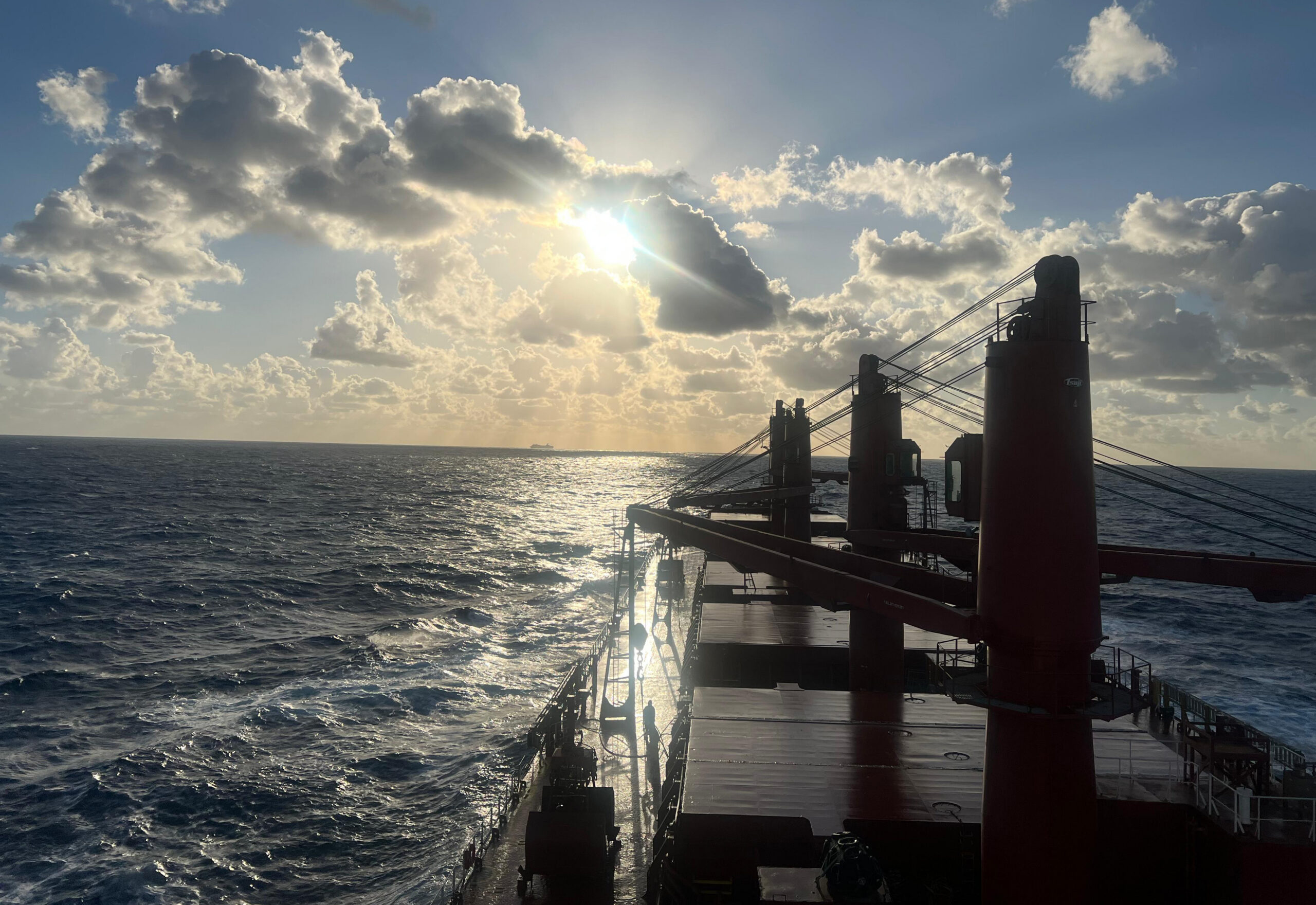
The first step in the monetization project is to procure and move the donated U.S. wheat. For this project, the total amount of wheat awarded to Counterpart International was divided into four separate shipments, which were loaded in the United States from mid-February to early April 2026, before traversing the oceans to East Africa. Two shipments were discharged in Dar es Salaam in Tanzania, and two at the Port of Mombasa in Kenya, including the Liberty Grace.
Global grain marketer CHS sold the wheat destined for the Counterpart International project, 69,600 MT (2.56 million bushels) of U.S. HRW wheat, to the Anderson Group and the Bakhresa Group. This tranche was part of a larger Food for Progress tender for three projects across Kenya and Ethiopia, which included a total of 183,700 MT (6.75 million bushels) of U.S. wheat.
On March 17, 2026, 47,000 MT (1.73 million bushels) of the wheat was loaded on the U.S.-flagged Liberty Grace cargo vessel at the Temco export terminal in Houston, Texas, which departed for the eastern side of the African continent.
Just over a month later, on April 21, the Liberty Grace arrived at the Port of Mombasa. A short wait for a berth later, Chargé d’Affaires Burns joined USDA officials and representatives from Counterpart International to watch the wheat discharge on May 4, 2026.
“Standing here at the port and watching the discharge of U.S. wheat, you see more than just a cargo ship – you see the results of our commitment to trade,” said Alex Samel, chief of party for the LIFT project for Counterpart International. “This wheat is diplomacy in action – supporting the Kenyan milling industry while simultaneously generating funds to empower local livestock producers.”
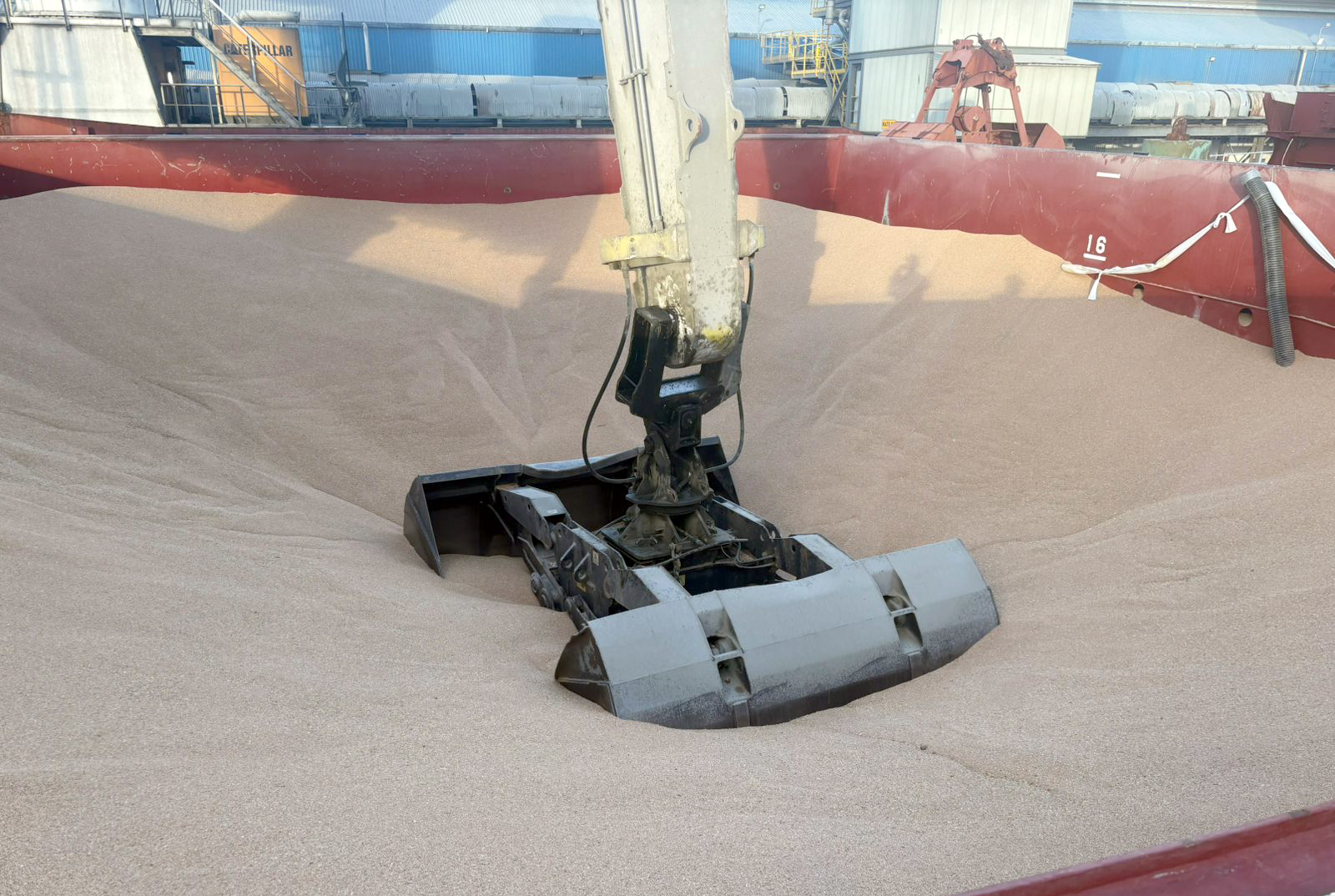
From the port, the wheat shipment was split into different final destinations. The Andersons pre-sold their portion of the shipment to 16 millers in Kenya and Uganda, so that wheat was transported upon discharge. This marks the next step toward achieving one of the goals of the FFPr program: using donated wheat to demonstrate the quality and versatility of U.S. wheat classes to potential and future customers of American farmers.
The Bakhresa Group is also an excellent example of this work in motion. The Bakhresa Group is also the largest grain milling company in East Africa with operations in nine countries, including Tanzania, Uganda, Malawi, Mozambique, Zambia, Rwanda, Burundi, Zimbabwe and South Africa.
Their portion of the donated wheat will be used by the Bakhresa Group for their mills in Tanzania, Rwanda and Burundi. While this appears simply opportunistic, the connection between the FFP project and the Bakhresa Group was strategically cultivated by U.S. Wheat Associates (USW), the market development organization supported by U.S. wheat farmers.
U.S. Wheat has been working with the Bakhresa Group for years, inviting key leaders and staff to crop quality seminars, buyers conferences, grain procurement short courses and other activities designed to familiarize them with the six different classes of U.S. wheat and the ins and outs of the U.S. grain marketing system.
It is an important consideration for any FFPr project that the donated food commodity be complementary, not competitive, with locally produced supplies. In the case of wheat, Kenya does have a small domestic supply, but production is never enough to meet the country’s full needs or those of surrounding markets. Instead, competition for wheat purchases comes from other world suppliers, like the Black Sea. As a result, the constraint on Bakhresa’s willingness to purchase U.S. wheat for use in the markets it serves is often price sensitivity, not competition with local supplies.
The momentum has been building, however, and Bakhresa made a commercial purchase of 5,000 MT (nearly 184,000 bushels) of U.S. HRW wheat in September 2025. Notably, the purchase was made while the group’s leaders were in the middle of a USW-organized trade team visit to South Dakota, Kansas and Texas. The sale was their first commercial purchase since 2018.
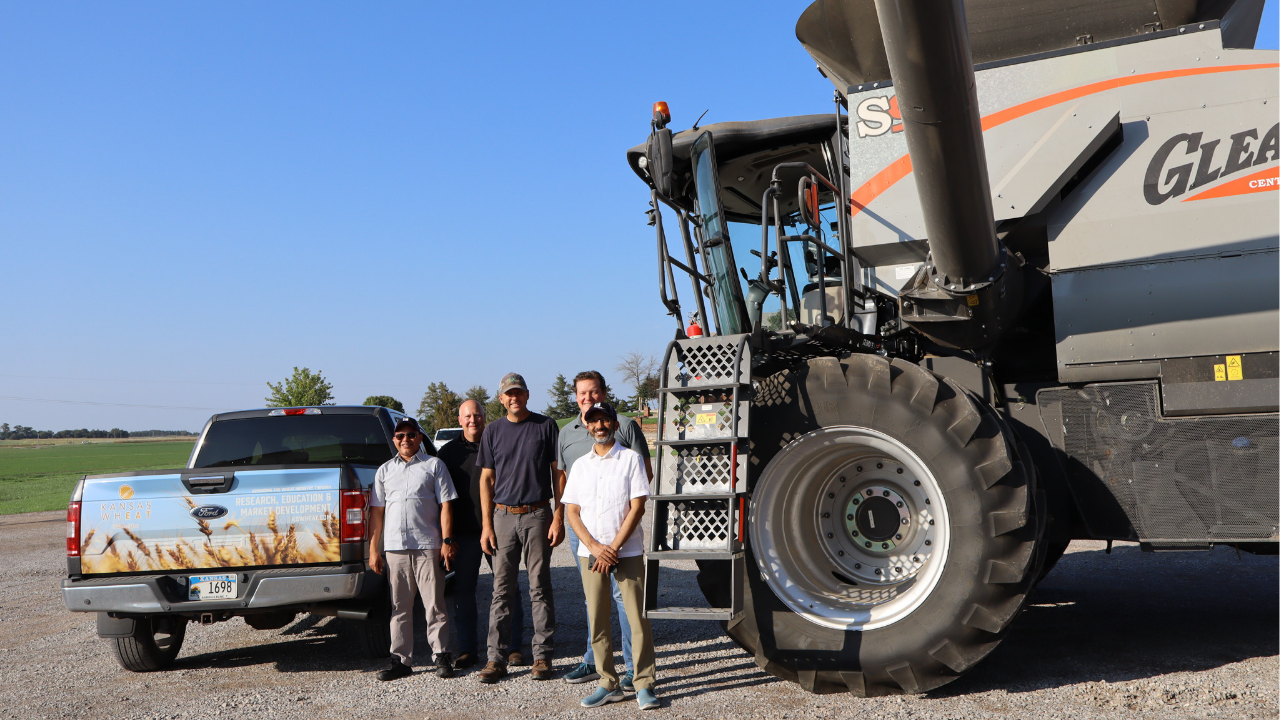
The donated wheat through FFPr will allow U.S. Wheat to continue advancing their efforts with Bakhresa Group. U.S. Wheat will provide technical expertise to help East African millers optimize their milling operations to improve extraction rates and other quality factors. As the millers learn how to best use the U.S. wheat, the proof will be in the flour – helping to produce a higher quality product and laying the foundation for future continued trade between Bakhresa Group and American wheat farmers.
“In a price-sensitive market like Kenya, the Food for Progress program gives us the room to demonstrate the quality and value of U.S. wheat compared to other origins,” said Dalton Henry, USW vice president of policy and communications. “This isn’t just about a single shipment; it’s about shifting the procurement strategy of a major milling partner. When a miller sees firsthand how U.S. wheat performs and enables them to produce a higher-quality, higher-value product, it builds a level of trust and familiarity that establishes that future foothold in the market.”
Giving Kenyan Livestock Producers a Lift
Parallel to USW’s work, Counterpart International will be using the monetization proceeds from the donated wheat to implement a development project under the Food for Progress program. Similar to the commodity donation itself, this initiative focuses on strengthening local industries to grow the customers of tomorrow.
The LIFT project exemplifies this goal as a new trade development project that aims to facilitate bilateral trade to improve Kenya’s access to high-quality ingredients and increase the productivity of their livestock sector. The five-year project will run through September 2030.
The project’s goal is to expand trade and open Kenya’s market to quality feed ingredients by harmonizing and implementing livestock feed regulations, supporting trade between exporters and Kenyan buyers and investing in upgrades and commercialization.
“The LIFT project is about creating lasting improvements in the Kenyan livestock industry,” Samel explained. “Counterpart International is proud to facilitate this unique partnership that provides Kenyan farmers with access to higher-quality, more affordable feed. By improving feed manufacturing and nutrition, we are helping local producers increase their productivity and income while simultaneously cultivating a robust new market for American farmers.”
Kenya is a tough market for feed ingredient exporters. Kenya currently does not allow the import of ingredients derived from biotechnology, imposes up to a 50% tariff on feed ingredients sourced outside East Africa, and has costly import conditions and strict sanitary and phytosanitary requirements. At the same time, feed costs for dairy and poultry farmers can account for as much as 70% of production costs, stifling the competitiveness of these industries.
Sorghum offers a viable solution. This feed grain meets Kenyan standards and serves as an effective component in animal feed rations. However, successfully integrating this ingredient requires a dual approach: Kenyan feed manufactures need technical assistance and equipment upgrades to process the grain effectively, while livestock farmers require targeted support to understand sorghum’s nutritional potential and how to best transition sorghum into their animals’ diets.
This is the ultimate goal of the LIFT project – a win-win scenario for Kenyan livestock producers, who gain technical knowledge and production efficiencies, and potentially even for U.S. sorghum farmers, many of whom may also grow wheat, who gain access to a new trading partner in a market primed for growth.
Carrying the Vision of the American Farmer Forward
By combining the monetization of U.S. wheat with technical assistance and market development, both U.S. Wheat and Counterpart International are using FFPr to build a bridge between U.S. and Kenyan producers.
Ultimately, this collaborative effort demonstrates how monetization does more than provide immediate aid; it is an important tool in the market development toolbox that helps cultivate new trading partners and support economic stability in tomorrow’s customers.
“When that young farmer stood up at his county meeting, he wasn’t just talking about singular donations, they were building a new way for American farmers to establish trade ties with the world,” Henry said. “We provide access to the most reliable supply of quality wheat in the world today so that we can build the strongest trading partners for tomorrow.”
The Liberty Grace and the American flag she flies will be long gone from Kenya before the full impact of this project is felt. But, as it has for decades, this cargo vessel serves as a beacon of hope for a brighter, more prosperous future on both sides of the ocean.